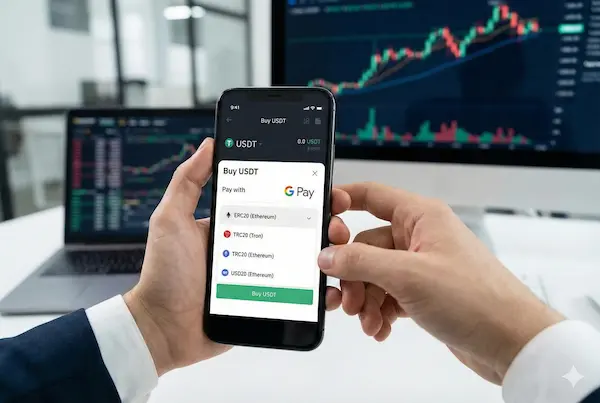
When you tap “Buy USDT” with Google Pay, the hardest choice is often not the coin, but the network behind it. One click on ERC20, TRC20 or another chain can change your fees, speed, DeFi options and even which platforms will accept your deposit. Instead of guessing or copying someone else’s setup, this guide helps you work out the best network for USDT Google Pay based on how much you buy, how often you move it and what you actually plan to do with your USDT afterward.
Contents
- 1 1. What Is The Best Network For USDT With Google Pay
- 2 2. How Google Pay Actually Works When You Buy USDT
- 3 3. USDT Network Basics – ERC20, TRC20 And Other Main Options
- 4 4. Key Factors When You Choose The Best Network For USDT Google Pay
- 5 5. Deep Dive Into ERC20 When You Buy USDT With Google Pay
- 6 6. Deep Dive Into TRC20 When You Buy USDT With Google Pay
- 7 7. Other USDT Networks To Consider With Google Pay
- 8 8. Regional And Platform Differences That Affect Your USDT Network Choice
- 9 9. Risk, Security And Compliance When Choosing A USDT Network
- 10 10. Practical Setups And Real World Examples
- 11 11. Step By Step Checklist To Choose The Best Network For USDT Google Pay
- 12 FAQs About The Best Network For USDT When You Use Google Pay
- 13 Conclusion
1. What Is The Best Network For USDT With Google Pay
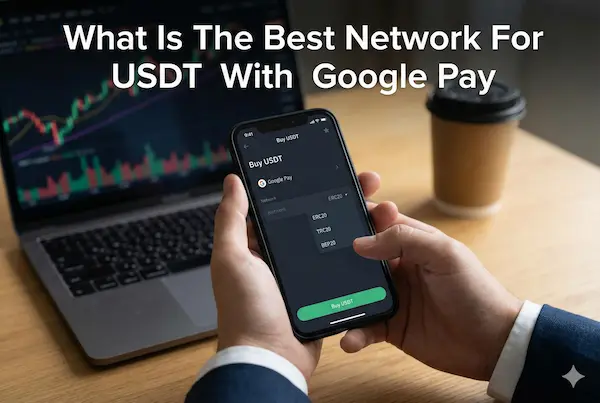
Most people just want to know which button to tap when they see ERC20, TRC20 and other options. There is no single chain that always wins, but you can get very close to the best network for USDT Google Pay by looking at how much you buy, how often you move USDT and whether you need DeFi or just cheap transfers.
1. Short answer for small and casual USDT buyers
If you buy small amounts from time to time and mainly send USDT to friends, family or one exchange, a low fee chain usually makes more sense than a big DeFi network. In that case, the right choice is the cheapest reliable network your platform supports, not necessarily the biggest or most famous one.
2. When ERC20 is still the right choice
ERC20 fits users who see USDT as part of a wider Ethereum strategy. If you plan to hold for longer, use DeFi or move into other ERC20 tokens, paying a higher one time gas fee can be acceptable. You are trading cheaper transfers for better access to liquidity, lending, staking and on chain tools.
3. When TRC20 or other low fee networks work better
If you move USDT often or use it like a remittance rail, fees matter more than ecosystem size. In that case, the best network for USDT Google Pay is usually TRC20 or another low fee chain that your main exchange or wallet handles well. Always test with a small amount first, check that deposits match the network you picked, then scale up once you know the flow works end to end.
2. How Google Pay Actually Works When You Buy USDT
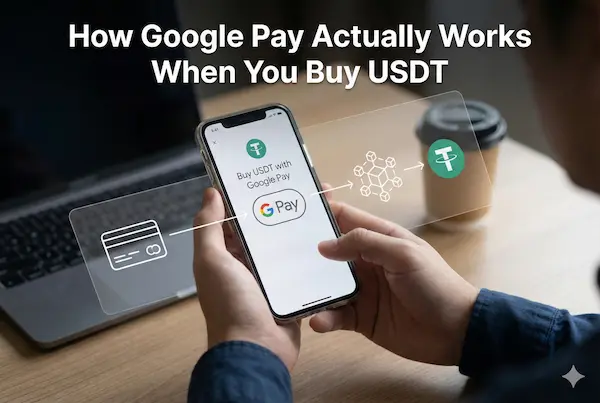
Before you decide on the best network for USDT Google Pay, it helps to see what Google Pay really does in the flow. It is not a crypto wallet or an exchange. It is a payment layer that sits on top of cards and banks, and your app decides which USDT networks you can actually use.
1. What Google Pay really does in a USDT purchase flow
When you tap Google Pay in an exchange or wallet, the app sends a normal card style payment through Google Pay to its payment processor or on ramp partner. Once the fiat payment is approved, the platform credits your account with USDT on a specific network. The card and bank side never see “ERC20” or “TRC20” at all. That choice happens entirely inside the crypto platform.
2. How exchanges, wallets and on ramps plug in Google Pay
Each platform decides how deep Google Pay goes into its system. Some only let you buy USDT on one default network. Others let you pick ERC20, TRC20 or another chain before you confirm payment. Under the hood, the provider routes your fiat through its processor, then mints or assigns USDT on the network you selected, according to its own liquidity and risk rules.
3. Limits, KYC and regional rules that affect your USDT network choice
Your country, bank and KYC level all influence what you see on screen. In some regions, certain networks or on ramp partners are not available at all, even if they exist globally. That is why the best network for USDT Google Pay on paper may not be visible inside your app. In practice, you often start by finding the app that serves your region reliably, then choose the best network available inside that specific platform.
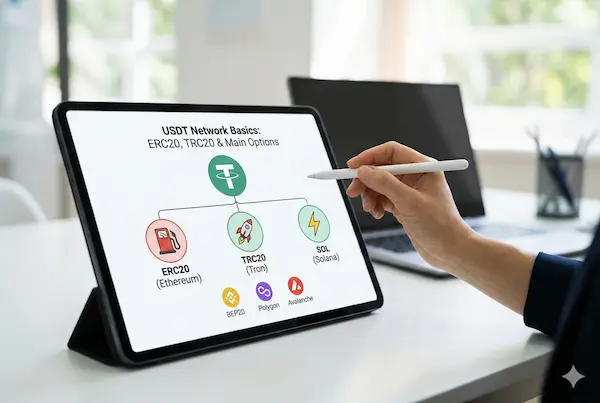
3. USDT Network Basics – ERC20, TRC20 And Other Main Options
Before you can choose the best network for USDT Google Pay, you need to know what you are actually choosing between. USDT is not one single coin on one chain. It is a token that lives on several blockchains, and each network changes how fees, speed and ecosystem feel in real use.
1. How the same USDT exists on many different blockchains
Tether issues USDT on multiple chains, but each version is separate. USDT on Ethereum, Tron or another network will always stay on that chain until you bridge or swap it. When you pick a network at checkout, you are not changing the coin itself, you are choosing which blockchain will hold your balance and handle every transfer after your Google Pay purchase.
2. Core profile of ERC20, TRC20, BSC, Polygon and others
ERC20 USDT lives on Ethereum and benefits from deep liquidity and a rich DeFi ecosystem, but gas fees can be high. TRC20 on Tron is known for cheap and fast transfers, which is why many people use it for frequent moves. USDT on BSC, Polygon or similar chains often sits in the middle, offering lower fees than mainnet Ethereum with varying levels of app and exchange support.
3. Why network choice matters more once Google Pay is in the flow
When you buy with Google Pay, you often only get one or two network options inside a given app. That means your decision about the best network for USDT Google Pay locks in not just your first purchase cost, but also the fees, speed and platform compatibility of every move you make after that. Picking a chain you already see on your main exchanges and wallets will save you far more trouble than chasing the absolute lowest fee in isolation.
4. Key Factors When You Choose The Best Network For USDT Google Pay
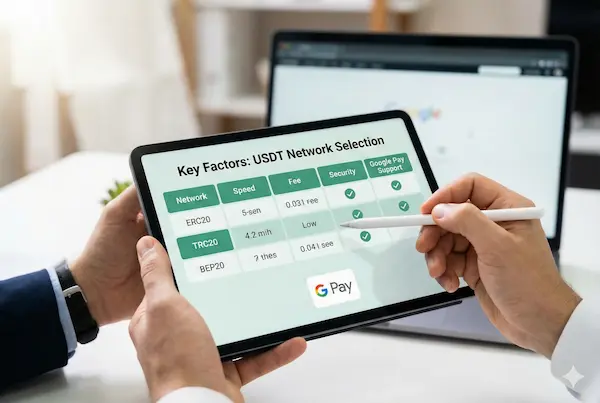
By the time you see network options on screen, you usually have only a few seconds to decide. Instead of guessing, you can break the choice down into a handful of clear criteria – fees, speed, support and risk. When you line those up for your own situation, the best network for USDT Google Pay becomes much easier to spot.
Table 1. Comparing ERC20, TRC20 And A Low Fee Alternative For Google Pay USDT Buyers
| Network | Typical fee level | Speed in normal conditions | DeFi and ecosystem strength | When it is usually the best choice |
|---|---|---|---|---|
| ERC20 (Ethereum) | High, gas based | Medium, can slow at peak times | Very strong DeFi and deep liquidity | Larger buys, long term holding, DeFi use and serious trading |
| TRC20 (Tron) | Very low | Fast, predictable confirmations | Limited but good enough for transfers | Frequent transfers, remittances, on off ramp with low fees |
| Low fee chain (BSC, Polygon, others) | Low to medium | Fast in most cases | Varies by chain and platform support | Users already active on that chain, fee conscious investors |
1. Fees, minimum purchase sizes and hidden charges by network
Network fees hit small buyers hardest. A few dollars of gas on ERC20 can be painful if you are only buying 50 or 100 dollars of USDT, while the same fee is barely noticeable on a four figure trade. On top of chain fees, some platforms add spread, card processing fees or extra charges for using Google Pay. The practical approach is to check the full cost to get USDT into your wallet, not just the advertised gas amount, then decide which combination of app and chain looks like the best network for USDT Google Pay for the amounts you actually move.
2. Speed, confirmation times and risk of failed or stuck transactions
If you move funds between platforms on a tight schedule, speed matters almost as much as price. ERC20 can slow down when the network is busy, which may leave you waiting longer for confirmations. TRC20 and many low fee chains usually confirm faster and more predictably, but you still need to watch for rare congestion or maintenance. Whatever you choose, always test with a small amount first so you know how long a normal transfer takes before you rely on it for something important.
3. Platform support for each network on exchanges, wallets and on ramps
The best chain on paper is useless if your main exchange or wallet does not support it. Before you commit, check which networks your favorite platforms accept for both deposits and withdrawals. Make sure the network you pick at Google Pay checkout appears in the deposit options wherever you plan to send USDT next. A network that is slightly more expensive but widely supported across your tools is often safer than a rock bottom fee option that only a few platforms understand.
5. Deep Dive Into ERC20 When You Buy USDT With Google Pay
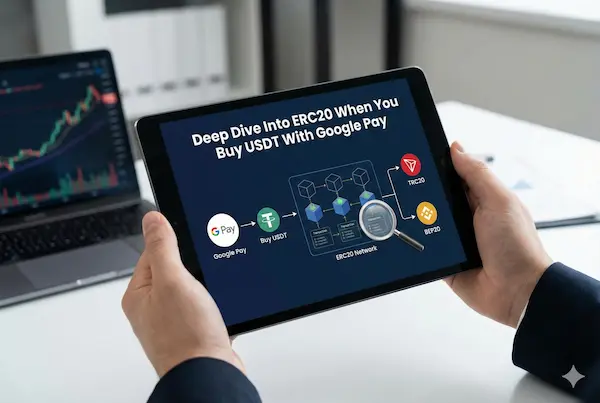
When people hear about ERC20, they usually think of high gas fees before anything else. That is fair, but it hides the reason so many platforms still start here. If you care about deep markets, lending and a wide choice of apps, ERC20 will often sit near the top of your list when you are deciding on the best network for USDT Google Pay.
1. Why many Google Pay on ramps default to ERC20 USDT
On most big exchanges and some wallets, the default USDT network is still Ethereum. It is easier for them to keep most of their USDT liquidity on one chain and plug it into existing trading, staking and custody systems. Card processors and banks also feel more comfortable with long established infrastructure, so on ramps tend to wire their first Google Pay flows to ERC20 and only later add cheaper chains once the core setup is stable.
2. Advantages of ERC20 for liquidity, DeFi and institutions
ERC20 gives you access to the broadest DeFi ecosystem, with lending pools, DEXs, derivatives and many tools built around Ethereum USDT pairs. For long term holders and active traders, this means fewer bridges, less juggling between chains and more direct ways to earn yield or hedge risk. If you know you will spend most of your time in Ethereum based apps, choosing ERC20 from the start keeps your USDT close to where the action is. In that case, ERC20 may be your best network for USDT Google Pay even if each transfer costs more.
3. Drawbacks of ERC20 fees and how to avoid painful gas spikes
Higher fees are the real downside. When gas spikes, even a simple transfer can feel expensive, especially on smaller amounts. You can reduce the sting by batching moves, avoiding peak times and keeping most of your activity on exchange order books rather than constant on chain withdrawals. For very small or frequent payments another low fee chain might still be the best network for USDT Google Pay, while ERC20 stays reserved for larger moves and DeFi strategies.
6. Deep Dive Into TRC20 When You Buy USDT With Google Pay
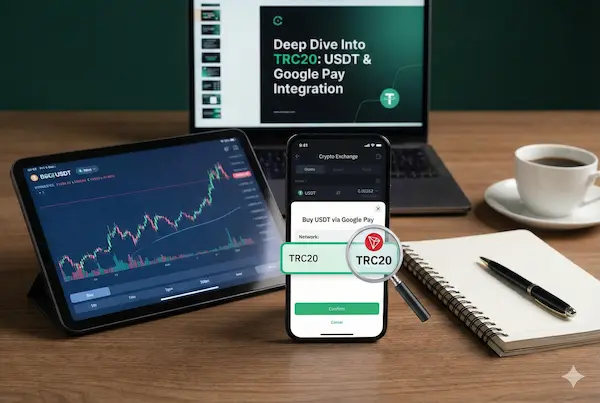
TRC20 is the network most people meet when they want cheap, fast USDT transfers. If you use USDT like a payment rail rather than a DeFi Lego piece, TRC20 often feels like the best network for USDT Google Pay because it keeps each move affordable without much extra setup or bridging.
1. How TRC20 became the everyday low fee choice for USDT
TRC20 grew quickly because it solves a simple pain: on many days, sending USDT on Tron costs only a fraction of an ERC20 transfer. Exchanges and on ramps noticed this and started pushing TRC20 as a standard option for deposits and withdrawals. For users who buy USDT with Google Pay and then move it often, that mix of low fees and predictable speed is hard to ignore.
2. Benefits of TRC20 for remittances and frequent transfers
For remittances, payroll or regular top ups, small savings add up fast. Lower network fees mean more of each Google Pay purchase actually arrives in the recipient wallet. Confirmations are usually quick, so people see funds in minutes instead of waiting through busy Ethereum blocks. If your main goal is to send value reliably every week or every month, TRC20 is a strong candidate for your best network for USDT Google Pay, especially when both your sending and receiving platforms support it smoothly.
3. Risks, ecosystem limits and what to check before relying on TRC20
TRC20 is not perfect. Its DeFi and app ecosystem is smaller than Ethereum, and some platforms still treat Tron as secondary. You need to confirm that every exchange, wallet and service you rely on accepts TRC20 deposits and withdrawals on the exact addresses you plan to use. It is also wise to follow news about network risk and regulation, since attitudes toward different chains can change over time. As long as you keep those checks in mind and test flows with small amounts first, TRC20 can be a practical, cost efficient best network for USDT Google Pay for high frequency, transfer focused users.
7. Other USDT Networks To Consider With Google Pay
Beyond ERC20 and TRC20, USDT lives on chains like BSC, Polygon and a few others. These networks can help you cut fees or match the ecosystem you already use, but they are not always visible in every app. For some users, mixing one of these chains into their setup can be part of the best network for USDT Google Pay strategy, as long as they stay realistic about support and risk.
1. USDT on BSC, Polygon, Solana and similar low fee chains
On BSC, Polygon or Solana, USDT transfers are usually cheap and fast, and many CEXs now support deposits and withdrawals on these networks. They are attractive if you already use those chains for other tokens and want to keep everything in one place. However, app support is less uniform than ERC20, so you should double check that every platform in your flow accepts the specific network you plan to use.
2. When these networks make sense as side wallets or bridges
For many people, these extra networks work best as “side lanes” instead of the main road. You might buy USDT with Google Pay on ERC20 or TRC20, then bridge a portion to BSC or Polygon for cheaper trades, farming or NFT activity. Used this way, they act as tools to optimise costs around your core setup instead of replacing your primary network everywhere.
3. Risks of niche networks and low support in exchanges and wallets
The main downside is uneven support. Some wallets and exchanges list a network for deposits but not for withdrawals, or only for certain pairs. Smaller or newer chains can also face outages or liquidity gaps at bad moments. Before you treat one of these networks as part of your best network for USDT Google Pay plan, send a small test, map out every step of your usual route and make sure you have a clear way back to a more widely supported chain if something changes.
8. Regional And Platform Differences That Affect Your USDT Network Choice
Even if you know exactly which chain you want, you can only choose from what your app and region allow. Banks, regulators and on ramp partners all shape what appears on your screen, so the best network for USDT Google Pay on paper may not match the options you see in practice.
1. How country, regulation and banking partners shape supported networks
Some countries have friendly rules for multiple chains, while others push platforms to stay conservative. In certain regions, providers only offer ERC20 at first and add TRC20 or low fee chains later, once they have tested the flows with local banks and card processors. That is why two users in different countries can open the same app, tap Google Pay and see different USDT network choices.
2. Differences between exchanges, wallets and on ramp services
A global exchange, a non custodial wallet and a local on ramp often plug into different payment partners. One may support several networks when you fund with Google Pay, another may lock you into a single default chain. Some apps even separate networks by product, allowing ERC20 for spot trading and TRC20 only for withdrawals. Your real best network for USDT Google Pay is the one that works smoothly across the specific mix of services you actually use, not the one that looks ideal in a generic comparison table.
3. Common network mixes in key crypto regions
In many Asian markets, TRC20 has become a standard option because low fees and frequent transfers matter most. In parts of Europe and North America, ERC20 often remains the default due to its deeper integration with existing trading and custody systems, with cheaper chains added as secondary options. Before you decide, it is worth opening the apps you rely on, checking which networks they list side by side and then choosing the combination that feels like your personal best network for USDT Google Pay rather than someone else’s.
9. Risk, Security And Compliance When Choosing A USDT Network
Cheaper fees and faster transfers are attractive, but they do not tell the whole story. Each chain has its own risk profile, monitoring tools and regulatory attention, so the best network for USDT Google Pay is also the one that fits your comfort level with security, freezes and changing rules.
1. Smart contract, chain level and governance risks you should know
Every network carries technical and governance risk. Congestion, bugs, validator issues or controversial upgrades can slow transfers, raise fees or in rare cases disrupt the chain. Some networks have long track records and broad communities, others are more concentrated. Before you commit, it is worth asking how mature the chain is, who maintains it and how it has handled stress in the past.
2. How network choice affects freezes, blacklists and custodian responses
Stablecoins can be frozen at the contract level and at the exchange or wallet level. Different networks are monitored in different ways, and some attract closer attention from regulators and compliance teams than others. Your choice of network affects how fast a custodian might react to suspicious activity, how easy it is to trace flows and how likely certain addresses are to be flagged. In practice, this means the best network for USDT Google Pay for a business that needs clean audit trails may not be the same as the best choice for a casual user focused mainly on cost.
3. Why “best” also means workable for future regulation and audits
Rules around stablecoins, privacy and travel rule style reporting are still evolving. A setup that feels perfect today can become uncomfortable if your main chain suddenly faces tighter controls or reduced support from exchanges. To stay flexible, it helps to pick networks that are widely supported, keep simple records of your flows and avoid complex routes you cannot later explain. The best network for USDT Google Pay is the one you can afford, rely on technically and still defend with a clear story if a bank, accountant or regulator ever asks how you use it.
10. Practical Setups And Real World Examples
All the theory becomes easier to use when you see how different people actually buy and move USDT. These examples show how the best network for USDT Google Pay changes with habits, amounts and goals, instead of being one fixed answer for everyone.
1. Small occasional buyer using Google Pay
Imagine someone who buys 50–150 USDT a few times a month to top up one exchange or send a bit to friends. For this profile, high gas fees hurt far more than a slightly smaller ecosystem. A low fee chain that their main app supports smoothly is usually the right choice. They check which networks the exchange accepts for both deposits and withdrawals, pick the cheapest reliable option, do one small test payment with Google Pay, then repeat the same flow each time instead of chasing every new chain.
2. Frequent mover using USDT as a cross border rail
Now think of a user who buys USDT with Google Pay every week and sends it out almost immediately as remittances or business payments. Here, speed and predictable fees matter more than DeFi access. In many cases this person ends up with TRC20 or another low fee chain as their best network for USDT Google Pay, because every dollar saved on fees lands directly in the recipient’s wallet. The key is to make sure both sending and receiving platforms support the same network and to keep one simple, tested route rather than juggling many.
3. Business or merchant settling invoices in USDT
A business that receives larger payments in USDT and sometimes uses DeFi or hedging tools needs deeper liquidity and cleaner audit trails. It might accept deposits on TRC20 for everyday clients but sweep larger balances to ERC20 for treasury, reporting and DeFi use. In that mixed setup, the best network for USDT Google Pay is not a single chain, but a small playbook: which network to use for small customer payments, which for large settlements and how to bridge between them without surprises on fees or compliance.
11. Step By Step Checklist To Choose The Best Network For USDT Google Pay
When you are about to buy and only have a few seconds to decide, a simple checklist keeps you from guessing. Follow these steps each time and you will get much closer to the best network for USDT Google Pay for that specific trade, not just in theory but in real use.
1. Answer a few quick questions before you buy
Ask yourself three things:
- How much USDT am I buying this time
- How often do I expect to move it
- Do I need DeFi and long term holding, or just cheap transfers
If the amount is small and you move funds often, a low fee chain usually makes more sense. If you are buying larger amounts and plan to use DeFi or hold, a deeper ecosystem like ERC20 becomes more attractive.
2. Match your answers to ERC20, TRC20 or another network
Now check which networks your app actually offers for this purchase. For each option, look at the full fee estimate, expected confirmation time and whether your main exchange or wallet supports that chain for deposits and withdrawals. Pick the network that fits your answers from step 1 instead of automatically tapping the first default. In many cases, this simple match is all you need to find the best network for USDT Google Pay for your current goal.
3. Do a small test and write down your working route
Before you trust any new setup, send a small test amount using the network you chose, then confirm that it arrived where you expected, on time and with the fee you were quoted. If everything looks right, save this route in a note or screenshot so you can repeat it later without thinking. Over time you will build one or two tested flows that you know are safe, so each time you buy you are not rethinking the whole decision about the best network for USDT Google Pay, you are just reusing what already works.
FAQs About The Best Network For USDT When You Use Google Pay
1. Which network is usually best for small USDT purchases using Google Pay?
For small and occasional buys, a low fee chain like TRC20 or another cheap option your app supports is usually better than ERC20.
2. Which network is better for large USDT buys and long term holding?
For bigger amounts and longer holding, ERC20 is often preferred thanks to deeper liquidity and better DeFi access.
3. Is ERC20 always better than TRC20?
No. ERC20 is stronger for DeFi and big balances, while TRC20 is usually better for frequent, low value transfers.
4. Is TRC20 safe to use for USDT with Google Pay?
TRC20 is widely used for transfers and remittances, as long as your exchanges and wallets fully support deposits and withdrawals on that network.
5. Can I move USDT from one network to another later?
Yes, but you will need a bridge, swap or exchange withdrawal, and each step adds extra fees and some risk.
6. What happens if I send USDT to the wrong network address?
If the destination does not support that network, the funds can be stuck or lost, so always match network and address carefully before you confirm.
7. Do all platforms that accept Google Pay support every USDT network?
No. Most apps support only a few networks, so always check which chains are listed for buying and withdrawing USDT.
8. How do I quickly pick the best network before I pay?
Check your amount, how often you move USDT and which networks your main exchange supports, then choose the option that fits those three points as your best network for USDT Google Pay.
Conclusion
There is no single chain that is always right for everyone. The best network for USDT Google Pay depends on how big your typical transactions are, how often you move USDT and whether you care more about DeFi tools or about cheap, predictable transfers. Instead of chasing one perfect answer, treat the best network for USDT Google Pay as a small, practical framework you can reuse and adjust when fees or rules change.
Quick summary table: Which USDT Network Fits Which Google Pay User Type
| User type | Top priority | Main network | Backup network |
|---|---|---|---|
| Small, occasional buyer | Low fees per trade | TRC20 or low fee chain | ERC20 |
| Frequent sender, remittance style | Predictable cost, speed | TRC20 | Low fee alt chain |
| Long term holder, DeFi user | Liquidity, DeFi access | ERC20 | One low fee chain |
| Business or merchant | Audit trail, flexibility | ERC20 for treasury | TRC20 for client flow |
Use XaiGate To Lock In The Best Network For USDT Google Pay
To turn this framework into a real workflow, you need a gateway that treats network choice as a first class decision, not a hidden setting. With XaiGate, you can accept Google Pay, buy USDT and test ERC20, TRC20 or other low fee networks on small tickets first. Once you see which route gives you the best mix of cost, speed and support, you can standardise that flow as your operational best network for USDT Google Pay and let your team follow it instead of guessing on every new transaction.
For daily updates, subscribe to XAIGATE’s blog!
We may also be found on GitHub, and X (@mxaigate)!