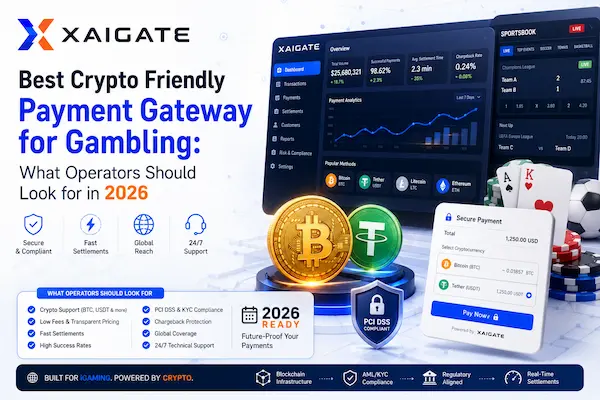
Running a gambling platform without the right payment setup is like building a casino with a locked front door. You may have strong traffic, a polished product, and competitive offers, yet poor payment performance can still choke growth. That is why many operators now search for a crypto friendly payment gateway for gambling instead of relying only on traditional processors. They want faster settlement, broader international reach, lower chargeback exposure, and a payment stack that fits a high-risk business model. In 2026, the smartest choice is not the gateway with the loudest marketing. It is the one that matches your licensing scope, compliance needs, and player payment behavior. Explore the details with XAIGATE in the article below.
Contents
- 1 What Makes a Payment Gateway Truly Crypto Friendly for Gambling
- 2 Compliance Requirements Every Gambling Business Must Check First
- 3 Key Features to Compare Before Choosing a Gambling Crypto Payment Gateway
- 4 Crypto Gateway vs Traditional Payment Processor for Gambling
- 5 Red Flags to Avoid When Evaluating a Crypto Gateway for Online Gambling
- 6 Final Thoughts on Choosing the Best Crypto Friendly Payment Gateway for Gambling
- 7 FAQs – Crypto Friendly Payment Gateway for Gambling
What Makes a Payment Gateway Truly Crypto Friendly for Gambling
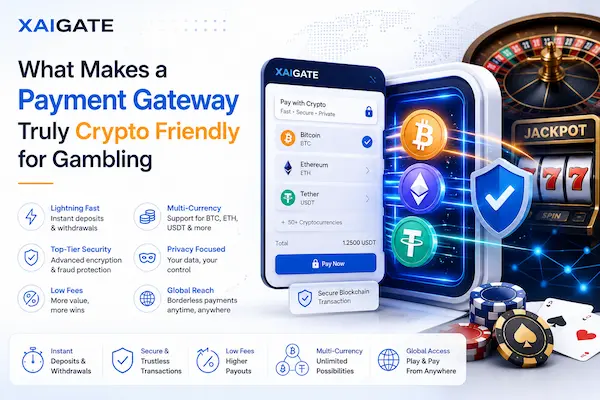
A provider is not truly crypto-friendly just because it accepts a few coins. For gambling operators, the real test is whether the gateway can support a high-risk merchant model, align with compliance obligations, and deliver payment flexibility at scale.
High-risk merchant acceptance matters more than marketing claims
This is the first filter. Some gateways advertise crypto payments for online businesses, but that does not mean they welcome gambling operators. A serious gambling business should look beyond homepage language and verify whether the provider has a real appetite for high-risk verticals, clear onboarding criteria, and operational support for regulated gaming or adjacent use cases. Market comparisons in late 2025 and 2026 increasingly treat high-risk appetite as a core evaluation factor.
- Ask about merchant categories: verify whether casino, sportsbook, betting, or gaming-adjacent models are accepted.
- Check the onboarding path: serious providers explain required documents, jurisdictions, and risk controls.
- Look for vertical fit: a general-purpose gateway may not understand gambling workflows or regulatory pressure.
Flexible settlement options support real operator needs
A gambling operator does not only need a deposit button. The business needs working settlement flows. That may include receiving funds in crypto, converting to stablecoins, or settling into fiat depending on treasury strategy. It may also include payouts to vendors, affiliates, or ecosystem partners. Providers focused on stablecoin and global payouts increasingly present these capabilities as core infrastructure, not optional extras.
- Crypto, stablecoin, or fiat settlement: flexibility protects your treasury model.
- Payout capability matters: operators often need outbound flows as much as inbound collection.
- Speed must be usable: fast settlement only matters when it supports real operational decisions.
Integration, security, and uptime shape player experience
Payment friction hurts conversion. A smooth checkout, clear transaction status, and stable processing flow all influence whether players complete deposits and return to the platform. Security also matters at the infrastructure level. Operators should look for API quality, reporting visibility, transaction traceability, and fraud-related controls rather than focusing only on the front-end payment form. Providers serving gaming and global business payments increasingly emphasize these areas.
- Integration depth: API and hosted checkout options should fit your product stack.
- Operational visibility: finance teams need reporting, tracking, and reconciliation tools.
- Security and reliability: uptime and transaction traceability protect both revenue and reputation.
See more: Insight on Crypto Payment Gateway: A Detailed Analysis of Today’s Crypto Payment Systems
Compliance Requirements Every Gambling Business Must Check First
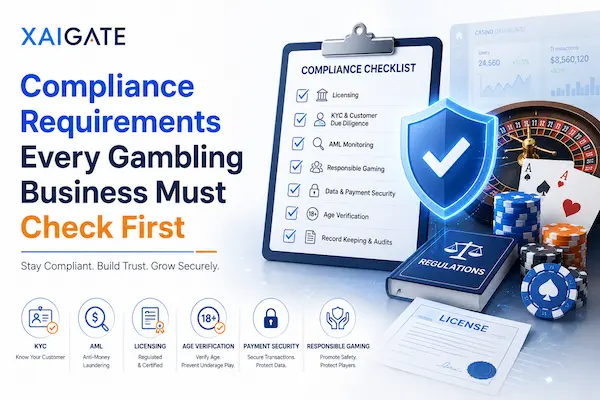
A crypto friendly payment gateway for gambling only adds value when it fits your legal and operational framework. Compliance is not a box to tick at the end. It is one of the first things that should shape provider selection.
Licensing coverage and jurisdiction fit should come before onboarding
No gateway is ideal for every market. Operators must first map where they are licensed, where their users are located, and which payment flows the provider can legally support. A gateway may look strong on pricing and features but still fail on jurisdictional fit. That mismatch can create onboarding delays, account restrictions, or future disruptions.
- Start with geography: confirm supported regions before technical integration.
- Match licensing scope: your payment partner must align with the legal model of your business.
- Plan for future markets: scaling later is easier when the provider already supports expansion.
AML, KYC, and KYT controls are not optional in gambling
Gambling and crypto both attract regulatory attention, so the overlap requires tighter controls. Providers that support serious business use cases increasingly emphasize compliance infrastructure, transaction traceability, and the need for authorization across fiat and digital asset flows. That matters because weak controls can expose operators to account freezes, enforcement risk, and damaged banking relationships.
- AML reduces platform risk: it helps detect suspicious patterns before they become major problems.
- KYC supports defensible onboarding: regulators expect stronger identity checks in sensitive sectors.
- KYT improves transaction monitoring: blockchain visibility matters when handling digital assets at scale.
Custodial vs non-custodial structure affects risk and control
The custody model changes how funds are handled, how much control the operator keeps, and where certain compliance duties sit. Some businesses prefer provider-managed simplicity, while others value stronger internal control over wallets and settlement. The right model depends on your risk appetite, treasury design, and technical capacity. This should be a strategic decision, not an afterthought.
Key Features to Compare Before Choosing a Gambling Crypto Payment Gateway
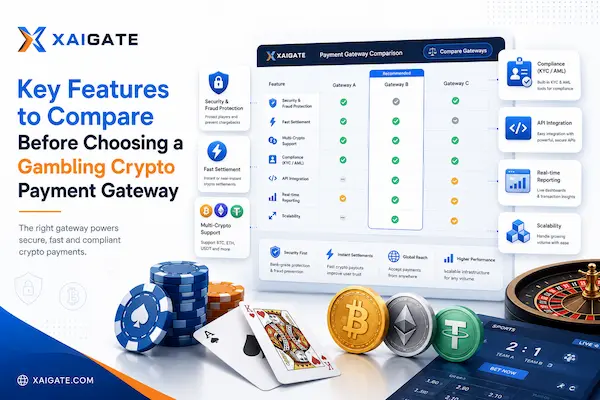
Once the compliance and risk basics are clear, operators should compare gateways using practical business criteria instead of marketing slogans.
| Evaluation factor | Why it matters | What to verify |
| Merchant acceptance | Prevents wasted onboarding time | Does the provider accept gambling or high-risk merchants? |
| Supported assets | Shapes player payment choice | Which coins, stablecoins, and networks are supported? |
| Settlement options | Impacts treasury and accounting | Can you settle in crypto, stablecoins, fiat, or a mix? |
| Compliance controls | Protects long-term operations | What AML, KYC, and monitoring tools are included? |
| Integration quality | Affects launch speed and UX | API, plugins, hosted checkout, reporting, webhooks |
| Payout support | Helps full-cycle operations | Are vendor, affiliate, or global payout flows supported? |
| Pricing transparency | Controls real margins | Fees, FX spreads, conversion costs, reserves, withdrawal charges |
Supported coins, stablecoins, and network coverage
More assets do not always mean better performance. Operators should focus on the coins their target users actually prefer, along with the stablecoins and networks that make settlement efficient. A gateway that supports the right mix will usually outperform one with a long asset list but weak operational fit.
Deposit flow, withdrawal flow, and back-office visibility
Deposits are only one part of the payment journey. Gambling businesses also need strong reporting, transaction tracking, and back-office tools that help finance and compliance teams work faster. A gateway should support clear operational workflows, not just checkout completion.
Pricing, transaction fees, and hidden operational costs
Low headline fees can be misleading. The true cost may include FX spreads, conversion costs, settlement charges, reserve structures, or withdrawal fees. Operators should compare the full payment model, not just the first number shown on a pricing page.
See more: How to Reduce Crypto Payment Gateway Fees
Crypto Gateway vs Traditional Payment Processor for Gambling
This comparison helps clarify why more operators are evaluating crypto-native or crypto-friendly options as part of their 2026 payment stack.
| Criteria | Crypto-friendly gateway | Traditional processor |
| High-risk fit | Often designed with more flexibility for digital and cross-border use cases | May be more restrictive for gambling merchants |
| Chargeback exposure | Generally lower with blockchain-based payment flows | Higher exposure through cards |
| Cross-border reach | Strong for global digital users | Depends heavily on local banking and card support |
| Settlement flexibility | Crypto, stablecoin, and sometimes fiat options | Mostly fiat-based and bank-tied |
| User accessibility | Useful for players comfortable with digital assets | Familiar for mainstream card users |
| Compliance burden | Requires strong crypto compliance controls | Requires conventional payment compliance and banking support |
Red Flags to Avoid When Evaluating a Crypto Gateway for Online Gambling
Many operators lose time by focusing on branding before qualification. The safer approach is to screen out weak options early.
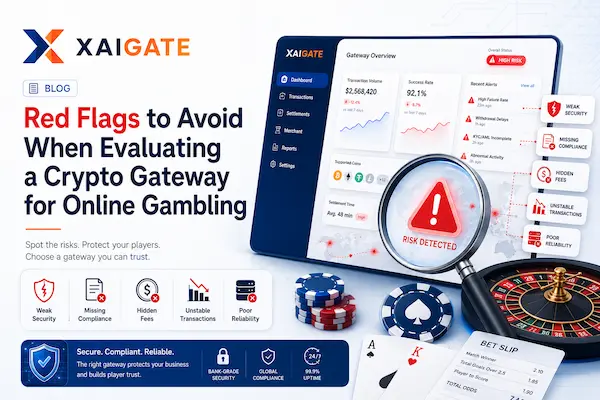
- No clear stance on gambling merchants: if the provider avoids the question, treat that as a warning sign.
- Vague compliance language: serious providers explain how they handle AML, KYC, licensing, and monitoring.
- Weak settlement transparency: you should know how funds move, when they settle, and in which currencies.
- Poor reporting detail: if the finance team cannot reconcile transactions easily, operations will suffer.
- Unclear total pricing: hidden costs can erase the benefit of a low processing fee.
Final Thoughts on Choosing the Best Crypto Friendly Payment Gateway for Gambling
Choosing the best crypto friendly payment gateway for gambling is not about chasing the provider with the most coins or the boldest claims. It is about selecting infrastructure that matches your merchant profile, jurisdiction, compliance burden, settlement needs, and player payment habits. In 2026, the market is clearly moving toward faster digital settlement, stronger stablecoin usage, and more specialized support for cross-border businesses. At the same time, mainstream merchant acceptance is still developing, which makes provider selection even more important.
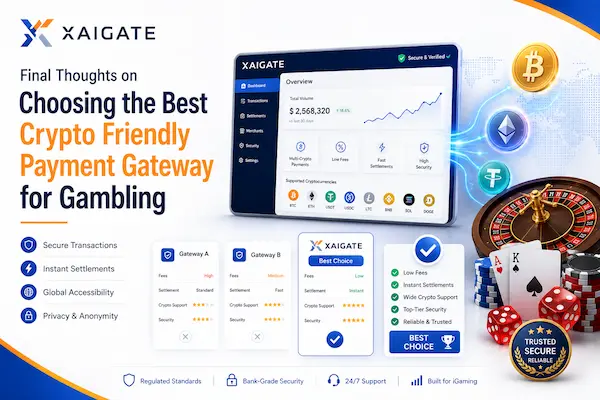
If your platform needs a payment partner that understands high-risk commerce, supports crypto-friendly operations, and helps you scale with more control, XAIGATE is the conversation worth starting now.
For daily updates, subscribe to XAIGATE’s blog!
We may also be found on GitHub, and X (@mxaigate)!
FAQs – Crypto Friendly Payment Gateway for Gambling
1. What is a crypto friendly payment gateway for gambling?
It lets licensed gambling sites accept crypto payments.
2. Why do gambling operators use crypto payments?
They support faster, global, and more flexible transactions.
3. Can gambling sites accept stablecoins?
Yes, many gateways support USDT, USDC, and other stablecoins.
4. Do crypto payments reduce chargebacks?
Yes, blockchain payments are generally irreversible.
5. Is compliance still required?
Yes, operators still need licensing, KYC, AML, and monitoring.
6. Can crypto gateways support withdrawals?
Yes, some gateways support both deposits and withdrawals.
7. What features matter most?
Compliance, reporting, settlement, security, and API integration.
8. Is crypto gambling payment processing high-risk?
Yes, gambling is a regulated high-risk merchant category.
9. Is XAIGATE suitable for gambling operators?
Yes, for licensed operators needing crypto-friendly payment tools.
10. What should operators check first?
Check license rules, KYC/AML, supported coins, fees, and settlement.