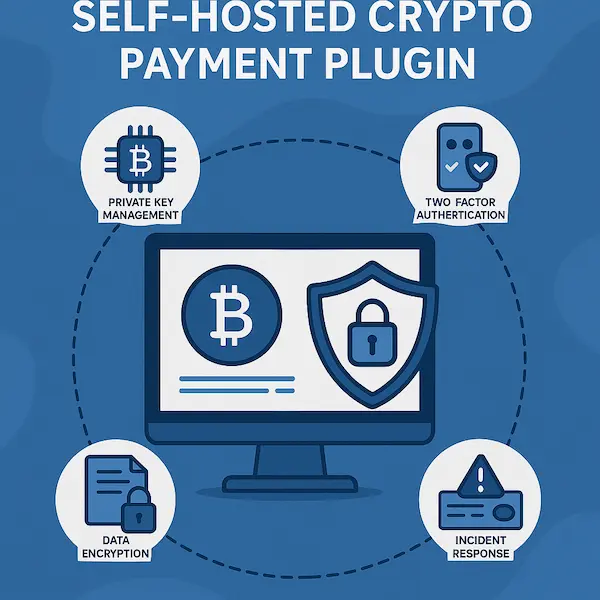
As the cryptocurrency industry matures, more businesses are turning to self-hosted crypto payment plugins to gain full control over their transactions and customer data. Unlike centralized payment gateways, these plugins empower merchants to process crypto payments directly, without intermediaries.
However, self-hosting also introduces new security responsibilities. If not properly secured, these plugins can become a point of failure, exposing private keys, transaction data, and customer funds. In this guide, we break down the top security measures every business must implement to protect their self-hosted crypto payment plugin in 2025.
Why Choose a Self-Hosted Crypto Payment Plugin?
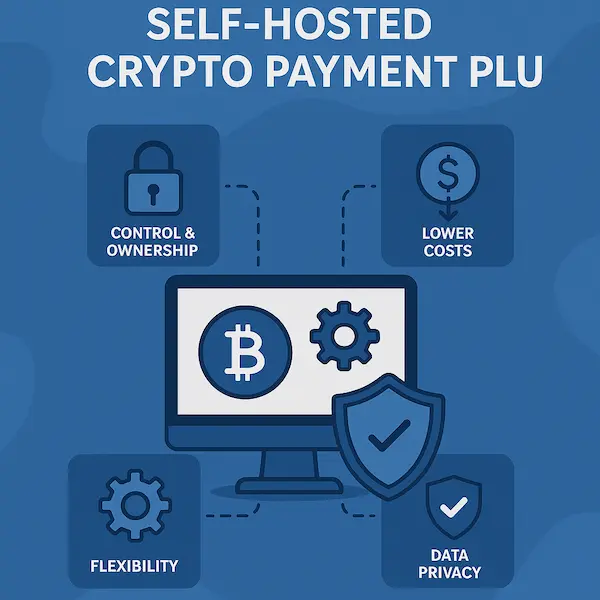
- Complete Data Ownership: Avoid third-party storage of sensitive financial data.
- Reduced Transaction Fees: Eliminate middlemen and their associated costs.
- Customizable Workflow: Tailor your plugin to match your business’s technical requirements.
- Regulatory Independence: Remain flexible across jurisdictions with varying crypto regulations.
Despite these advantages, self-hosting means you are solely responsible for its security.
Threat Landscape in 2025 for Crypto Payment Systems
The cyber threat environment continues to evolve. Self-hosted plugins are particularly vulnerable to:
- Phishing attacks targeting admin interfaces.
- Exposed private keys due to poor file permission settings.
- Man-in-the-middle (MITM) attacks during checkout processes.
- API abuse from improperly authenticated third-party services.
- Zero-day exploits in open-source components.
Understanding these risks is the first step in building a robust defense strategy.
Essential Security Practices for Self-Hosted Crypto Payment Plugins
1. Host Your Plugin in a Secure Environment
- Choose VPS or cloud providers with strong reputations (e.g., AWS, DigitalOcean).
- Ensure the operating system is regularly updated.
- Use containerization (Docker) to isolate services.
- Enable firewalls and disable unused ports.
2. Use HTTPS with Valid SSL Certificates
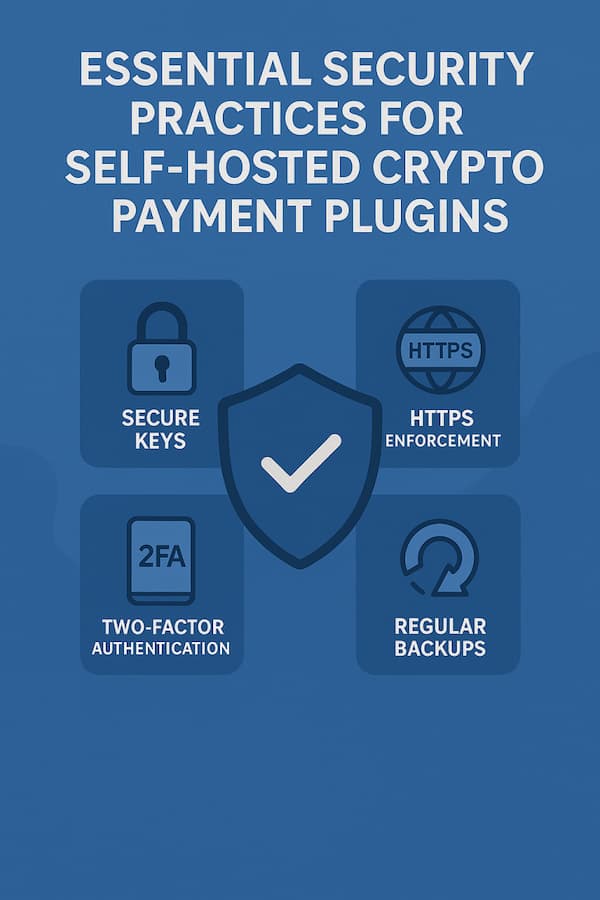
- Enforce HTTPS on all routes.
- Use a certificate authority like Let’s Encrypt or Sectigo.
- Implement HTTP Strict Transport Security (HSTS).
3. Safeguard Your Private Keys
- Never store private keys in plaintext.
- Use hardware security modules (HSMs) or encrypted keystores.
- Apply strict file permissions (e.g., chmod 600) and isolate access.
4. Enable Two-Factor Authentication (2FA) for Admin Access
- Use apps like Google Authenticator or Authy.
- Combine 2FA with role-based access control.
- Regularly review and rotate admin credentials.
5. Regularly Patch and Update
- Monitor plugin repositories for security advisories.
- Automate dependency updates via GitHub Dependabot.
- Follow a structured CI/CD pipeline with security checks.
Explore our full guide to open-source payment solutions here:
👉 Open-Source Crypto Payment Gateway Plugin
Implementing Transaction-Level Security
1. Secure Webhooks
- Validate webhook signatures.
- Rate-limit incoming requests.
- Implement IP whitelisting.
2. Monitor for Anomalies
- Track irregular transaction volumes.
- Use tools like Sentry, New Relic, or self-hosted ELK stack.
3. Anti-Fraud Integration
- Implement risk scoring for wallet addresses.
- Use blacklists for suspicious IPs and domains.
Backups, Disaster Recovery, and Incident Response
- Schedule encrypted backups of wallet data, transaction logs, and system configurations.
- Store backups in geographically redundant locations.
- Prepare an incident response plan: define detection, containment, recovery, and reporting procedures.
Developer Best Practices
Code Audits and Penetration Testing
- Conduct third-party code reviews annually.
- Use automated scanners like SonarQube.
Secure Development Lifecycle (SDLC)
- Implement threat modeling during design phase.
- Use Git commit signing and protected branches.
Secrets Management
- Store credentials in secure vaults like HashiCorp Vault or AWS Secrets Manager.
- Avoid hardcoding API keys and passwords.
Compliance Considerations in 2025
While a self-hosted crypto payment plugin offers flexibility, you still need to comply with:
- Data protection laws: GDPR, PDPA, or CCPA, depending on region.
- Local crypto regulations: licensing requirements may apply.
- Tax reporting: Keep records of crypto revenue for audits.
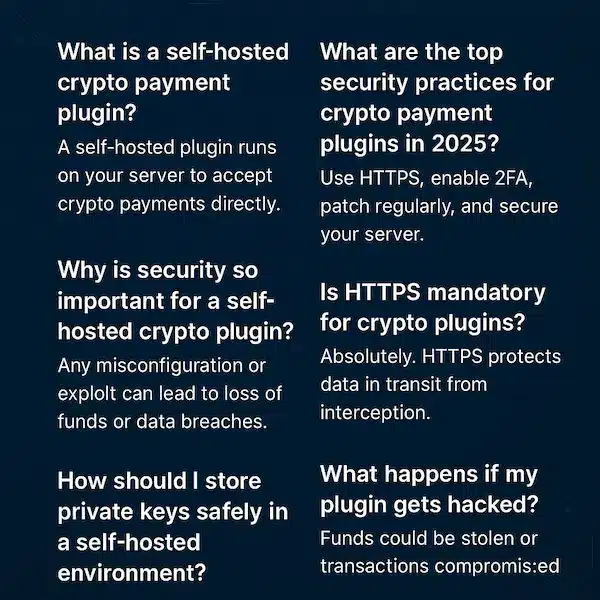
FAQs – Self-Hosted Crypto Payment Plugin Security
1. What is a self-hosted crypto payment plugin?
A self-hosted crypto payment plugin is a software tool you run on your own server that enables your website or app to accept cryptocurrency payments directly, without third-party intermediaries.
2. Why is security so important for a self-hosted crypto plugin?
Because you’re managing transactions, private keys, and customer data independently, any misconfiguration or exploit can lead to loss of funds or data breaches. Strong security practices are non-negotiable.
3. How should I store private keys safely in a self-hosted environment?
Always encrypt private keys and store them in secure vaults or hardware security modules (HSMs). Never keep them in plaintext or within public web directories.
4. What are the top security practices for crypto payment plugins in 2025?
Key practices include using HTTPS, enabling 2FA, patching your plugin regularly, securing your server environment, encrypting all sensitive data, and performing routine backups.
5. What happens if my plugin gets hacked?
If a self-hosted crypto payment plugin is compromised, attackers may steal funds, access private keys, or manipulate transactions. That’s why having an incident response plan and backup strategy is essential.
6. How often should I update my self-hosted plugin?
You should monitor the official repository of your plugin weekly and apply security patches immediately. Delayed updates are one of the most common causes of breaches.
7. Can I comply with data privacy laws using a self-hosted crypto plugin?
Yes, but only if your plugin is configured correctly. You must implement data encryption, user consent mechanisms, and maintain proper transaction logs to comply with GDPR, CCPA, and similar laws.
8. Do I need developer knowledge to secure a crypto plugin?
Basic server administration and familiarity with cybersecurity best practices are recommended. If you’re not confident, hiring a blockchain security expert is advisable.
Conclusion: Security is Not a One-Time Task
Securing a self-hosted crypto payment plugin is not a set-it-and-forget-it task. It requires a proactive approach that includes regular updates, continuous monitoring, employee training, and robust contingency planning. The goal is simple: never let a security vulnerability turn into a customer trust crisis.
By implementing the security best practices outlined in this guide, businesses can confidently embrace self-hosted crypto payment solutions while minimizing risk.
We may also be found on GitHub, and X (@mxaigate)! Follow us!
Don’t miss out on the opportunity to elevate your business with XAIGATE’s Open-source web3 payment gateway . The three-step process is designed to be user-friendly, making it accessible for all busineses. Embrace this modern payment solution to provide customers with a secure and efficient way to pay. Take the first step towards a competitive edge in the digital realm and unlock the benefits of cryptocurrency payments for online casino today.
As a trusted leader in self-hosted crypto plugins, open-source crypto payment gateways, and secure blockchain transaction tools, XAIGATE empowers developers and businesses to process crypto payments with full control and compliance.