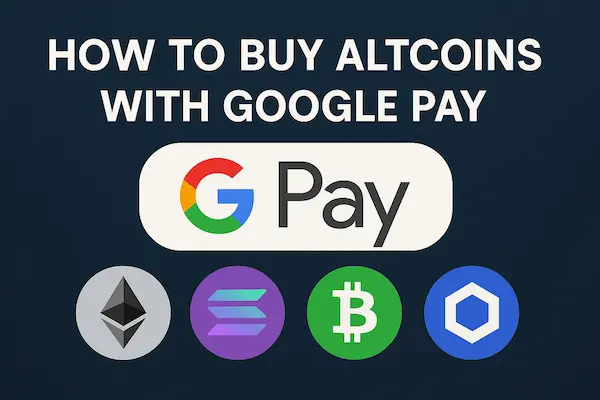
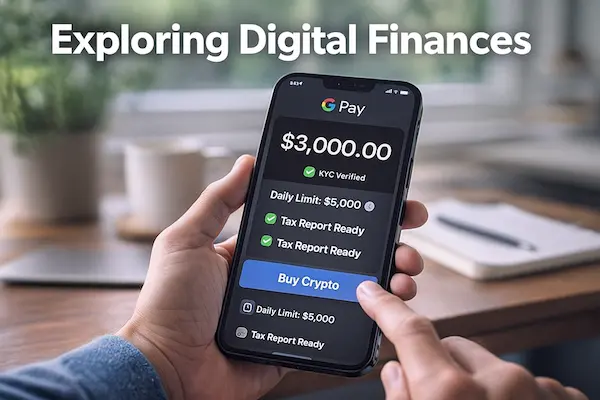
Buying crypto with Google Pay feels almost like paying for a streaming service: tap, confirm, done. Behind that smooth button, though, there are strict rules about who you are, how much you can spend and how your activity may appear on a tax form later. This guide walks through the real KYC requirements to buy crypto with Google Pay, how platforms decide your limits and what you should prepare so that your next purchase is fast, compliant and easier to report if needed.
Contents
- 1 1. Why KYC Matters When You Buy Crypto with Google Pay
- 2 2. KYC Requirements To Buy Crypto with Google Pay
- 3 3. Identity Checks Beyond Google Pay: What Exchanges Need
- 4 4. Regional Differences In KYC Requirements To Buy Crypto with Google Pay
- 5 5. How Google Pay, Banks And Exchanges Together Shape Your Limits
- 6 6. Typical Limit Tiers When You Use Google Pay For Crypto
- 7 7. Risk Checks Behind The Scenes For Google Pay Crypto Buys
- 8 8. Tax Basics When You Buy Crypto with Google Pay
- 9 9. Country Specific Tax Considerations For Google Pay Crypto Purchases
- 10 10. Privacy, Data Protection And How Your KYC Data Is Stored
- 11 11. Compliance Red Flags When You Buy Crypto with Google Pay
- 12 12. Balancing Fast Google Pay Checkouts With Safe KYC Practices
- 13 13. Where A Compliant Gateway Like XaiGate Fits In Your Google Pay Crypto Flow
- 14 14. Case Studies: Real Users And Businesses Buying Crypto With Google Pay
- 15 FAQs About KYC Requirements To Buy Crypto with Google Pay
- 16 Conclusion: One Page KYC, Limits And Tax Checklist For Google Pay Crypto Buyers
1. Why KYC Matters When You Buy Crypto with Google Pay
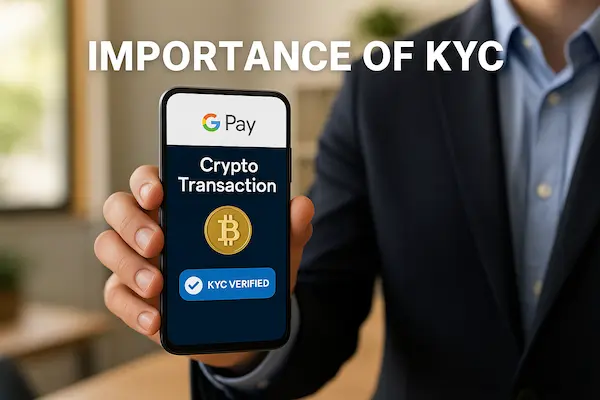
When you use Google Pay to fund a crypto purchase, you are touching both the banking system and the crypto world at the same time. That is exactly where regulators, card networks and exchanges pay the most attention.
1. From Anonymous Trading To Regulated Fiat On Ramps
In the early days, many traders moved value with almost no questions asked. Today, the strictest controls sit on the points where fiat enters and leaves crypto, so any serious platform that accepts Google Pay is expected to know who is behind each payment.
2. Why Card And Wallet Funded Crypto Gets Extra Scrutiny
Card and wallet payments can be reversed through chargebacks, while blockchain transfers cannot. If stolen cards are used to buy crypto, exchanges and payment partners can be left holding the loss, so they apply stronger screening to these flows than to simple deposits from a known bank account.
3. How Exchanges Tighten KYC When You Connect Google Pay
Most platforms now link payment options to your verification tier. New users might only get small Google Pay limits until ID checks are complete, and larger volumes usually require full documents and extra reviews. That is why KYC requirements to buy crypto with Google Pay keep getting tighter as regulators and payment partners raise the bar.
2. KYC Requirements To Buy Crypto with Google Pay
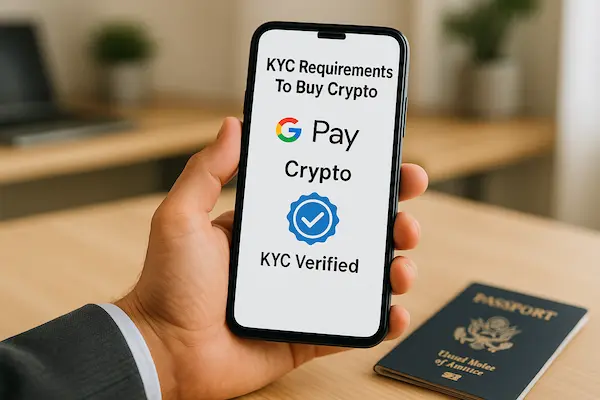
Most buyers just want to know what will be asked, what it unlocks, and when extra checks start. This is the short version of the KYC requirements to buy crypto with Google Pay.
1. One Sentence Definition Of KYC Requirements To Buy Crypto with Google Pay
KYC requirements to buy crypto with Google Pay are the identity and document checks a crypto platform must complete on you before it lets you fund purchases through Google Pay at different limit levels.
2. Basic KYC Checklist Before Your First Google Pay Crypto Purchase
Be ready to share:
- Full name, date of birth and address
- Email, phone and confirmation codes
- Photo or scan of a government ID
- Sometimes a quick selfie to match your face to the ID
3. What Changes When You Move From Light KYC To Full KYC
As you ask for higher limits, platforms usually add:
- Proof of address such as a bank or utility bill
- Simple questions about source of funds and purpose
- Occasional requests for updated documents or a fresh selfie
TLDR – KYC when you buy crypto with Google Pay
- At minimum: name, address, ID and contact details
- Higher limits always mean deeper questions and checks
- Keep clean copies of ID and proof of address ready in advance
KYC levels when you buy crypto with Google Pay – what to expect
| KYC level | Typical data required | Usual buy and withdrawal limits | Extra risk checks | When you are asked to upgrade |
|---|---|---|---|---|
| View only | Email and password, no verified identity | No buys or very small test amounts | Basic device and IP checks | When you try to place your first real order |
| Basic KYC | Name, date of birth, address, verified email and phone | Low daily and monthly buy limits | Simple fraud and sanctions screening | When you approach starter limits regularly |
| Full KYC | Government ID, selfie, proof of address | Medium to high buy and withdrawal caps | Deeper risk scoring and manual review | When you request higher limits or large withdrawals |
| Enhanced KYC | Extra documents on income and source of funds | Highest limits and access to more products | Ongoing monitoring and periodic refresh | When your volumes or patterns trigger extra review |
3. Identity Checks Beyond Google Pay: What Exchanges Need
Google Pay knows your card and device, but it does not replace exchange KYC. Trading platforms still need their own view of who you are before they trust wallet funded crypto buys.
1. Personal Information: Name, Address And Date Of Birth
The first layer is simple profile data. Most platforms ask for your full legal name, date of birth, country of residence and current address. They use this to check you against sanction lists, blocked countries and age rules, and to make sure your details match the card or bank backing your Google Pay account.
2. Document Verification: ID, Passport And Proof Of Address
Next comes proof. You are usually asked to upload a government ID such as a passport or national ID card, and sometimes a separate proof of address like a bank statement or utility bill. Automated systems read the document, check security features and compare key fields with the personal data you typed in earlier.
3. Biometric Checks And Liveness Tests At Higher Tiers
For higher limits, many platforms now ask for a selfie or short video. The goal is to confirm there is a real person present and that their face matches the ID. Simple liveness tests, such as turning your head or reading a short code, help prevent stolen documents from being reused. Once you understand these layers, it is easier to see how they support the KYC requirements to buy crypto with Google Pay instead of feeling like random extra hurdles.
4. Regional Differences In KYC Requirements To Buy Crypto with Google Pay
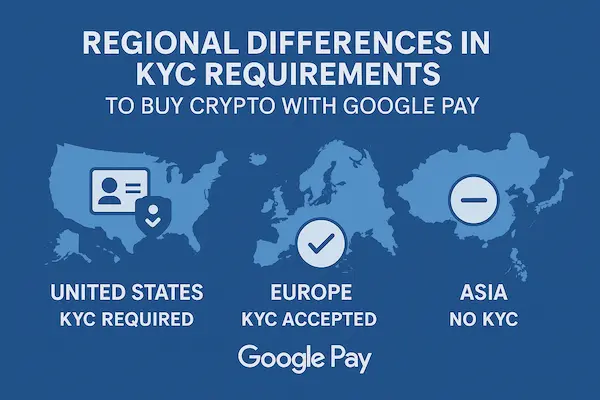
The core idea is the same everywhere, but how strict KYC requirements to buy crypto with Google Pay feel will depend a lot on your country.
1. United States and Canada
Platforms that accept Google Pay usually ask for full ID and address before giving real limits. Larger amounts can trigger extra questions about your job, source of funds and trading purpose, and your verified profile is often tied to tax forms or yearly summaries.
2. Europe and UK
In Europe and the UK, AML rules and strong customer authentication are standard. Even small Google Pay buys can require clear identification, plus 2 factor checks on payments. Higher tiers bring the usual ID and proof of address, plus ongoing monitoring for unusual patterns.
3. Asia Pacific snapshots: Singapore, India, Indonesia and Vietnam
In Asia Pacific the picture is mixed. Hubs like Singapore push for fully licensed players with strict KYC. India and Indonesia blend banking rules with evolving crypto guidance, so requirements vary by platform. Many users in markets such as Vietnam rely on global exchanges that still apply full KYC and tiered limits before allowing larger Google Pay funded purchases.
5. How Google Pay, Banks And Exchanges Together Shape Your Limits
Your real limit is not decided in one place. Google Pay, your bank or card issuer and the crypto platform all run their own checks before a buy goes through.
1. Daily And Monthly Limits On Google Pay And Card Networks
Google Pay itself follows limits set by your card network and bank. They may cap how much you can spend per transaction, per day or per month, especially on payments marked as high risk. If you hit those ceilings, the crypto order can fail even if the exchange is happy and you still have money in your account.
2. Exchange Limits Based On KYC Tier And Risk Scoring
Exchanges add their own tiers on top. New or lightly verified users get small daily or monthly buy caps, while fully verified accounts can move more. Risk engines also look at how often you buy, which countries are involved and whether patterns match normal behaviour. A sudden jump in size or frequency can trigger temporary holds while the platform rechecks your KYC requirements to buy crypto with Google Pay.
3. Why Payments Can Fail Even When Your Balance Looks Fine
Because three systems are involved, a payment can be declined for several reasons at once. Your bank might block the merchant category, the card network may see the flow as unusual, or the exchange might decide a single order is too large for your current tier. When that happens, support teams often suggest raising KYC level, lowering the ticket size or trying again after the next reset of daily or monthly limits.
6. Typical Limit Tiers When You Use Google Pay For Crypto
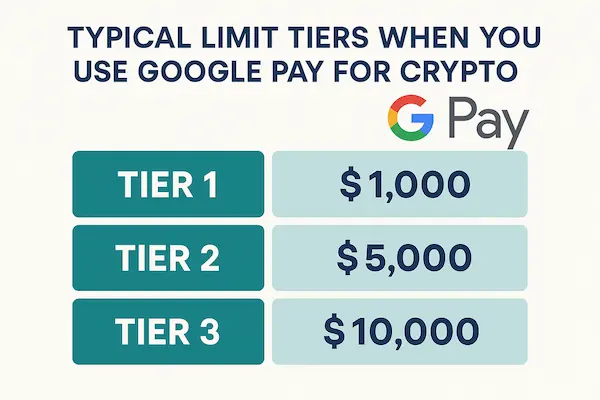
Most platforms group buyers into tiers. Each tier has its own mix of limits and checks, so more freedom almost always means deeper KYC requirements to buy crypto with Google Pay.
1. Low Limit Accounts For First Small Google Pay Crypto Buys
Starter tiers usually allow only small test purchases. You give basic profile details and light ID checks, and in return you get low daily and monthly caps that are enough to try Google Pay once or twice without committing large funds.
2. Medium Tier Accounts For Regular Google Pay Purchases
After full ID and proof of address, most exchanges move you into a standard tier. Limits rise to levels that fit regular retail buyers or small dollar cost averaging plans. Risk engines watch frequency, size and country patterns and may ask you to refresh documents from time to time.
3. High Limit Accounts For Active Traders And Business Use
High and professional tiers are designed for larger flows. Here you can expect extra questions on income, source of funds and sometimes supporting bank statements. Big Google Pay orders may be held briefly for manual review before they clear, especially if they break your usual pattern.
Limit tiers and KYC requirements when buying crypto with Google Pay
| Tier | Example daily or monthly limit | KYC data required | Typical user profile | Extra checks or cooling periods |
|---|---|---|---|---|
| Starter | Very small test buys | Basic profile, verified email and phone | New users trying Google Pay a few times | Simple fraud checks, blocks on repeated failed attempts |
| Standard | Modest daily and monthly buy caps | Full ID and proof of address | Regular retail buyers and small DCA users | Occasional document refresh and pattern monitoring |
| Advanced | High daily and monthly transaction caps | Full KYC plus questions on source of funds | Active traders and higher net worth users | Manual review on large or unusual Google Pay purchases |
| Professional | Custom or very high limits | Enhanced due diligence and extra documents | Business accounts and institutional clients | Ongoing monitoring, stricter cooling periods after spikes |
Understanding how these tiers work makes it easier to plan your volume around the KYC requirements to buy crypto with Google Pay before you start pushing higher limits.
7. Risk Checks Behind The Scenes For Google Pay Crypto Buys
Even after you meet the KYC requirements to buy crypto with Google Pay, exchanges still decide in real time whether each order looks safe enough to approve instantly.
1. Velocity Checks And Unusual Patterns
Risk engines watch how often you buy, from which devices and in what size. Sudden spikes, repeated small attempts or new logins from high risk locations can trigger extra checks or short delays.
2. Chargeback Risk On Google Pay Purchases
Because Google Pay sits on top of cards and bank accounts, chargebacks are always a concern. First time users placing large orders or accounts with a history of disputes often face tighter limits and more manual review.
3. Triggers For Freezes And Extra Verification
Large jumps in volume, mismatches between your stated country and IP address, or links to flagged wallets can lead to temporary freezes or requests for new documents. These checks are how platforms enforce their own risk rules on top of the KYC requirements to buy crypto with Google Pay.
8. Tax Basics When You Buy Crypto with Google Pay
Tax offices care less about which button you tap and more about what you buy, sell and report. The same data used to meet KYC requirements to buy crypto with Google Pay is what makes your activity easy to trace later.
1. What Counts As A Taxable Event
In many countries, buying with fiat is not taxed, but selling, swapping to other coins or spending crypto usually is. Treat every Google Pay purchase as the start of a position you may need to declare.
2. Cost Basis And Simple Records
For each buy, note the date, fiat amount, crypto amount and fees. Export history from your exchange and keep it with Google Pay receipts so you can rebuild your cost basis if systems change or accounts close.
3. Small Buys, Big Paperwork
Regular small Google Pay buys can turn into a long list by year end. Clean, simple records that match your verified identity and the KYC requirements to buy crypto with Google Pay will save you time and stress when tax season arrives.
9. Country Specific Tax Considerations For Google Pay Crypto Purchases
Tax rules differ by country, but the patterns repeat. The same data used to meet KYC requirements to buy crypto with Google Pay often feeds into how your trades are reported and taxed.
1. Capital Gains Versus Income
Some countries treat most crypto profits as capital gains, others may tax frequent trading or staking rewards as income. Using Google Pay does not change the category by itself, but it does make your entry and exit points easier to trace, especially when they are tied to a verified profile and card.
2. Reporting Thresholds, Returns And Exchange Statements
Many tax offices set thresholds where you must declare activity or file specific forms. Exchanges that support Google Pay often provide yearly summaries or exportable CSV files that match your bank and wallet records. It is still your job to check local rules and make sure those reports cover every account you use.
3. Cross Border Reporting And Information Sharing
Cross border rules, travel rule requirements and data sharing between jurisdictions mean your activity may be visible beyond your home country, especially if you trade on large global platforms. Clean records that match your verified identity and the KYC requirements to buy crypto with Google Pay reduce the risk of painful questions if one tax authority asks how you funded your positions.
10. Privacy, Data Protection And How Your KYC Data Is Stored
Sharing documents and selfies is a big step. Understanding where that data goes is part of staying in control while you meet the KYC requirements to buy crypto with Google Pay.
1. Where KYC Data Is Usually Stored And For How Long
Most platforms keep your KYC files in encrypted databases, often in specific regions to match local rules. Policies usually state how long they retain ID images, proof of address and logs of your Google Pay funded transactions. If a platform cannot explain storage locations and timelines in simple language, it is harder to trust it with data created by the KYC requirements to buy crypto with Google Pay.
2. Data Sharing Between Exchanges, Payment Partners And Analytics Tools
Exchanges often share limited information with payment partners, fraud tools and sometimes banking or analytics providers. In a good setup this is tightly scoped to what is needed for risk checks and compliance, not broad access to your full profile. Look for clear sections that say who data is shared with, for what purpose and whether any information is sold for marketing.
3. How To Read A Privacy Policy Before You Upload Anything
Before you upload an ID, skim the privacy policy for three things: what data is collected, who it is shared with and how you can delete or export it. Check if there is a simple contact route for data questions, not only general support. If you still feel unsure after that quick review, consider walking away before your documents ever leave your device.
11. Compliance Red Flags When You Buy Crypto with Google Pay
Not every service that accepts Google Pay has strong compliance. Spotting a few warning signs early helps you avoid platforms that will struggle to meet the KYC requirements to buy crypto with Google Pay when regulators or payment partners look closer.
1. Services Advertising “No KYC” But Accepting Google Pay
If a site loudly promises “no KYC” yet claims to support Google Pay for meaningful amounts, treat it as a major red flag. Card and wallet partners expect solid checks on who is buying crypto. A platform that ignores this today can be forced to freeze accounts, block countries or exit card and wallet rails with very little notice.
2. Confusing Licence Claims And Offshore Only Operations
Be careful with platforms that show a wall of logos and vague licence numbers but never explain which entity you are dealing with. If everything runs through a small offshore company, with no clear registration in the markets it targets, your position is weaker when something goes wrong or extra KYC is suddenly requested.
3. Weak Support When KYC Or Limit Problems Appear
You will only see how serious a platform is when something breaks. Long delays on basic KYC questions, copy pasted replies about failed Google Pay payments or no clear path to escalate issues are all signs that compliance and support teams are stretched. In that environment, meeting the KYC requirements to buy crypto with Google Pay over the long term is much harder, and sudden freezes become more likely.
12. Balancing Fast Google Pay Checkouts With Safe KYC Practices
The appeal of Google Pay is speed, but you still need to stay within the KYC requirements to buy crypto with Google Pay and your own comfort level with risk.
1. Preparing KYC Documents Before Your First Google Pay Crypto Buy
Before you connect a card or wallet, save clear photos of your ID and proof of address in a secure folder. Check that your name and address match your bank records, and that expiry dates are still valid. When the platform asks for uploads, you can finish the process in minutes instead of dropping out halfway through.
2. Setting Personal Limits Below Platform And Card Maxima
Platforms and card schemes set their own ceilings, but you do not have to go that high. Decide in advance how much you are willing to spend per week or per month and stay under that number, even if the app offers more. This keeps mistakes small if you misjudge a market move or run into a delayed KYC review.
3. Using Alerts, Receipts And Exports To Track Your Activity
Turn on email or app alerts for every Google Pay funded crypto buy, keep receipts in a separate inbox folder and export trade history regularly. Simple habits like these make it easier to track your cash flow, spot errors early and prepare for tax time. You get the fast checkout that drew you to Google Pay, while still respecting the KYC requirements to buy crypto with Google Pay that sit behind each transaction.
13. Where A Compliant Gateway Like XaiGate Fits In Your Google Pay Crypto Flow
If you run an exchange, wallet or merchant flow, handling KYC requirements to buy crypto with Google Pay in house can quickly become heavy, messy and hard to update. A compliant gateway like XaiGate sits between Google Pay, banks and your platform so you keep the UX while it carries most of the compliance work.
1. Offloading KYC And Risk Rules To A Gateway Layer
XaiGate can handle KYC checks, sanctions screening, velocity rules and chargeback risk on Google Pay funded flows, then pass back a clean yes or no to your app. Your team focuses on product, not rebuilding risk logic every time rules change.
2. Staying In Sync With Changing Regulations
Instead of updating dozens of custom flows, you let one gateway track new guidance, from local VASP rules to travel rule requirements. XaiGate encodes those updates once and your connected products inherit them automatically.
3. Standardising KYC Across Markets And Brands
If you operate in several regions or under multiple brands, XaiGate gives you one consistent way to apply KYC requirements to buy crypto with Google Pay everywhere. Front ends can differ, but tiers, limits and approval logic stay aligned and easier to defend with regulators and partners.
14. Case Studies: Real Users And Businesses Buying Crypto With Google Pay
Real situations make the KYC requirements to buy crypto with Google Pay easier to see in practice.
1. First Time Buyer Blocked At Higher Limits
A new user made a few small Google Pay buys with no issues, then a big order was held until they uploaded ID, proof of address and a selfie. After full KYC approval, higher limits opened and later payments went through without delays.
2. DCA Buyer Cleaning Up Tax Records
Another user ran small weekly Google Pay purchases but kept no records. By exporting exchange history, matching it with wallet receipts and storing everything in one folder, they created a clean trail that made tax reporting much simpler.
3. Merchant Using A Gateway For Google Pay Compliance
A small crypto friendly merchant wanted Google Pay top ups without building its own KYC system. By integrating a compliant gateway that handled checks, limits and risk rules, it kept a fast checkout while still meeting KYC requirements to buy crypto with Google Pay and local regulations.
FAQs About KYC Requirements To Buy Crypto with Google Pay
1. What are the basic KYC requirements to buy crypto with Google Pay
You normally need your full name, date of birth, address, a verified email and phone, plus a clear photo of a government ID.
2. Why do I need KYC if Google Pay already knows my card
Google Pay identifies your device and payment method, but exchanges must run their own checks on who you are to follow AML and local rules.
3. How long does KYC approval usually take
Most simple KYC checks finish within a few minutes, but full review for higher limits can take several hours or, in busy periods, a day or two.
4. Can I raise my Google Pay crypto limits without extra KYC
Small increases may be possible, but bigger jumps almost always require extra documents or answers, because limits are tied to your KYC tier.
5. What happens if I fail or refuse KYC
If you refuse or fail KYC, you will usually lose access to Google Pay buys, face lower limits or be restricted to closing your account and withdrawing.
6. Do all countries have the same KYC requirements to buy crypto with Google Pay
No. The core data is similar, but some countries demand stricter checks, more frequent reviews or extra questions about source of funds.
7. Is it safe to upload ID documents for KYC
It can be, if the platform explains where data is stored, how long it is kept, who it is shared with and gives you a way to ask for deletion later.
8. How should I prepare before meeting KYC requirements to buy crypto with Google Pay
Make sure your ID and proof of address are valid, match your bank records and are saved as clear images, so you can complete checks in one smooth session.
Conclusion: One Page KYC, Limits And Tax Checklist For Google Pay Crypto Buyers
In a stricter regulatory climate, you cannot treat KYC requirements to buy crypto with Google Pay as a one time box to tick. You need a simple routine you can repeat every month without stress.
Quick Summary Table: KYC, limits and tax checklist for Google Pay crypto users
| Area | Key question now | Simple test today | One action this month |
|---|---|---|---|
| KYC | Do my details match my bank and ID | Compare name and address across all accounts | Update any expired ID or proof of address |
| Limits | Do my limits fit how I really buy | Check typical order size vs current tier | Set a personal cap below platform and card maxima |
| Tax | Can I rebuild my full buy and sell history | Export trades and match to Google Pay receipts | Save exports and receipts in one secure folder |
| Privacy | Do I know where my KYC data is stored | Skim the privacy policy for storage and sharing | Ask support one clear data question and note reply |
| Records | Do I have evidence if there is a dispute | Trace one old transaction end to end | Add a monthly reminder to download statements |
Pick the row that feels weakest and fix that first. The rest can follow later.
Why The Next 30 Days Matter
Rules and headlines will keep changing, but your next month of activity is already in your hands. If you complete KYC properly, set realistic personal limits and tidy your records now, you will be ready when tax season or new guidance arrives.
Next Step: Use XaiGate As Your Google Pay KYC And Limits Gateway
If you run an exchange, wallet or merchant flow, keeping up with changing KYC requirements to buy crypto with Google Pay on your own is expensive, risky and hard to scale. A compliant gateway like XaiGate lets you keep fast Google Pay checkouts while moving most of the heavy KYC and limit logic into a specialised layer.
With XaiGate you can:
- Centralise KYC checks, sanctions screening and limit rules in one regulated gateway
- Apply the same clean logic for Google Pay crypto flows across products and regions
- Keep your own team focused on UX and trading features while XaiGate tracks rules, risk and reporting behind the scenes
The practical next step is simple: map where Google Pay orders are failing today because of KYC, limits or chargebacks, then test XaiGate as the compliance backbone that keeps those flows fast for users and defensible for regulators. Over time, this is what turns your Google Pay on ramp from a fragile experiment into a stable, scalable channel.
For daily updates, subscribe to XAIGATE’s blog!
We may also be found on GitHub, and X (@mxaigate)!