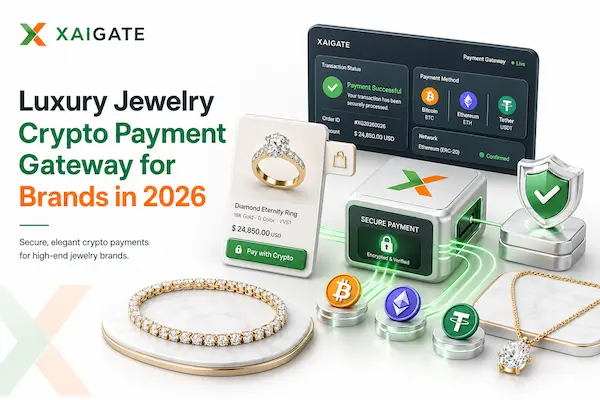
Selling fine jewelry is not like selling everyday accessories. Each order carries high ticket value, strict trust requirements, and a brand experience that must feel seamless from product page to final payment. That is why many premium merchants are now evaluating a luxury jewelry crypto payment gateway instead of relying only on cards and bank transfers. As more affluent buyers hold digital assets and more luxury brands test crypto checkout, the question is no longer whether crypto belongs in luxury retail. The real question is which gateway can protect margin, reduce risk, and preserve a premium buying journey. Explore the details with XAIGATE in the article below.
Contents
- 1 What makes a crypto payment gateway suitable for luxury jewelry
- 2 Key features to compare before choosing a luxury goods crypto payment gateway
- 3 Common risks luxury jewelry merchants must manage
- 4 How XAIGATE can help luxury jewelry brands accept crypto more confidently
- 5 How to choose the best crypto payment gateway for your jewelry business
- 6 FAQs – Luxury Jewelry Crypto Payment Gateway
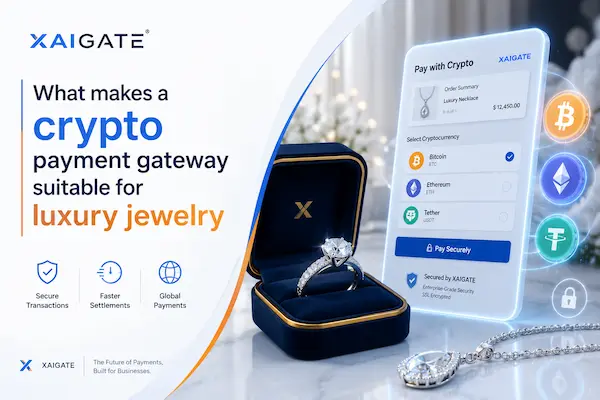
What makes a crypto payment gateway suitable for luxury jewelry
A general crypto checkout tool is not always the right fit for a premium jewelry merchant. High-value transactions demand stronger controls, clearer settlement logic, and better operational visibility than a standard low-ticket ecommerce store usually needs.
Security and fraud controls for high-value orders
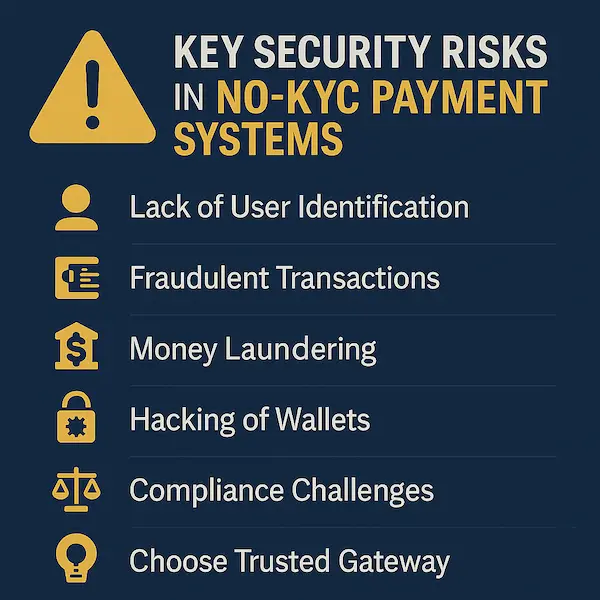
A suitable gateway should help the merchant verify payment status clearly, document each transaction, and maintain an audit trail for finance and compliance teams. This matters more in luxury jewelry because order values are high and disputes can become complex, especially when the buyer sits in another jurisdiction. FATF guidance also makes clear that virtual asset activity should follow a risk-based approach, with proper monitoring, supervision, and mitigation measures rather than informal acceptance alone.
To assess security properly, merchants should focus on the following points:
- Transaction traceability: The gateway should provide clear payment records, wallet-level visibility where appropriate, and dashboards that help teams confirm whether funds were received, converted, or refunded.
- Risk screening support: A strong provider should show how it handles sanctions exposure, suspicious activity patterns, and internal controls for higher-risk flows.
- Operational reliability: Luxury brands need a stable checkout experience because buyers spending four or five figures will not tolerate broken payment pages, confusing confirmations, or delayed status updates.
Stablecoin and fiat settlement options
Settlement flexibility is one of the most important decision factors for luxury merchants. Some brands want to hold selected digital assets, while others want immediate conversion to reduce volatility and simplify accounting. Reuters noted that Ferrari used BitPay in the United States and that the processor converted crypto into traditional currency, helping address price fluctuation concerns. That model is highly relevant for jewelry sellers, where margins and pricing discipline matter.
Stablecoins are becoming even more important in this discussion. Recent reporting from Reuters shows renewed European attention on euro-pegged stablecoins, while merchant-facing providers increasingly position stablecoin settlement as a practical payment rail for global commerce. For a luxury jewelry merchant, that can mean faster cross-border acceptance without carrying the full treasury risk of holding volatile coins after every sale.
Compliance features such as KYC, AML, and reporting
Luxury goods sit close to a higher-risk zone because they combine high transaction values, global buyers, and potential misuse for illicit activity. That does not mean crypto payments are unsuitable. It means the gateway must support a compliance-first workflow. FATF states that virtual asset service providers should be subject to measures comparable to those applied to other financial institutions, including risk assessment and mitigation.
In practice, jewelry brands should not treat compliance as a legal afterthought. They should evaluate whether a provider can support reporting, internal review processes, and a risk-based approach that fits high-value commerce. A gateway that only promotes low fees but says little about compliance maturity is usually the wrong partner for a premium brand.
See more: Why Use a Crypto Payment Gateway: Key Advantages You Should Know
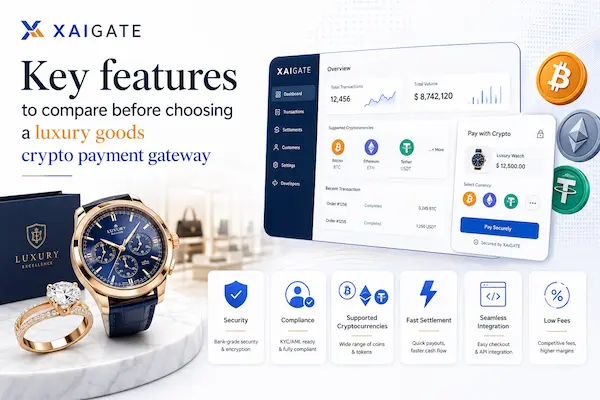
Key features to compare before choosing a luxury goods crypto payment gateway
Before selecting a provider, merchants should compare capabilities in a structured way. The best gateway for a luxury jewelry brand is rarely the one with the longest coin list alone. The right choice is the provider that matches brand positioning, risk appetite, and international growth plans.
| Feature | Why it matters for luxury jewelry | What to look for |
| Settlement model | Protects margin and treasury strategy | Fiat conversion, stablecoin settlement, or hybrid options |
| Compliance support | Reduces AML and operational risk | Clear controls, reporting, risk review workflows |
| Checkout experience | Affects conversion and brand perception | Smooth hosted checkout, wallet compatibility, mobile-friendly flow |
| Integration options | Speeds deployment and lowers technical friction | API, plugins, payment links, webhook support |
| Coin support | Expands buyer choice | Major coins plus stablecoins that matter to target markets |
| Reconciliation tools | Helps finance and operations teams | Dashboard visibility, exports, payment status tracking |
| Refund handling | Important for premium customer service | Clear refund policy and manageable operational process |
The table above gives a realistic framework for evaluation. Triple-A’s 2026 overview also emphasizes settlement models, licensing context, and operational fit as core selection criteria, not just headline marketing claims. That aligns with what luxury merchants need when one failed payment experience can damage both revenue and trust.
Checkout UX for luxury ecommerce websites
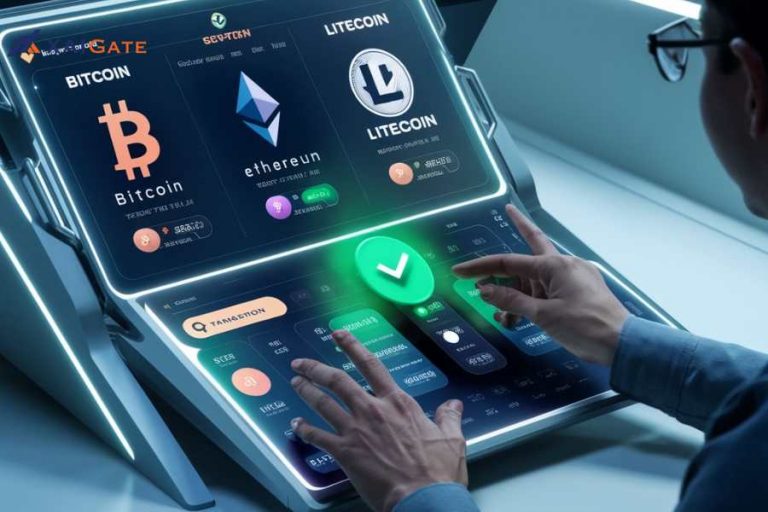
Premium buyers expect confidence and speed. A crypto payment flow that looks technical, slow, or uncertain will weaken conversion even if the backend works perfectly. The gateway should fit the existing luxury checkout journey instead of forcing the brand to bolt on a clunky external experience. That means clear payment instructions, fast confirmation logic, mobile-friendly wallet support, and a polished interface that feels worthy of a premium purchase.
Supported coins and preferred payment methods
Coin breadth matters, but relevance matters more. Many merchants do not need hundreds of tokens if their real buyer demand centers on Bitcoin, Ethereum, and major stablecoins. Some providers emphasize broad asset support, while others frame the conversation around settlement flexibility and business use case. For luxury jewelry, stablecoins often deserve priority because they preserve crypto convenience while limiting pricing instability.
Integration, reconciliation, and operational ease
Luxury brands often run leaner teams than enterprise marketplaces, so operational simplicity matters. A strong gateway should make deployment straightforward and day-to-day management even easier.
A practical evaluation should include these questions:
- How fast can the team deploy it?
Look for API clarity, plugin availability, and onboarding steps that do not overburden ecommerce or engineering teams. - Can finance reconcile transactions easily?
Payment records, exports, and status visibility should support accounting without forcing manual work across multiple wallets and tools. - What happens after the payment?
The provider should make it clear how confirmations, settlements, exceptions, and refunds are handled from an operations perspective.
Common risks luxury jewelry merchants must manage
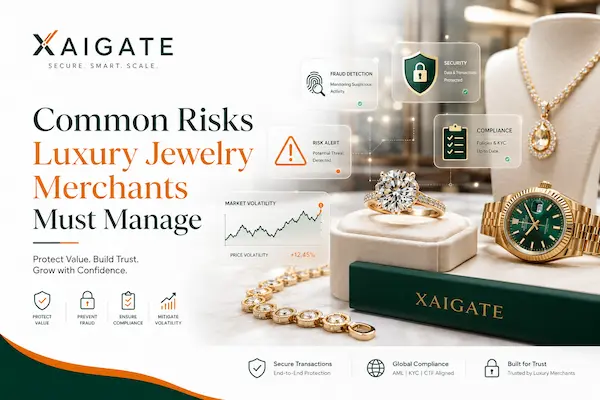
Crypto payments can improve international commerce, but they do not remove risk automatically. A luxury merchant still needs internal rules, the right provider, and a clear customer-facing policy.
The main risks usually include the following:
- Price volatility risk: Merchants can reduce this by using auto-conversion or stablecoin settlement instead of holding more volatile assets after each order.
- Compliance exposure: High-value orders require stronger review processes because FATF expects risk-based controls around virtual asset activity and providers.
- Refund complexity: Brands must define whether refunds are issued in crypto equivalent, stablecoins, or fiat terms before disputes arise, especially when market prices move sharply.
- Brand trust concerns: Luxury buyers may welcome crypto, but they still expect the same certainty, discretion, and service level they receive from premium traditional payment options.
See more: Why Businesses Should Use Crypto Payment Gateway: A Complete Guide for Companies
How XAIGATE can help luxury jewelry brands accept crypto more confidently
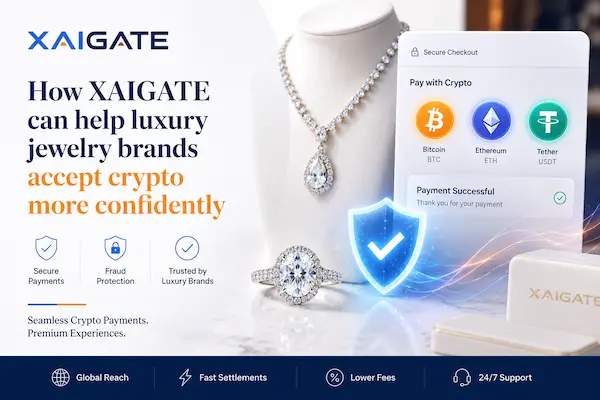
For a brand like XAIGATE, the opportunity is not to pitch crypto as a trend. The stronger positioning is to present XAIGATE as a payments partner that helps luxury jewelry merchants adopt crypto without weakening control. That means speaking directly to cross-border growth, high-value checkout performance, and the need for reliable settlement options rather than pushing a generic Web3 story.
XAIGATE should frame its value around business outcomes that matter in luxury commerce:
- Smoother global checkout: A well-designed crypto flow can help brands serve international buyers who prefer digital assets without forcing them into slow bank-transfer processes.
- More controlled settlement: The right gateway structure can support stablecoin or fiat-oriented workflows that protect pricing discipline and simplify treasury decisions.
- Operational confidence: Merchants need visibility, reporting logic, and a deployment path that fits premium ecommerce, not a tool built only for experimental crypto-native stores.
This angle is especially strong because the market now evaluates crypto payment gateways by settlement model, operational maturity, and use-case fit, not only by whether they accept Bitcoin. XAIGATE should therefore position itself as the practical answer for premium merchants that want growth with control.
How to choose the best crypto payment gateway for your jewelry business
The best crypto payment gateway for luxury jewelry brands is the one that fits your business model, protects the buying experience, and gives your team confidence after the payment is completed. A boutique selling bespoke diamond pieces may need a different workflow than a fast-growing luxury ecommerce brand shipping internationally, but both need strong settlement logic, compliance awareness, and a polished checkout experience.
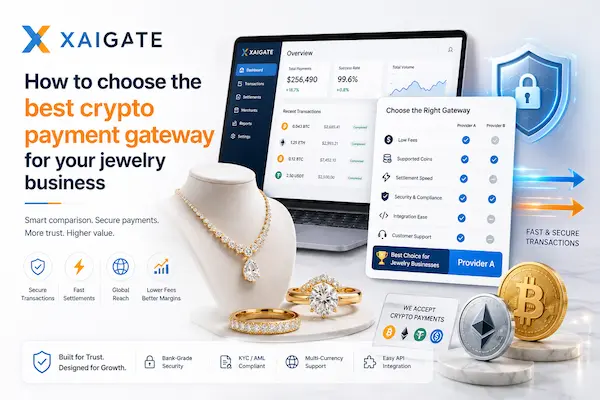
Talk to XAIGATE about a crypto payment setup designed for luxury jewelry sales, cross-border buyers, and premium checkout performance. Choose a gateway strategy that protects your brand, supports growth, and turns crypto acceptance into a business advantage.
For daily updates, subscribe to XAIGATE’s blog!
We may also be found on GitHub, and X (@mxaigate)!
FAQs – Luxury Jewelry Crypto Payment Gateway
1. What is a luxury jewelry crypto payment gateway?
It lets jewelry brands accept crypto for high-value purchases.
2. Why should jewelry brands accept crypto?
Crypto helps serve global buyers and digital-asset holders.
3. Is crypto safe for high-value jewelry orders?
Yes, if the gateway supports security, reporting, and risk controls.
4. Can stablecoins help jewelry merchants?
Yes, stablecoins reduce price volatility during payment.
5. Can brands convert crypto to fiat?
Yes, many gateways support fiat or stablecoin settlement.
6. What features matter most?
Security, compliance, checkout UX, settlement, and reconciliation.
7. Can crypto payments reduce chargebacks?
Yes, crypto payments are generally irreversible.
8. Are refunds harder with crypto?
They can be, so brands need a clear refund policy.
9. Is XAIGATE suitable for luxury jewelry?
Yes, it supports crypto checkout, settlement, and merchant tools.
10. What should jewelry brands check first?
Check security, supported coins, settlement, compliance, and integration.