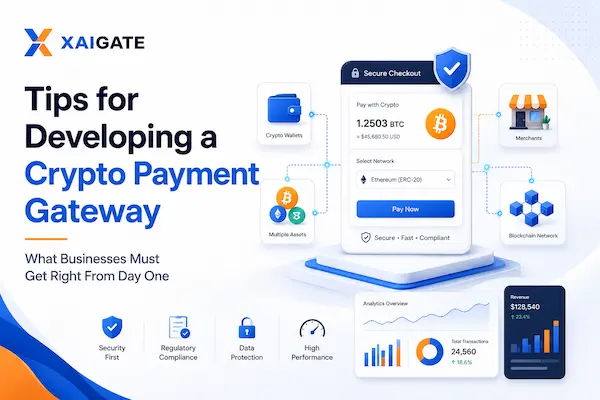
Entering crypto payments can feel like opening a new lane in global commerce. On the surface, it looks like a simple transaction layer. In practice, it is a system where security, compliance, settlement, and user experience must move together without friction. That is why businesses exploring a crypto payment gateway need more than coding advice. They need clear priorities from day one. If the foundation is weak, growth becomes expensive. If the foundation is strong, crypto payments can support faster expansion, broader reach, and more flexible digital payment operations. Explore the details with XAIGATE in the article below.
Contents
- 1 Start with the right crypto payment gateway business model
- 2 Prioritize security in crypto payment gateway development
- 3 Design for compliance from the beginning
- 4 Create a checkout experience merchants and users can trust
- 5 Build strong backend operations and settlement logic
- 6 Build a scalable crypto payment gateway API and infrastructure
- 7 Conclusion
- 8 FAQs – Reduce Crypto Payment Gateway Fees
Start with the right crypto payment gateway business model
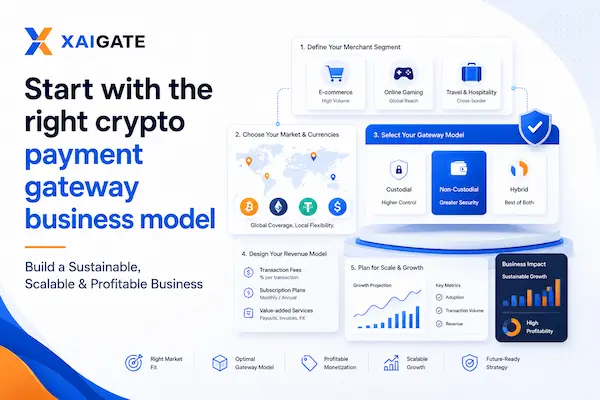
Before writing code, define what the gateway should solve. Many teams fail because they build around technical possibilities instead of real merchant needs. A crypto payment gateway should begin with a focused commercial model, not a feature wishlist.
Build for your target users, not for every use case
The first step is identifying the merchants you want to serve. A gateway for online travel brands will not have the same priorities as one built for gaming platforms, SaaS vendors, or digital marketplaces. Payment flow, average order value, refund behavior, and supported regions all change the product requirements.
Start by narrowing the use case with questions like these:
- What merchant segment are you serving first
This decision shapes your checkout flow, settlement logic, support needs, and compliance design. - What regions and currencies matter most
A global vision is useful, but the first rollout should focus on a manageable set of markets and payment scenarios. - What pain point are you solving
Some merchants want faster cross-border crypto payments. Others want stablecoin settlement, lower friction, or an alternative to restricted banking options.
Decide between custodial, non-custodial, or hybrid architecture
Architecture choices directly affect risk, control, and operational complexity. A custodial model gives the provider more control over funds and settlement, but it also increases custody responsibility. A non-custodial crypto payment gateway can reduce direct asset handling risk, but it may limit some product features and merchant expectations.
A hybrid approach is often attractive for businesses that need flexibility. It allows controlled settlement options while keeping core wallet exposure more structured. The right model depends on legal exposure, technical maturity, and the level of user trust you need to create.
Validate your revenue logic before writing code
A product can process payments well and still fail commercially. That is why monetization must be clear before development begins. Transaction fees, conversion fees, payout fees, and platform service fees should all connect to your operating costs and target margins.
A strong revenue model should account for these elements:
- Infrastructure costs, including wallet operations, blockchain access, monitoring, and support
- Risk and compliance overhead, especially in regulated or high-risk merchant categories
- Merchant expectations around transparent crypto payment gateway fees and settlement speed
Prioritize security in crypto payment gateway development
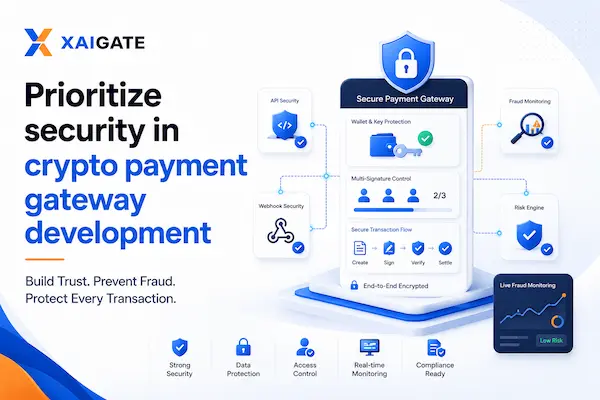
Security is not a layer you add later. It is part of the core product logic. When businesses develop a crypto payment gateway, they are building around irreversible transactions, exposed APIs, and valuable digital assets. That changes the security standard completely.
See more: How to Reduce Crypto Payment Gateway Fees
Protect wallets, keys, and transaction signing flows
Wallet and key management sits at the center of crypto payment security. If private keys, signing permissions, or wallet access controls are weak, the gateway remains exposed no matter how polished the frontend looks. Hot wallets can support fast processing, but they should be limited by clear rules and monitored closely.
Security design should include the following controls:
- Role-based access for operational teams
This reduces internal risk and prevents over-concentration of transaction authority. - Segmented wallet logic for treasury, settlement, and operating flows
This makes monitoring and reconciliation more precise. - Advanced signing methods such as multisig or MPC where appropriate
These approaches can strengthen secure transaction signing and reduce single-point failure.
Build real-time monitoring for suspicious payment activity
A crypto payment gateway needs constant visibility into what is happening across addresses, invoices, and transaction patterns. Real-time monitoring helps detect unusual velocity, duplicate payment behavior, abnormal wallet interactions, or suspicious blockchain movement before issues spread.
Strong monitoring improves more than fraud prevention. It also helps your support team identify failed payments, delayed confirmations, and operational anomalies faster. That makes crypto fraud prevention part of both security and service quality.
Secure APIs, webhooks, and merchant integrations
Many gateway failures happen at integration points rather than inside wallet logic. Merchant APIs, callback endpoints, and webhook events need strict validation, authentication, and rate control. An exposed webhook can create false payment states, while weak API controls can open serious operational gaps.
To strengthen payment gateway API security, apply a consistent framework:
- Signed webhook verification for all status updates
- Strict authentication and key rotation policies
- Environment separation between production and sandbox systems
- Detailed request logging for investigation and dispute analysis
Design for compliance from the beginning
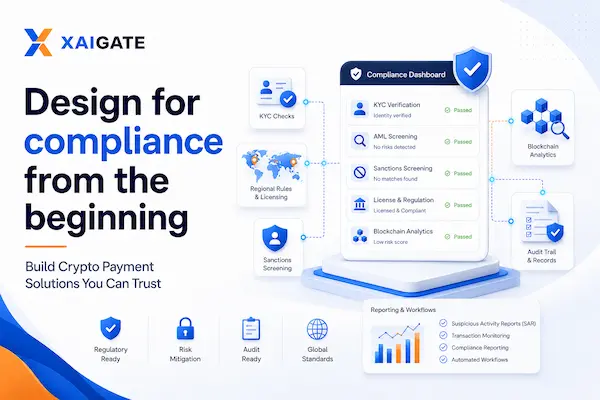
Compliance is one of the most underestimated parts of crypto payment gateway development. Many teams treat it like a later-stage legal task. In reality, it should shape product design from the first planning phase.
Understand KYC, AML, and regional licensing exposure
Different jurisdictions apply different standards to digital asset payments. Some markets focus heavily on merchant onboarding. Others place more scrutiny on transaction flow, fund origin, or settlement structure. That means KYC and AML decisions should not be improvised after launch.
At minimum, teams should define:
- Which merchants need onboarding review and enhanced due diligence
- Whether end-user screening is required in certain flows
- What type of crypto payment compliance obligations apply in each target market
Plan for sanctions screening and blockchain analytics
Wallet addresses and transaction histories can carry risk signals that are invisible in ordinary payment systems. Sanctions exposure, suspicious wallet clustering, and high-risk fund sources need to be assessed through proper blockchain monitoring tools.
This is where wallet risk scoring and transaction analytics become essential. They help businesses reduce exposure before payments are accepted, settled, or routed onward. That is especially important for platforms operating across multiple regions or serving merchants in sensitive categories.
Document audit trails and reporting workflows
Audit readiness should not depend on manual spreadsheets or scattered logs. A gateway should capture payment states, admin actions, settlement events, and exception handling in a clear and reviewable format. Good audit trails support internal control, faster investigations, and stronger reporting discipline.
Create a checkout experience merchants and users can trust
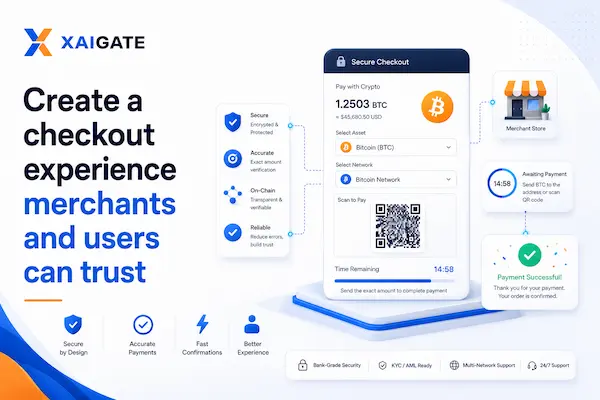
Even the most secure crypto payment gateway will struggle if the checkout flow feels confusing. Users need clarity, speed, and confidence. Merchants need fewer failed payments and lower support volume. Good checkout design serves both sides at the same time.
Keep the crypto checkout flow simple and fast
The ideal crypto checkout experience removes unnecessary choices and makes payment instructions obvious. Customers should quickly see the amount, selected asset, supported network, wallet destination, QR code, and payment deadline. Every extra step creates new room for delay or error.
A clean checkout usually performs better when it includes:
- Clear invoice timing and expiration visibility
- Simple copy-and-scan payment actions
- Instant status feedback once the blockchain transaction is detected
Support the right coins, networks, and settlement options
Supporting too many assets too early creates risk. It increases wallet management complexity, reconciliation burden, and user confusion. A better approach is to begin with the coins and networks that fit actual merchant demand.
For many businesses, that means starting with a mix like this:
| Asset type | Why it matters | Typical use case |
| Stablecoins | Lower volatility and easier treasury planning | Merchant settlement and cross-border payments |
| Major cryptocurrencies | Strong user recognition and broader adoption | General checkout acceptance |
| Selected networks | Lower fees and reliable confirmation speed | Operational efficiency and smoother user experience |
This structure helps build a multi-currency crypto payment gateway without making the product bloated from the start.
Reduce failed or delayed payments with smart UX
Blockchain payments can fail in ways that card users never see. Underpayments, wrong networks, expired invoices, and delayed confirmations all create friction. Smart UX should anticipate those issues before they become support tickets.
Helpful checkout design includes payment progress indicators, confirmation guidance, network reminders, and clear instructions for handling mismatched transfers. These small details improve trust and reduce operational noise.
Build strong backend operations and settlement logic
Many teams focus heavily on payment acceptance and forget what happens after the transaction lands. That is where operational quality makes the difference between a functional gateway and a scalable one.
Automate reconciliation across wallets, invoices, and merchants
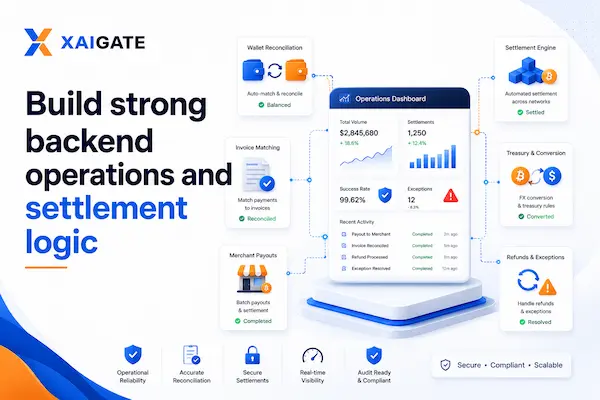
Manual reconciliation does not scale. A gateway needs automated mapping between blockchain transactions, invoice records, merchant accounts, and settlement status. Without that layer, reporting becomes inconsistent and exception handling becomes slow.
Crypto payment reconciliation should connect these core objects accurately:
- Wallet address and transaction hash
- Invoice ID and payment status
- Merchant account and payout instruction
See more: Fiat to Crypto Payment Gateway 2026 – Secure, Fast & Compliant Business Solutions
Manage volatility with conversion and treasury controls
Price volatility can damage both merchant trust and internal planning. Businesses developing a crypto payment gateway should define how and when asset conversion happens. Some merchants want to settle in crypto. Others want crypto-to-fiat settlement or stablecoin conversion as quickly as possible.
Treasury rules should cover:
- Auto-conversion timing
- Supported settlement currencies
- Exposure limits by asset type
- Manual override rules for large or unusual transactions
Prepare for refunds, disputes, and exception handling
Refunds in crypto payments are rarely simple reversals. They need a clear operational process, especially when asset values change or users pay through the wrong chain. A well-designed gateway should define refund logic early and communicate it clearly to merchants.
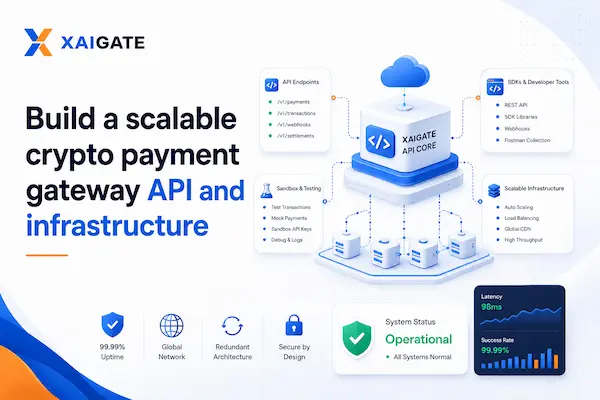
Build a scalable crypto payment gateway API and infrastructure
Scalability is not just about higher transaction volume. It is about keeping the gateway reliable while new merchants, assets, regions, and use cases are added over time.
Use modular architecture for future expansion
A modular system makes it easier to improve one function without breaking the rest of the platform. Payment orchestration, wallet services, compliance screening, settlement logic, and merchant reporting should be logically separated. That structure supports faster iteration and cleaner maintenance.
Plan for uptime, redundancy, and chain reliability
Blockchain networks, node providers, and third-party services do not fail on your schedule. High availability should be built into the infrastructure from the start. Redundant node access, failover planning, and resilient monitoring all help maintain service continuity.
Make integrations easier for merchants and partners
Merchants do not just buy payment capability. They buy faster implementation and lower operational burden. Clear API documentation, SDK support, sandbox access, and readable webhook events can shorten onboarding and improve adoption. A developer-friendly payment gateway often wins because it removes unnecessary implementation friction.
Conclusion
Developing a crypto payment gateway is not just a product build. It is a business infrastructure decision. The strongest gateways begin with the right merchant focus, security model, compliance framework, settlement logic, and checkout design. Businesses that get these priorities right from day one are better positioned to scale with confidence.If your team is evaluating the next step, XAIGATE can help you move from concept to execution with a clearer strategy for crypto payment gateway development. Talk to XAIGATE to build a gateway that is secure, practical, and ready for real merchant growth.
For daily updates, subscribe to XAIGATE’s blog!
We may also be found on GitHub, and X (@mxaigate)!
FAQs – Reduce Crypto Payment Gateway Fees
1. Why are crypto payment gateway fees high?
Fees come from blockchain networks, gateway services, security, and added tools.
2. How can businesses reduce crypto payment fees?
Choose low-fee coins, optimize timing, and compare gateways.
3. Do blockchain network fees change?
Yes, fees rise when networks are congested.
4. Which coins have lower transaction fees?
USDT on TRON or Solana often costs less than Bitcoin or Ethereum.
5. Can batching reduce crypto fees?
Yes, combining payments can reduce repeated network fees.
6. Does transaction timing matter?
Yes, sending payments during low congestion can lower costs.
7. Can optimized wallets reduce fees?
Yes, some wallets help customize or optimize gas fees.
8. Do gateway promotions help?
Yes, incentives can lower long-term payment costs.
9. Should merchants monitor fees regularly?
Yes, fee tracking helps control payment expenses.
10. What should businesses check first?
Check coins, network fees, gateway fees, timing, and settlement.