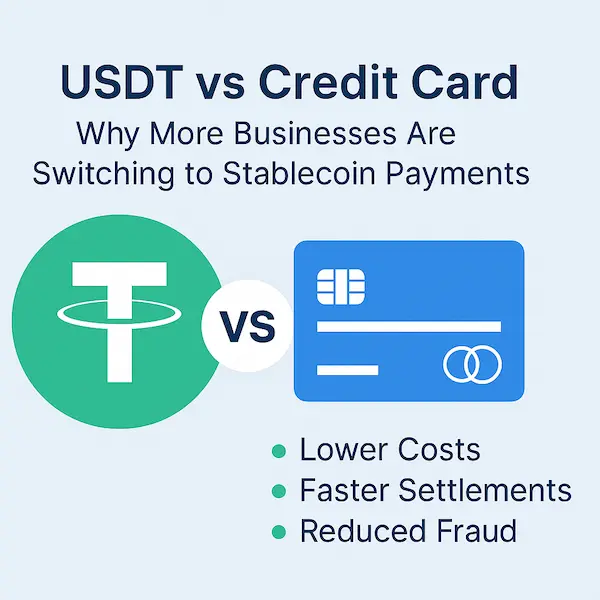

Accepting cryptocurrency payments can feel like opening a new checkout lane in a busy store. The opportunity is clear, but the wrong setup can create payment friction, expose businesses to price volatility, and add operational complexity. That is why many merchants are no longer asking whether they should accept crypto. Instead, they are asking which payment gateway can make the process practical, compliant, and scalable. The list of crypto payment gateways below is designed to support exactly that decision. Rather than offering vague descriptions, this article by XAIGATE compares the leading platforms based on fees, supported assets, settlement flexibility, and the business use cases they are best suited for in 2026.
Quick comparison table of the top crypto payment gateways
Before diving into the full list, here is a side-by-side view of the most relevant choices for online businesses.
| Gateway | Indicative Fee | Supported Crypto | Settlement Options | Best For |
| NOWPayments | 0.5% standard | 350+ | Crypto, some conversion options | Altcoins, SaaS, global merchants |
| CoinGate | Varies by plan/service | 70+ | EUR, USD, GBP, crypto | eCommerce, EU-facing merchants |
| BitPay | From 1% | Major coins + stablecoins | Local currency, crypto, mixed | Enterprise, compliance-heavy merchants |
| Coinbase Business / Payments | Stablecoin-focused | USDC, USDT rollout | On-chain stablecoin flows | Shopify, stablecoin commerce |
| Cryptomus | 2% for new users, lower possible | 100+ | Crypto payouts | Small businesses, simple setup |
| CoinPayments | Broad multi-coin support | 100+ | Crypto, flexible merchant tools | Merchants prioritizing coin coverage |
| B2BinPay | Custom / sales-led | Multi-chain support | Crypto-to-fiat and fiat-to-crypto tools | B2B, fintech, enterprise |
| Triple-A | Sales-led | Stablecoin and major asset focus | Local currency and stablecoins | Cross-border, APAC, MENA |
| ALFAcoins | 0.99% incoming payments | Multiple major coins and stablecoins | Crypto and conversion tools | Smaller merchants needing simplicity |
| SpicePay / Cryptopay | Around 1% / sales-led | Major coins | Crypto or fiat depending on product | Regional, niche, and fast-start merchants |
Fees and asset coverage can vary by product, settlement method, jurisdiction, and transaction structure.

List of crypto payment gateway: 10 best options for online businesses
This section focuses on the strengths, trade-offs, and ideal merchant fit for each platform rather than repeating the same generic feature set.
NOWPayments
NOWPayments is one of the strongest choices if your business wants breadth. Its pricing page highlights a 0.5% service fee for payments without exchange, and the platform promotes support for more than 350 currencies. It also offers plugins, invoices, subscriptions, payment buttons, widgets, and an API, making it especially useful for eCommerce brands, SaaS companies, and international merchants that want altcoin flexibility without a heavy implementation burden.
CoinGate
CoinGate is a practical option for merchants that care about settlement flexibility more than sheer asset count. Its official materials emphasize support for a wide set of digital currencies and real-time fiat payouts in EUR, USD, and GBP. CoinGate also supports plugins and POS-oriented use cases, so it fits online stores and merchants that want to accept crypto while still reconciling in familiar currencies.
See more: Top Crypto Payment Gateways 2026: Best Options for Global Merchants
BitPay
BitPay remains one of the most established names in crypto commerce. Its pricing page states plans starting from 1%, and the platform supports settlement in local currency, cryptocurrency, or a combination of both. BitPay is often a strong fit for larger businesses because it emphasizes merchant controls, reporting, and compliance-oriented workflows instead of positioning itself as the broadest altcoin gateway.

Coinbase Business / Coinbase Payments
For merchants that want to stay close to the Coinbase ecosystem, Coinbase’s current business payments push is centered on stablecoin commerce. Official help documentation states that Coinbase Business currently supports USDC, with USDT launching in March 2026, while Coinbase Payments is already being featured on Shopify for USDC acceptance. That makes this option more focused than legacy “accept every coin” gateways, but potentially attractive for brands prioritizing stable settlement and simple on-chain payment flows.
Cryptomus
Cryptomus is geared toward merchants that want a faster path to crypto checkout without a large integration project. Its fee page says new users pay 2% per transaction, with the possibility of lower rates, and its FAQ states support for more than 100 cryptocurrencies and stablecoins. That profile makes Cryptomus more suitable for small businesses, digital sellers, and operators that value ease of setup over enterprise-grade treasury tooling.
CoinPayments
CoinPayments is still relevant for merchants who care first about asset variety and merchant tools. Its official materials highlight extensive supported coins and prebuilt plugins for major eCommerce platforms, payment buttons, and integration tools. It may not be the cleanest option for every modern enterprise stack, but it remains a recognizable choice for businesses that want broad token acceptance and traditional merchant-style tooling.

B2BinPay
B2BinPay is better understood as a payments infrastructure product than a simple checkout plugin. Its site emphasizes crypto payment processing, swift crypto-to-fiat payouts, and both off-ramp and on-ramp functionality. That makes it a stronger fit for B2B, fintech, high-volume, and operationally complex environments where treasury workflows, conversion, and multi-chain payment support matter as much as the checkout experience itself.
Triple-A
Triple-A has positioned itself around global business payments using stablecoins and local currencies. Its homepage focuses on helping businesses pay and get paid globally without the complexity of holding and converting stablecoins manually. The company also highlights broad geographic reach and enterprise use cases, which makes it particularly relevant for merchants operating across APAC, MENA, and other cross-border corridors.
ALFAcoins
ALFAcoins is a smaller but still useful option for merchants that want straightforward crypto acceptance without enterprise complexity. Its fee schedule lists a 0.99% incoming payment fee, and its merchant materials show support for major coins and stablecoins including BTC, ETH, XRP, BCH, LTC, USDC, and USDT. It is a reasonable fit for merchants that value simplicity, lower stated fees, and basic conversion functionality.

SpicePay and Cryptopay
These two are worth grouping as notable niche options. SpicePay markets low fees, with official pages stating that merchant processing fees do not exceed 1%, while Cryptopay Business focuses on accepting major cryptocurrencies with the ability to settle in crypto or fiat. Neither platform is usually the first name in broad “best overall” lists, but both can be relevant when regional fit, quick deployment, or a more focused product scope matters more than exhaustive coin coverage.
How to choose the right crypto payment gateway for your business
A long list is only useful if it helps narrow the field. The right crypto payment gateway depends less on brand recognition and more on operational fit.
- Start with settlement needs: If your finance team wants to avoid volatility, prioritize gateways with strong fiat payout or stablecoin settlement support. CoinGate, BitPay, Triple-A, B2BinPay, and Cryptopay all emphasize conversion or local-currency settlement in some form.
- Match asset breadth to your customer base: If your customers demand broad token support, NOWPayments and CoinPayments are stronger than stablecoin-focused options. If your buyers mainly use USDC or USDT, Coinbase’s business stack or Triple-A may be more aligned.
- Check implementation complexity: Smaller merchants often benefit from plugins, hosted checkout pages, and quick-start tools. Enterprise teams usually care more about API depth, treasury flows, and compliance processes. That is why the “best” gateway for a Shopify merchant is often different from the best gateway for a fintech platform.
- Do not ignore compliance and geography: Settlement options, supported jurisdictions, and onboarding standards vary. A gateway that works well for EU-focused eCommerce may not be ideal for global B2B payout flows or MENA expansion.
See more: Top commercial benefits of crypto payment gateways
Crypto payment gateway vs traditional payment processors
For many businesses, crypto gateways are not replacing card processors completely. They are adding an alternative rail for specific customers and markets.
- Fees and chargebacks: Crypto payments can reduce chargeback exposure because blockchain transactions are generally irreversible. Platforms like SpicePay and Cryptopay explicitly market this operational advantage to merchants.
- Cross-border reach: Crypto payment gateways can simplify international acceptance where card penetration, banking friction, or FX costs create problems. Triple-A, NOWPayments, and B2BinPay all position their products around global payment efficiency.
- Settlement control: Traditional processors usually settle in fiat by default. Crypto gateways increasingly let merchants choose between crypto, fiat, or hybrid settlement. That flexibility is one of the biggest reasons businesses adopt them in the first place.

Conclusion
The best answer depends on what your business actually needs from a crypto checkout stack. If you want the broadest asset support and flexible integrations, NOWPayments is one of the strongest options. If you care more about fiat settlement, CoinGate and BitPay stand out. If your roadmap is stablecoin-first, Coinbase’s business payments stack and Triple-A are especially relevant. If you need B2B-scale infrastructure, B2BinPay deserves serious attention.
For XAIGATE, this topic also creates a strong strategic angle: merchants do not only need a list of crypto payment gateway providers. They need help choosing the right model for growth, margin protection, and international expansion. That is where educational content becomes a conversion asset rather than just an SEO page.
For daily updates, subscribe to XAIGATE’s blog!
We may also be found on GitHub, and X (@mxaigate)!
FAQs – List of Crypto Payment Gateway
1. What is a crypto payment gateway?
It lets businesses accept cryptocurrency payments from customers.
2. What are the best crypto payment gateways?
Popular options include NOWPayments, CoinGate, BitPay, Coinbase, and Cryptomus.
3. Which gateway supports the most coins?
NOWPayments and CoinPayments are strong for broad coin support.
4. Which gateway is best for fiat settlement?
CoinGate, BitPay, Triple-A, and B2BinPay are strong options.
5. Why do stablecoins matter?
Stablecoins help reduce volatility during crypto payments.
6. Are crypto payment fees lower than card fees?
Often yes, but fees vary by gateway and settlement method.
7. Do crypto gateways reduce chargebacks?
Yes, blockchain payments are generally irreversible.
8. Are plugins important for ecommerce?
Yes, plugins make setup faster for online stores.
9. Do enterprises need APIs?
Yes, APIs support custom checkout, reporting, and treasury workflows.
10. What should merchants compare first?
Compare fees, coins, settlement, integrations, compliance, and support.