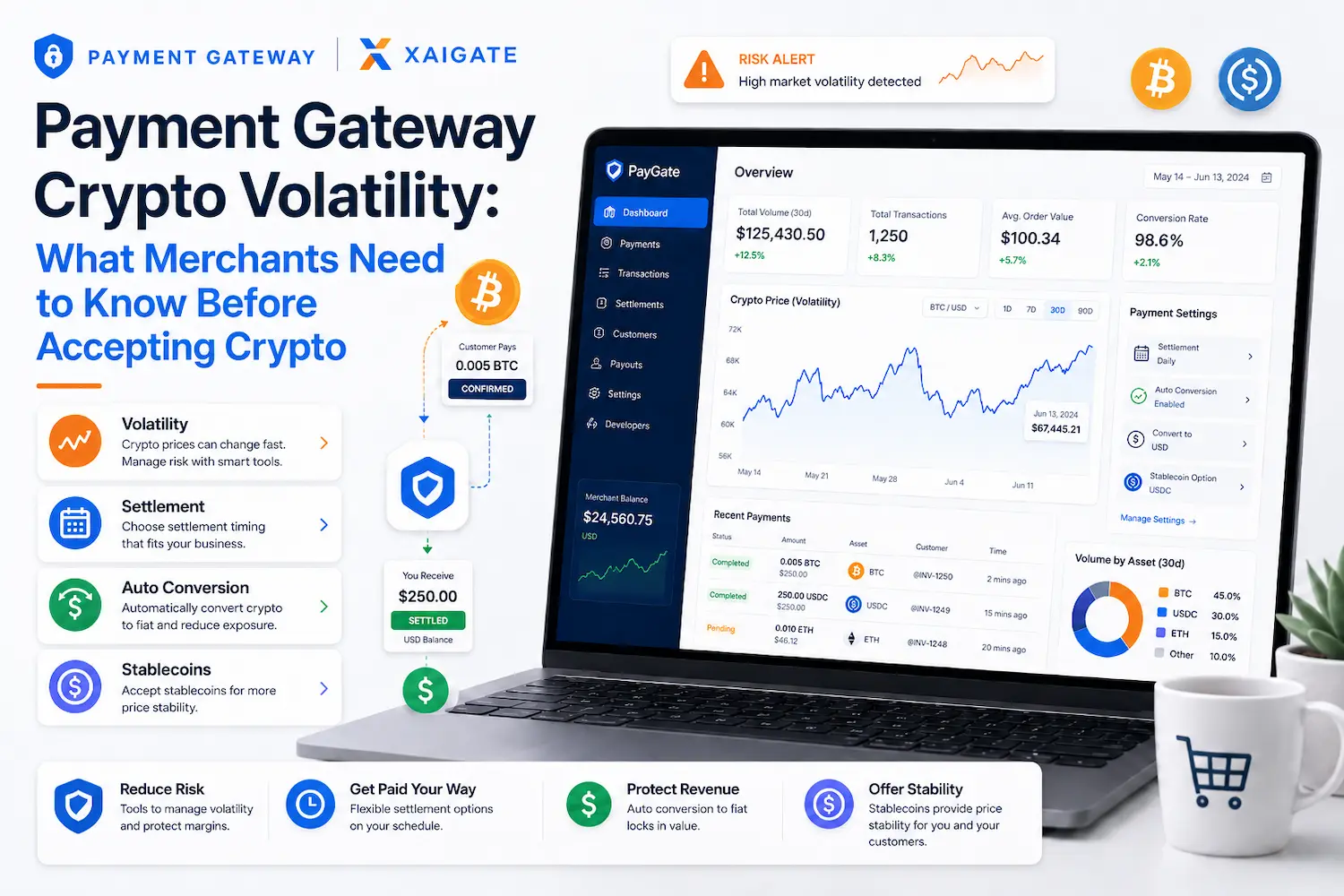
Crypto payments open the door to global customers, faster settlement, and lower transaction costs. But for many merchants, one question comes first: what happens when prices move? Payment gateway crypto volatility is not just a market issue. It affects checkout value, settlement, refunds, and accounting. The good news is simple: with the right payment setup, businesses can accept crypto without turning every transaction into a trading decision. Explore the details withXAIGATE in the article below.
What Does Crypto Volatility Mean in Payment Gateway Transactions?
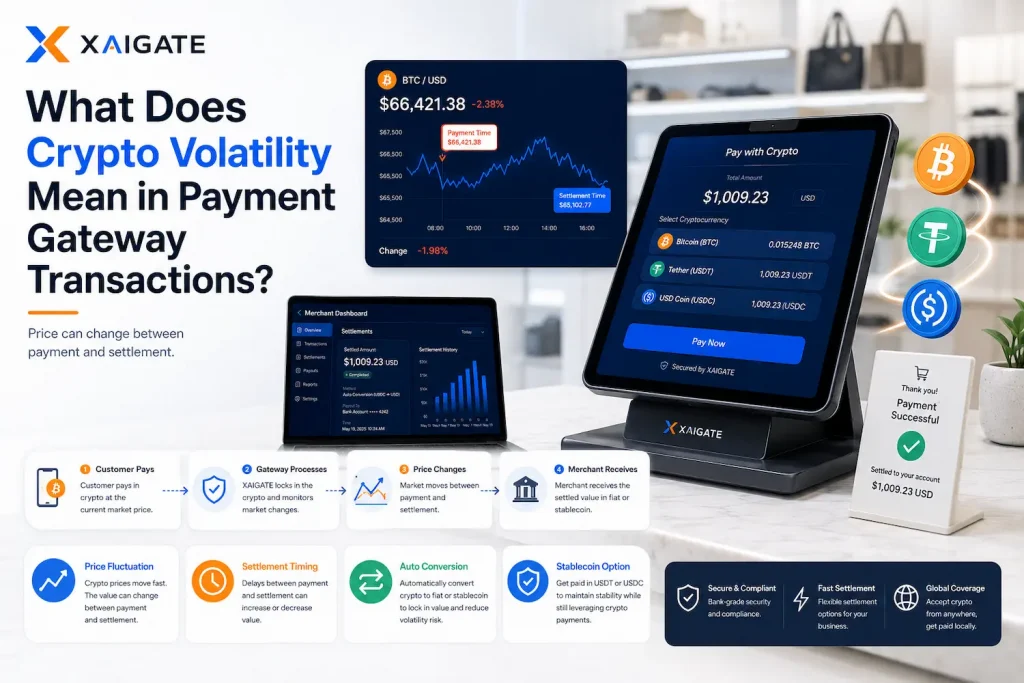
Crypto volatility means the value of a coin can change between checkout, confirmation, settlement, or refund. For merchants, this creates a gap between the displayed price and the final business value.
Why crypto prices change after checkout
Crypto prices move because supply, demand, market sentiment, liquidity, and news change quickly. BTC and ETH can rise or fall within minutes, especially during high-volume market periods.
For example, a customer may pay $500 worth of BTC at checkout. If BTC drops before the merchant settles or records the payment, the received value may feel different from the invoice value.
Key causes include:
- Market demand: More buyers push prices up, while strong selling pressure pulls prices down.
- Liquidity changes: Smaller or less active coins may move faster than major assets.
- Network timing: Slow confirmations may expose the transaction to more price movement.
How volatility affects merchant revenue
Volatility can affect gross revenue, margins, and reconciliation. If a merchant sells products with thin margins, even a small value difference may reduce profit.
This matters most when the business holds volatile crypto after receiving payment. If the merchant accepts BTC and keeps BTC, the payment becomes both revenue and market exposure.
To reduce this risk, merchants often use stablecoins, faster settlement, and clear reporting from a crypto payment gateway.
Why volatility matters more for BTC and ETH than stablecoins
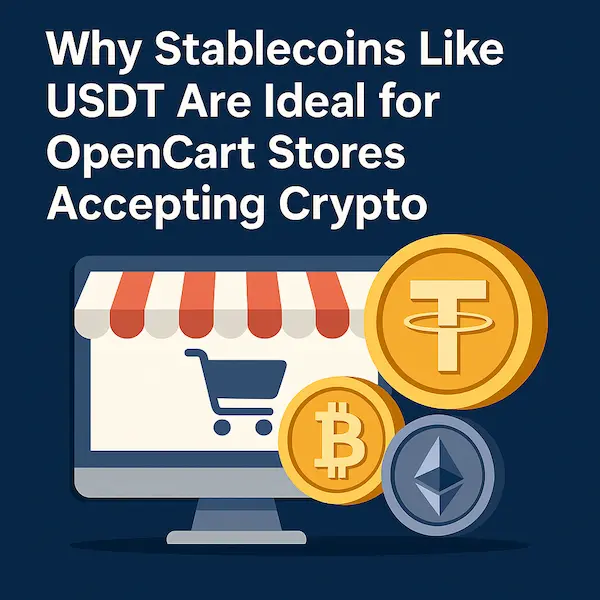
BTC and ETH are popular, but they are market-priced assets. Their value can change quickly. Stablecoins such as USDT and USDC are designed to stay close to fiat value, so they are easier for payment operations.
For most businesses, stablecoin payments are more practical for invoices, subscriptions, cross-border payments, and product pricing.
See more: Top Crypto Payment Gateways for Businesses in 2026
Main Risks of Crypto Volatility for Online Businesses
Volatility does not mean crypto payments are unsafe. It means merchants need the right process before accepting them.
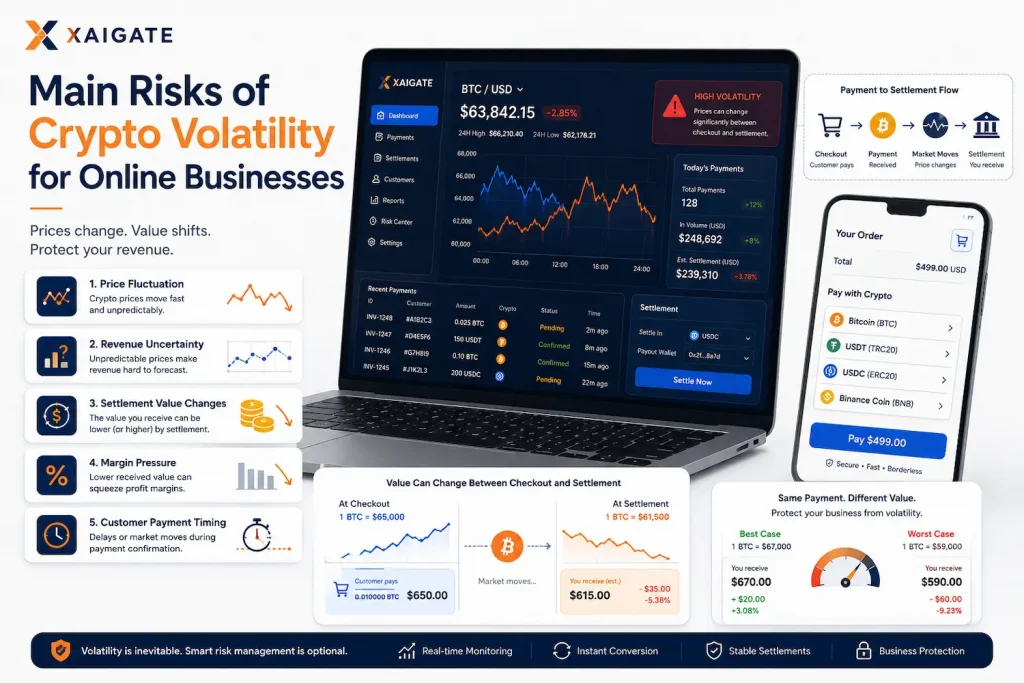
Settlement value may change before funds arrive
If settlement is delayed, the final value may differ from the checkout value. This risk increases when networks are congested or when merchants accept highly volatile coins.
Businesses can reduce this issue by choosing gateways with fast processing, stablecoin support, and simple settlement tracking.
Refunds can become more complex
Refunds are harder when the crypto price changes after purchase. A $100 payment in BTC may not equal the same BTC amount later.
Merchants should define refund rules clearly:
- Refund based on fiat invoice value.
- Refund based on original crypto amount.
- Refund through store credit or stablecoin value.
Clear refund terms protect both the business and the customer.
Pricing products in crypto can create accounting issues
Most businesses price products in fiat, then convert to crypto at checkout. This is easier than listing fixed BTC or ETH prices.
Finance teams need clean records for:
- Checkout value
- Crypto amount received
- Settlement time
- Network fee
- Refund history
- Asset used for payment
A clear dashboard helps reduce manual work and reporting errors.
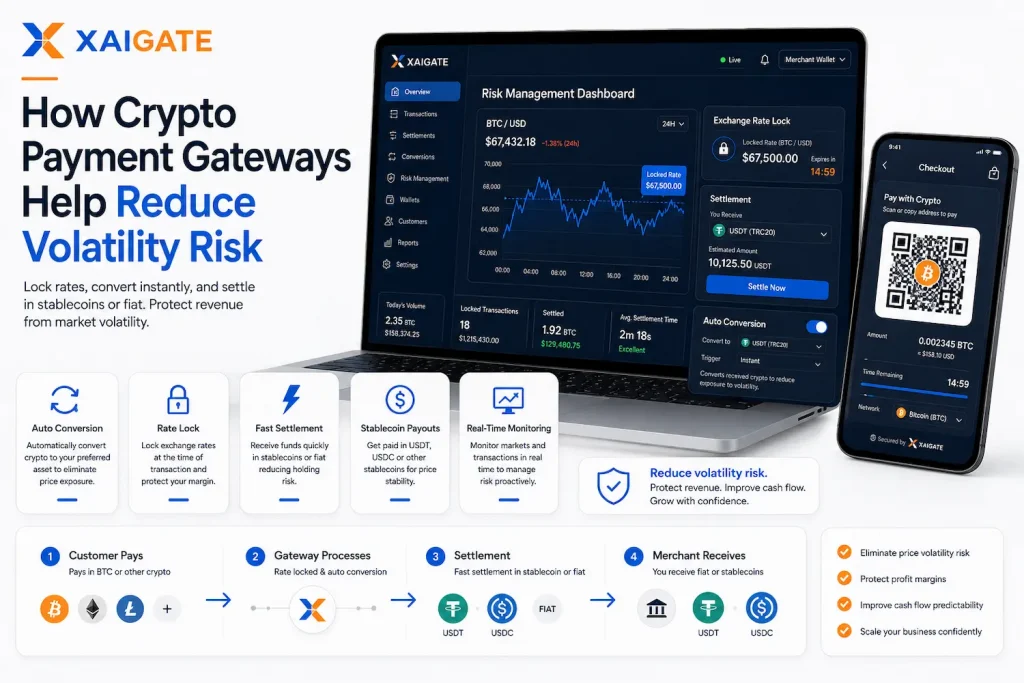
How Crypto Payment Gateways Help Reduce Volatility Risk
A good crypto payment gateway does not remove market volatility completely. It helps merchants control how much volatility reaches their business operations.
Important features include:
- Real-time exchange rate calculation: The gateway calculates crypto prices at checkout, so customers pay the current value.
- Stablecoin payment options: USDT and USDC help merchants avoid major price swings.
- Fast confirmation and settlement: Shorter processing time reduces exposure to price movement.
- Clear dashboard: Merchants can track payments, balances, refunds, and transaction status.
- API and plugin integration: Smooth integration reduces manual payment errors.
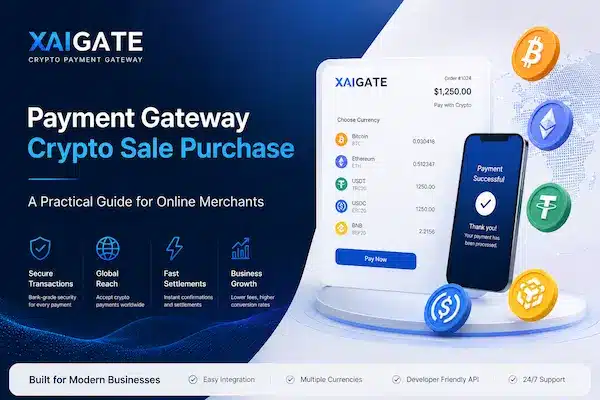
This is where XAIGATE fits well as a practical crypto payment gateway. It is positioned for simple crypto acceptance, low fees, non-custodial payments, multiple blockchain support, and fast API or plugin integration.
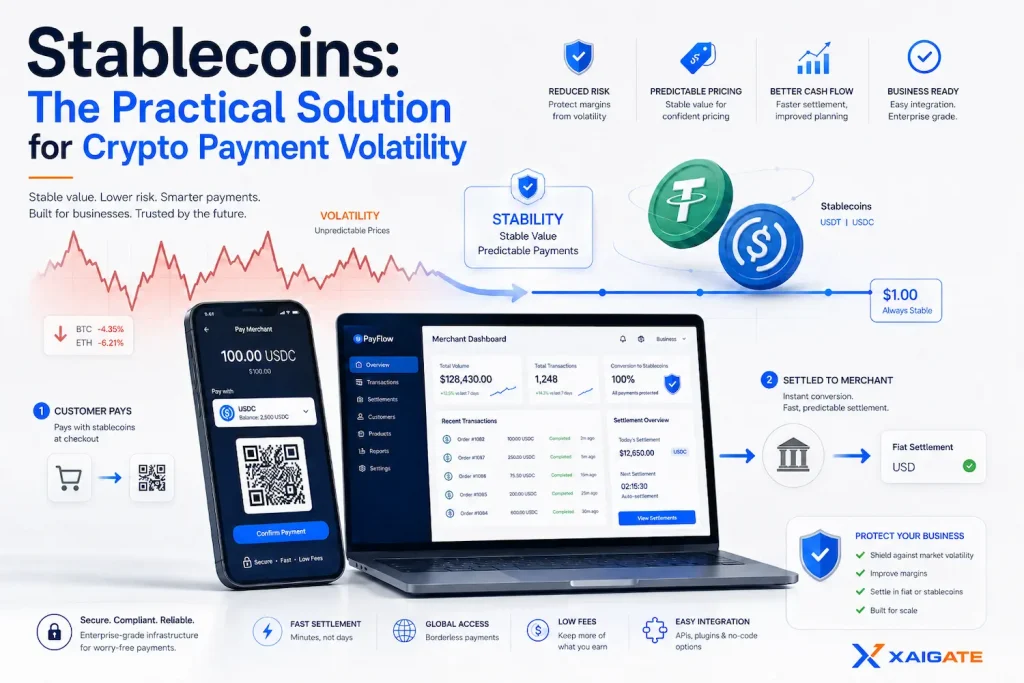
Stablecoins: The Practical Solution for Crypto Payment Volatility
Stablecoins are often the best starting point for merchants that want crypto payments without heavy exposure to market swings.
They help businesses accept crypto while keeping value closer to fiat. USDT and USDC are easier to use for invoices, checkout pricing, subscriptions, and international payments.
For many merchants, the best approach is not choosing between crypto and fiat. It is accepting crypto through stablecoins, then adding BTC, ETH, or other coins based on customer demand.
See more: Top Crypto Payment Gateways 2026: Best Options for Global Merchants
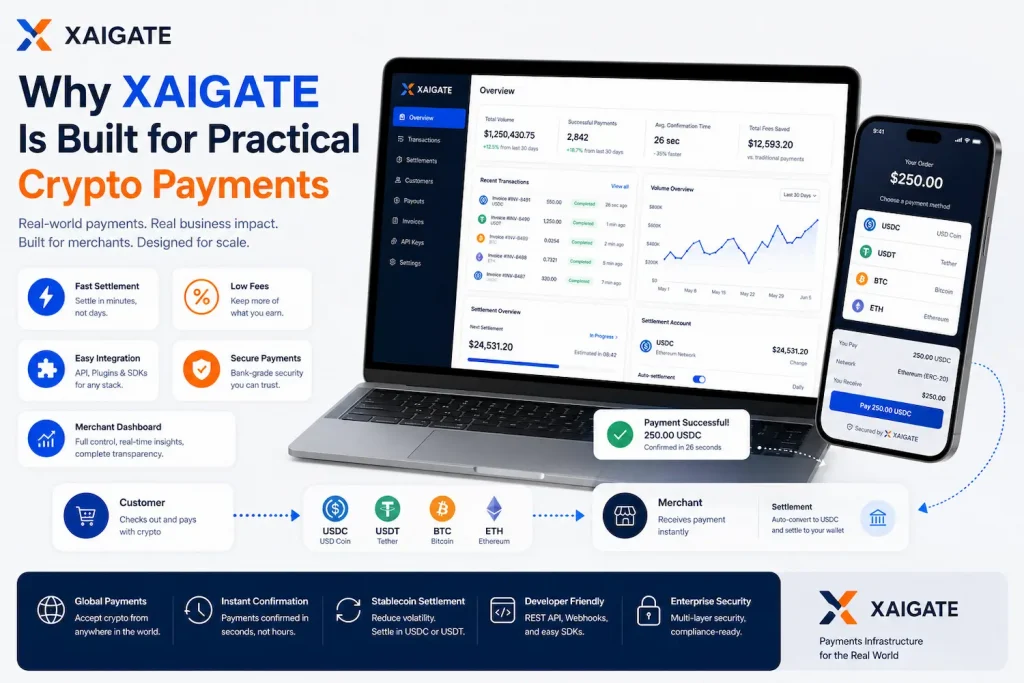
Why XAIGATE Is Built for Practical Crypto Payments
XAIGATE is designed for businesses that want crypto payments without unnecessary complexity. It works like a crypto version of familiar payment tools, helping merchants receive digital assets from global customers.
Key strengths include:
- Low fee around 0.2% per transaction: Helps protect margins, especially for high-volume merchants.
- Non-custodial model: XAIGATE does not hold user funds, which supports greater control.
- Multiple blockchain and coin support: Businesses can serve more crypto users globally.
- API and plugin integration: Merchants can connect crypto checkout faster.
- Simple payment experience: XAIGATE focuses on practical crypto payments, not complicated Web3 workflows.
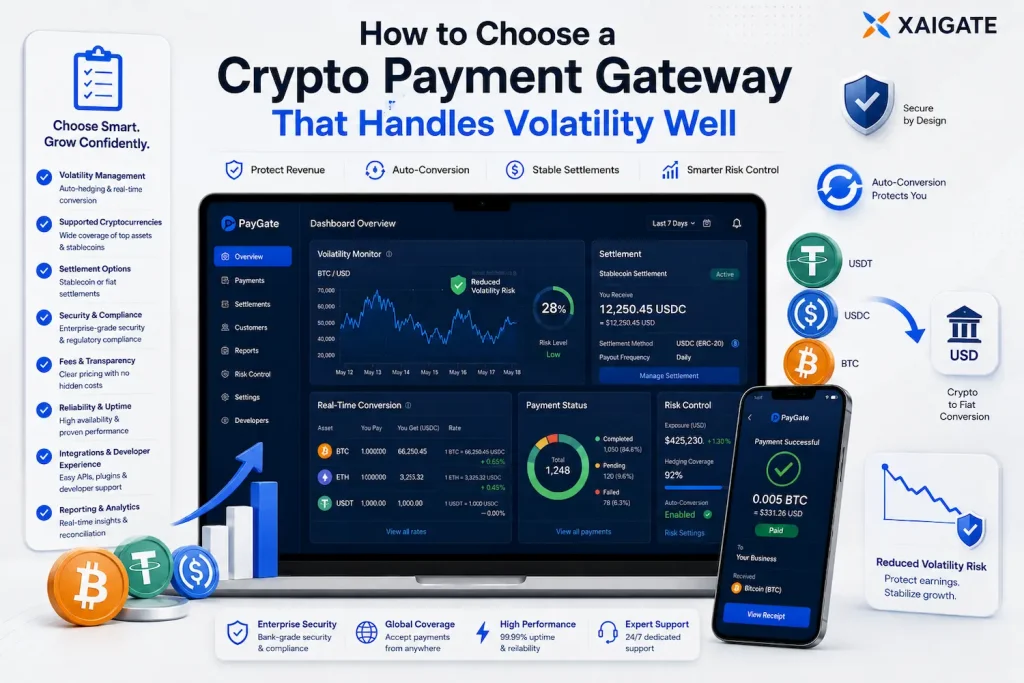
How to Choose a Crypto Payment Gateway That Handles Volatility Well
Before choosing a gateway, merchants should check how the system manages price movement, settlement, and reporting.
Focus on these criteria:
- Stablecoin support: USDT and USDC reduce crypto volatility risk.
- Settlement speed: Faster processing limits exposure during market movement.
- Transparent fees: Low, clear fees protect profit margins.
- Simple integration: API and plugins reduce development time.
- Readable reporting: Finance teams need clean data for reconciliation.
A payment gateway should make crypto easier to use, not harder to manage.
Conclusion
Payment gateway crypto volatility is a real concern, but it should not stop merchants from accepting crypto. The right setup can reduce risk through stablecoins, real-time pricing, fast settlement, and clear reporting.
XAIGATE helps businesses accept crypto payments globally with low fees, simple integration, and a practical non-custodial model.
Start accepting crypto with XAIGATE today and give your customers a faster, simpler way to pay.
For daily updates, subscribe to XAIGATE’s blog!
We may also be found on GitHub, and X (@mxaigate)! Follow us!
FAQs
1. What is crypto volatility in payments?
It means cryptocurrency prices can change quickly during or after a transaction.
2. Why does volatility matter for merchants?
Price changes can affect revenue, margins, refunds, and settlement value.
3. Can a crypto payment gateway reduce volatility risk?
Yes, it can use stablecoins, fast settlement, pricing tools, and conversion options.
4. Are stablecoins useful for crypto payments?
Yes, USDT and USDC help keep payment value more stable than volatile coins.
5. Should merchants accept only Bitcoin?
Not always. Many merchants also accept stablecoins to reduce price risk.
6. What is instant conversion?
It converts crypto payments into another asset or fiat value quickly after payment.
7. Can volatility affect refunds?
Yes, refund value may differ if crypto prices move after the original payment.
8. How can merchants manage crypto pricing?
They can use real-time exchange rates, fixed checkout windows, and clear policies.
9. Is crypto volatility always bad?
No, but merchants need tools and rules to control payment and settlement risk.
10. How does XAIGATE help with volatility?
XAIGATE helps merchants accept crypto with stablecoin support, gateway tools, and flexible payment workflows.