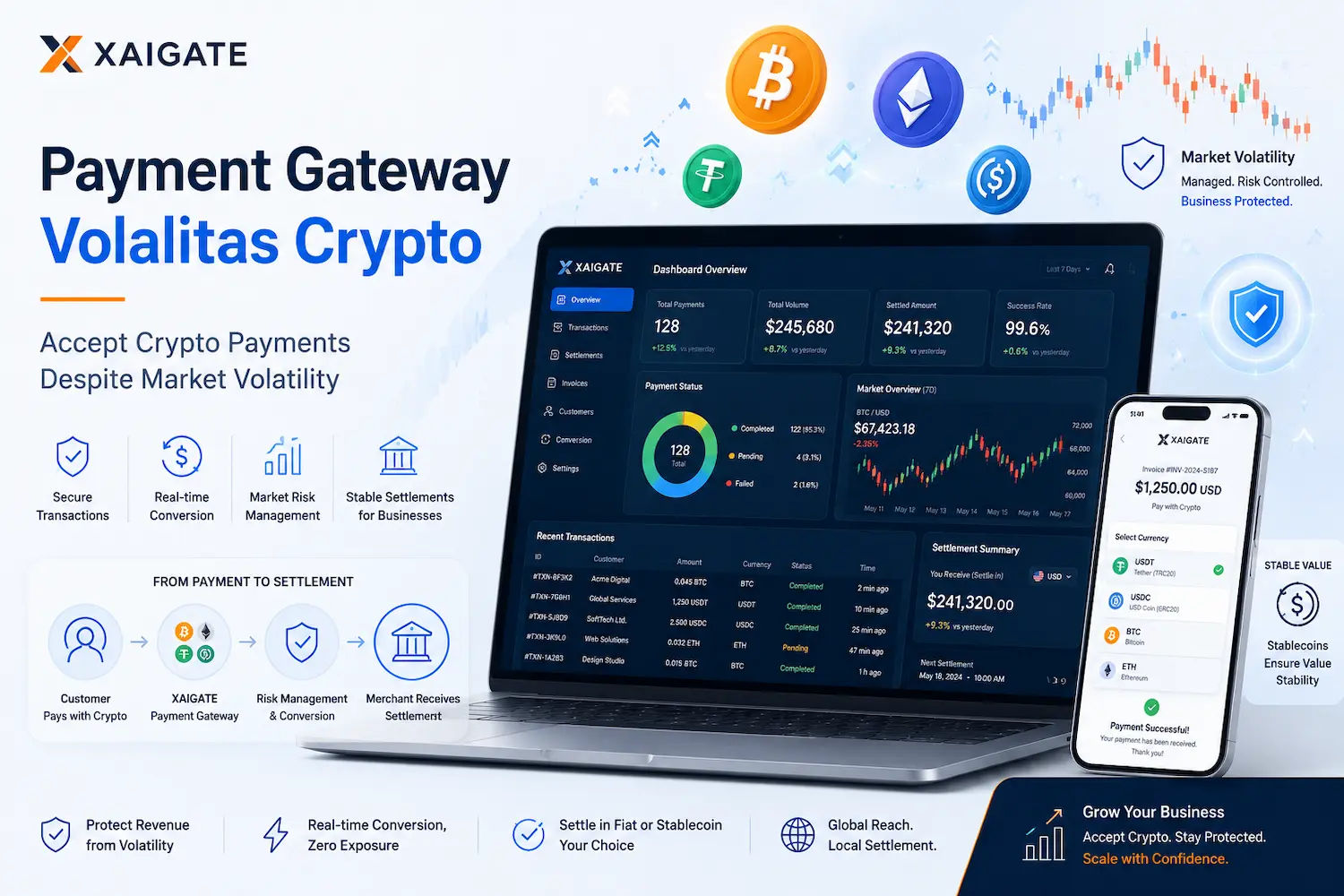
Crypto payments look like an open highway for global business, but volatility can feel like a sudden storm on that road. A customer may pay in crypto today, while the asset value shifts before the merchant settles it. That is why a payment gateway volalitas crypto strategy matters. It helps businesses accept digital assets with more control, lower friction, and fewer operational surprises. Explore the details withXAIGATE in the article below.
What Does Payment Gateway Volalitas Crypto Mean?
Payment gateway volalitas crypto refers to a crypto payment system designed to help merchants receive digital asset payments while managing price volatility. In simple terms, it connects customers who want to pay with crypto and businesses that want a smoother payment process.
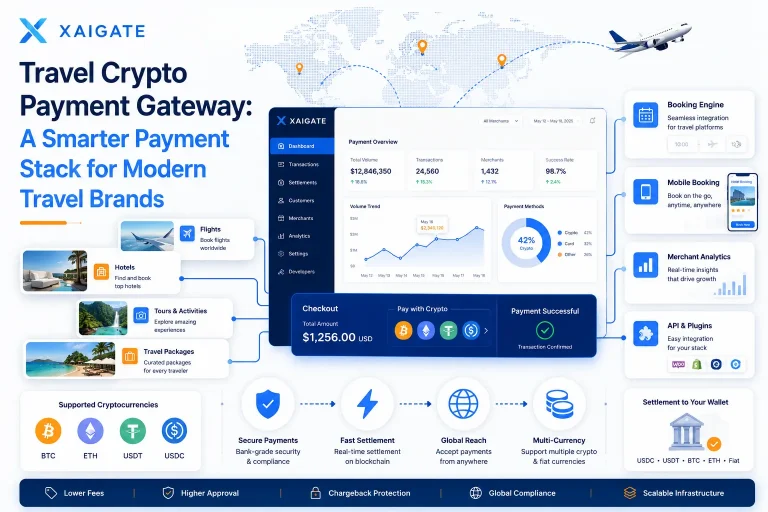
For merchants, the gateway handles core payment steps such as invoice creation, payment tracking, transaction confirmation, and settlement visibility. Instead of manually checking wallets or blockchain explorers, the business can manage crypto payments through one dashboard, API, or plugin.
This matters because crypto prices can move quickly. Without a payment gateway, a merchant may struggle with delayed confirmations, wrong payment amounts, unclear payment status, and manual reconciliation.

Why Crypto Volatility Creates Payment Challenges for Businesses
Crypto adoption can expand global reach, but volatility changes how merchants think about pricing, settlement, and revenue protection.
Price Fluctuations Can Affect Real Revenue
When a customer pays with a volatile asset, the value may change between checkout and settlement. A business selling a product for $500 does not want to receive crypto worth much less after confirmation.
This creates several risks for merchants:
- Revenue mismatch: The displayed price and final crypto value may differ if the market moves quickly.
- Accounting complexity: Finance teams need clear records for payment value, transaction time, and settlement status.
- Customer disputes: If the payment amount changes during checkout, customers may become confused or abandon the transaction.
A payment gateway helps reduce these issues by creating clearer payment windows, tracking transaction status, and giving merchants better operational control.
See more: Top commercial benefits of crypto payment gateways
Slow Settlement Increases Exposure to Market Swings
The longer a crypto payment remains unsettled, the more exposed the business becomes to price movement. This is especially important for high-ticket products, global orders, or businesses with tight margins.
Fast confirmation and clear settlement tracking help merchants reduce uncertainty. They can see whether a payment is pending, confirmed, underpaid, overpaid, or completed.
For businesses, this means fewer manual checks and fewer delays between customer payment and order processing.
Complex Payment Operations Make Adoption Harder
Many businesses are interested in crypto payments, but they do not want complicated Web3 infrastructure. They need a practical payment layer, not a technical maze.
Common operational barriers include:
- Manual wallet monitoring: Teams must check blockchain transactions one by one.
- Difficult integrations: Developers may spend too much time connecting checkout systems.
- Hidden fees: Unclear cost structures make crypto payments harder to forecast.
- KYC friction: Some merchants prefer faster onboarding with flexible verification requirements.
A strong gateway solves these problems by simplifying checkout, payment tracking, and technical integration.

How a Crypto Payment Gateway Reduces Volatility Risk
A crypto payment gateway cannot remove market volatility completely. However, it can reduce the operational impact of volatility through speed, visibility, and payment flexibility.
Faster Payment Confirmation and Settlement
Fast payment processing reduces the time between customer payment and merchant confirmation. This helps businesses act quickly and avoid unnecessary exposure to market movement.
A volatility-ready gateway should support:
- Real-time payment status: Merchants can track whether a payment is pending, confirmed, or completed.
- Automated order updates: The store can update order status without manual checking.
- Reliable transaction records: Teams can review payments, amounts, and timestamps more easily.
For e-commerce stores, faster confirmation also improves customer experience. Customers do not want to wait too long after sending crypto.
Multi-Currency Support for Stablecoin Payments
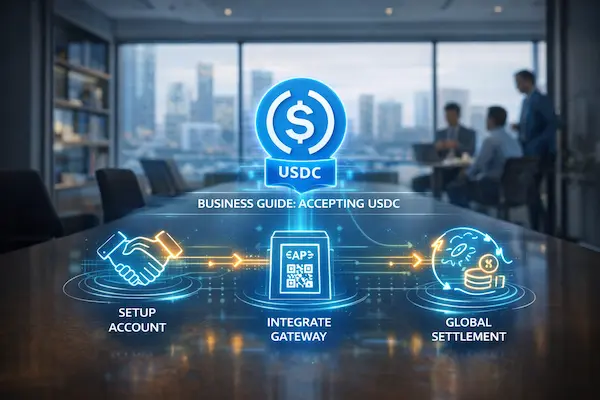
Stablecoins can help reduce volatility because they are designed to track fiat currencies such as the US dollar. For many merchants, accepting USDT or USDC may feel safer than accepting only highly volatile assets.
A payment gateway with multi-currency support gives customers more payment options while helping merchants manage risk better.
This flexibility is valuable because different customers prefer different assets. Some may pay with BTC or ETH, while others may prefer stablecoins for predictable value.
Clear Dashboard, API, and Plugin Integration
A good crypto payment gateway should not force merchants to build everything from scratch. It should provide simple integration options for both technical and non-technical teams.
Important integration tools include:
- Dashboard: Helps merchants view payments, revenue, transaction status, and settlement activity.
- API: Allows developers to connect crypto payments with custom websites, apps, or platforms.
- Plugins: Support faster setup for e-commerce platforms such as WooCommerce or similar systems.
When the payment system is easy to manage, businesses can focus on sales instead of blockchain operations.

See more: Why Use a Crypto Payment Gateway: Key Advantages You Should Know
Key Features to Look for in a Volatility-Ready Crypto Payment Gateway
A business should choose a gateway based on practical value, not only crypto hype. The best option should make payment acceptance simple, stable, and cost-efficient.
Key features to review include:
- Low transaction fees: Lower fees help protect margins, especially for high-volume businesses.
- Stablecoin support: USDT and USDC payments can reduce exposure to market volatility.
- Fast confirmation: Shorter processing time limits uncertainty during checkout.
- Non-custodial structure: Merchants can avoid unnecessary fund-holding risk.
- API and plugin support: Easy integration helps businesses launch faster.
- Transparent pricing: Clear fee structures reduce unexpected costs.
- Global payment access: Merchants can serve customers across borders without relying only on banks.
These features help businesses accept crypto with more confidence, even when market prices move quickly.
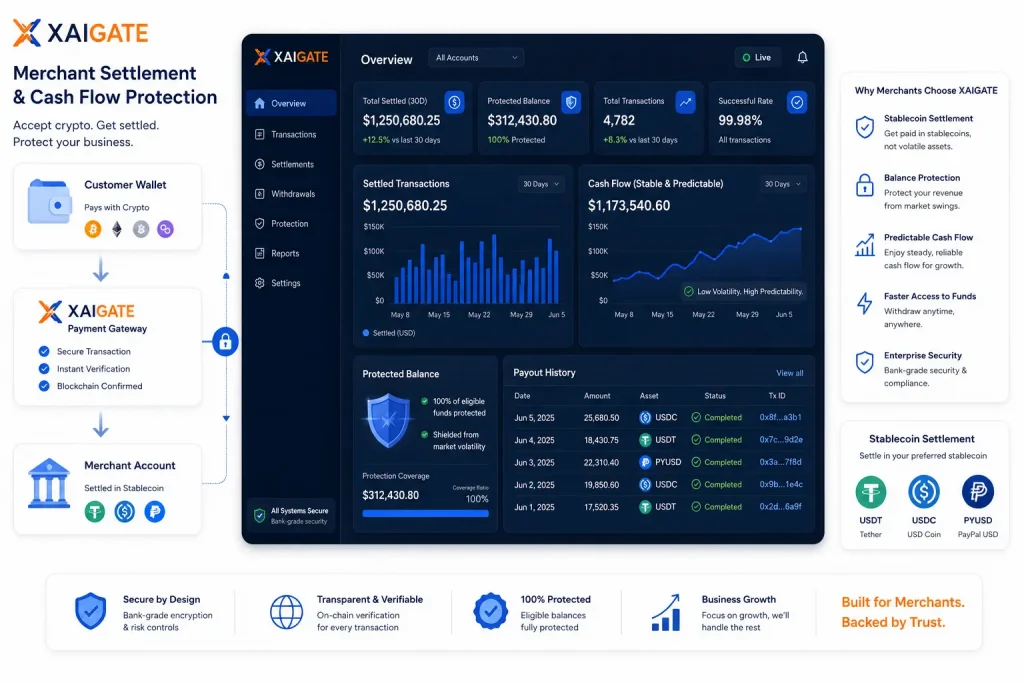
Why XAIGATE Is a Practical Choice for Crypto Payments
XAIGATE is positioned as a practical crypto payment gateway for businesses that want simple, low-friction digital asset payments. Instead of making crypto adoption complex, XAIGATE focuses on usability, cost control, and merchant flexibility.
For businesses dealing with crypto volatility, XAIGATE offers several practical advantages:
- Low fees: Around 0.2% per transaction helps merchants reduce payment costs.
- Non-custodial model: Businesses keep more control because the gateway does not hold user funds.
- Multiple blockchain and coin support: Customers can pay with different digital assets, including popular crypto options.
- Fast API and plugin integration: Merchants can connect crypto payments without building a full payment system from zero.
- Flexible KYC approach: Onboarding can be simpler depending on the merchant case.
This makes XAIGATE suitable for online stores, digital service providers, global merchants, SaaS platforms, and businesses that want to accept crypto without operational complexity.
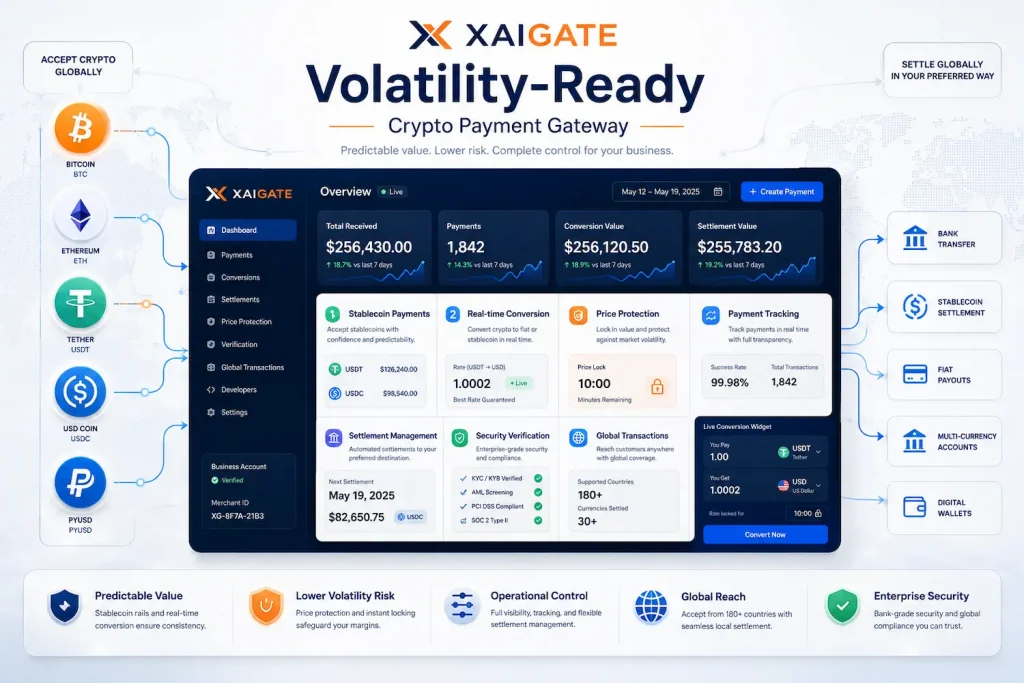
Conclusion
Crypto volatility is real, but it should not stop businesses from serving global crypto users. With the right payment gateway volalitas crypto strategy, merchants can reduce payment friction, improve settlement visibility, support stablecoins, and control transaction costs.
XAIGATE gives businesses a practical way to accept crypto payments with low fees, simple integration, and flexible payment support. Start accepting crypto with XAIGATE today and turn volatility into a manageable payment challenge, not a business barrier.
For daily updates, subscribe to XAIGATE’s blog!
We may also be found on GitHub, and X (@mxaigate)! Follow us!
FAQs
1. What is crypto volatility in payment gateways?
It means crypto prices can change quickly before, during, or after payment.
2. Why does crypto volatility matter for merchants?
It can affect payment value, profit margin, settlement, refunds, and accounting.
3. Can a crypto payment gateway reduce volatility risk?
Yes, it can use stablecoins, pricing tools, fast settlement, and conversion options.
4. Are stablecoins useful for crypto payments?
Yes, USDT and USDC help keep payment value more stable.
5. Should merchants accept only volatile coins?
Not always. Many merchants combine Bitcoin, altcoins, and stablecoins.
6. What is fast settlement?
It means payments are confirmed and moved quickly to reduce price exposure.
7. Can crypto volatility affect refunds?
Yes, refund value may change if crypto prices move after the original payment.
8. How can merchants manage crypto price risk?
Use stablecoins, fixed checkout rates, short payment windows, and clear refund rules.
9. Is crypto volatility always a problem?
No, but businesses need the right tools to manage payment and settlement risk.
10. How does XAIGATE help with crypto volatility?
XAIGATE helps merchants accept crypto with gateway tools, stablecoin options, and flexible payment workflows.