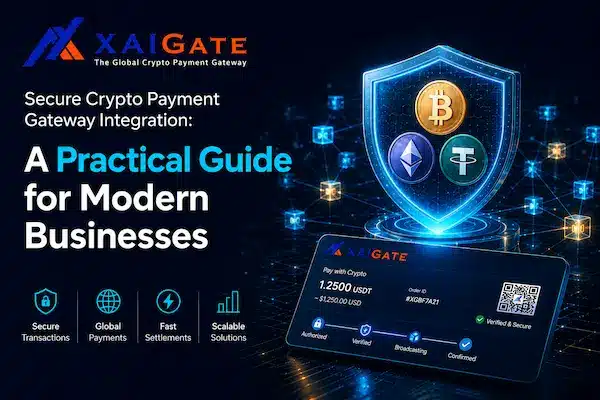
Building a crypto payment product without a security-first architecture is like constructing a vault with a glass front door. The interface may look modern, the checkout may feel smooth, and the integration may seem fast, but one weak control can expose wallets, merchant funds, customer data, and business reputation at the same time. If you want to develop a secure crypto payment gateway, you need to treat security as a product layer, not a final testing task. In practice, that means designing around API abuse, key protection, access control, monitoring, and compliance from day one. Explore the details with XAIGATE in the article below.
Contents
- 1 Start with a secure-by-design architecture
- 2 Harden API security before you add features
- 3 Use phishing-resistant MFA for privileged access
- 4 Build key management like a core security product
- 5 Add monitoring that detects abuse early
- 6 Treat compliance as a security control, not a legal checkbox
- 7 Test continuously, not only before release
- 8 FAQs – Tips to Develop a Secure Crypto Payment Gateway
- 9 Conclusion
Start with a secure-by-design architecture
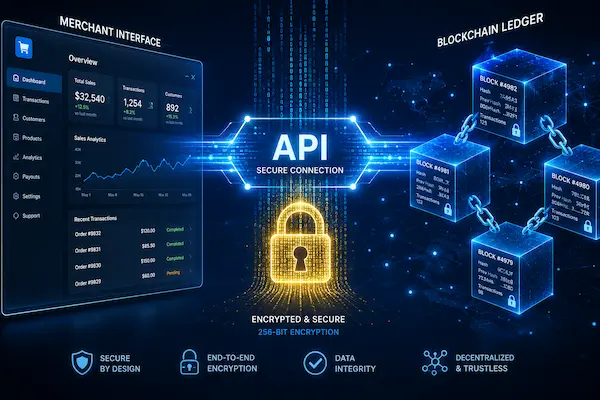
A secure crypto payment gateway should separate critical trust boundaries instead of putting everything into one application layer. Wallet management, merchant checkout, settlement, admin operations, and compliance workflows should not all share the same privileges or runtime context.
Three design principles matter most here:
- Isolate high-risk services: Put signing logic, payout approval, admin actions, and treasury functions into tightly controlled services with narrower permissions. This reduces blast radius when one service is compromised.
- Minimize direct exposure: Public APIs should never expose internal identifiers, signing systems, or operational endpoints without strict authorization and validation.
- Design for failure containment: Add rate limits, transaction thresholds, approval rules, circuit breakers, and manual review triggers for abnormal behavior.
This matters because modern payment stacks are API-heavy by default. The more endpoints you expose, the more attack surface you create unless authorization is checked at every function and every object access.

Harden API security before you add features
If your main keyword is tips to develop secure crypto payment gateway, this is the section that deserves the most attention. In real systems, API weaknesses are often easier to exploit than core cryptography.
Enforce object-level and function-level authorization
A merchant should only access its own invoices, balances, payouts, and webhooks. An internal support user should not automatically inherit finance privileges. An API consumer should never be able to change an invoice, payout, or wallet object just by guessing an identifier. OWASP lists broken object level authorization and broken function level authorization among the most critical API risks for exactly this reason.
Protect authentication and sessions aggressively
Broken authentication remains one of the most common entry points for abuse. Use short-lived tokens, secure refresh logic, device-aware sessions, anomaly checks, and forced re-authentication for sensitive actions such as payout edits, API key creation, and settlement changes. NIST states that phishing-resistant authenticators provide stronger protection against verifier impersonation attacks, which is highly relevant for admin access and treasury workflows.
See more: Top Crypto Payment Gateways 2026: Best Options for Global Merchants
Validate input, payload size, and business logic
Do not only validate format. Validate intent. A secure gateway should check currency pair compatibility, network selection, destination address rules, transaction limits, webhook origin, and replay conditions. OWASP’s API Security Top 10 also highlights unrestricted resource consumption, which means weak controls around request size, frequency, or processing cost can become a denial-of-service problem.

Use phishing-resistant MFA for privileged access
Not every user account needs the same control set, but every high-privilege account does. Admin consoles, signer systems, merchant finance roles, compliance dashboards, and payout approval flows should require strong multi-factor authentication.
NIST’s digital identity guidance distinguishes phishing-resistant authentication from weaker forms, and its draft guidance explicitly notes that OTP authentication is not phishing-resistant. PCI SSC also emphasizes MFA as a core control in payment environments, and PCI DSS 4.0.1 clarified applicability around phishing-resistant authentication for certain access cases. Together, those sources point to a practical rule: the more sensitive the action, the stronger the authentication method should be.
For a crypto payment gateway, this usually means:
- Prefer hardware-backed or cryptographic authenticators for internal privileged users
- Require step-up authentication for payout releases and settlement edits
- Limit shared admin accounts and enforce role-based access
- Review session history and alert on impossible travel or suspicious device changes
Build key management like a core security product
No matter how polished the checkout is, weak key handling will break the entire trust model. NIST defines key management as covering the full lifecycle of keys, including generation, storage, use, and destruction. That lifecycle approach is exactly what crypto gateways need for wallet infrastructure, signing services, API secrets, and internal encryption keys.
Separate operational convenience from key custody
Do not let development speed drive custody design. Signing keys, treasury keys, and hot-wallet controls should live in a dedicated key management system with strict policies, logging, and approval boundaries. NIST’s cryptographic key management guidance and CKMS materials both stress that secure key management depends on policies, procedures, devices, and system controls, not just encryption alone.
Rotate, revoke, and inventory secrets
API tokens, webhook secrets, database credentials, and internal service keys should be centrally managed, audited, and rotated. OWASP’s Secrets Management Cheat Sheet recommends centralized storage, controlled provisioning, auditing, and rotation because secrets sprawled across codebases and servers are hard to track after a leak.
Reduce hot wallet exposure
Only keep the operational liquidity you need in hot infrastructure. Push excess funds into colder, more controlled environments. This limits loss severity if a production environment is breached or an internal workflow is abused.

Add monitoring that detects abuse early
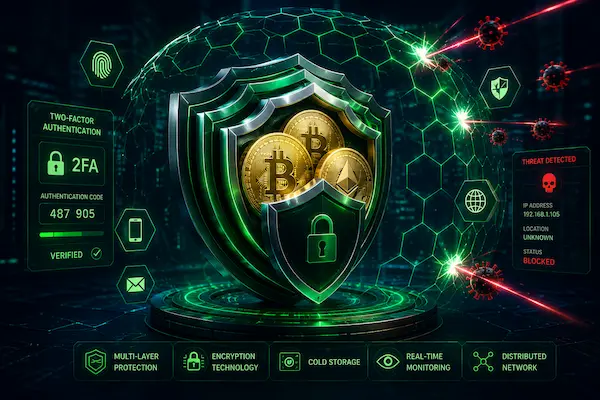
A secure crypto payment gateway should not rely on prevention alone. You also need the ability to detect suspicious behavior before it becomes a major loss event.
CISA’s event logging guidance recommends a baseline logging strategy to improve threat detection, while its logging recommendations also stress protecting logs from unauthorized access or deletion. For a payment gateway, that means centralizing logs across API gateways, wallet operations, auth systems, admin actions, webhook events, and payout workflows.
Focus your monitoring on these signals:
- repeated failed logins or MFA resets
- unusual API key creation or scope changes
- merchant payout destination changes
- sudden spikes in refund or withdrawal attempts
- repeated webhook replays
- abnormal transaction size, velocity, or geography
- admin privilege escalation events
Good logging is not just forensic hygiene. It helps your team contain incidents faster, understand attacker behavior, and prove operational discipline to partners and merchants.
See more: Top commercial benefits of crypto payment gateways
Treat compliance as a security control, not a legal checkbox
Crypto payment gateways often operate across multiple jurisdictions, fiat rails, and risk categories. That means your architecture should support compliance workflows without undermining product usability.
FATF’s virtual asset guidance and later implementation updates make clear that AML/CFT expectations for virtual asset service providers remain a central global issue, including Travel Rule implementation and risk-based supervision. Even if your exact obligations vary by market and business model, the design implication is clear: transaction monitoring, counterparty screening, audit trails, and policy enforcement cannot be improvised after launch.
A practical security-minded compliance stack should include:
- risk-based onboarding and merchant verification
- transaction monitoring rules
- sanction and suspicious activity screening
- case management with audit logs
- jurisdiction-aware payout and token controls
- data retention policies aligned with regulatory needs

Test continuously, not only before release
Security testing for a crypto gateway should be continuous because the threat surface changes whenever you add coins, chains, plugins, payout methods, or merchant features. OWASP’s secure coding and API guidance both support the idea that secure development requires repeatable controls across the software lifecycle, not one-time review.
Use a layered testing program that includes code review, dependency scanning, API testing, secrets scanning, infrastructure validation, and targeted penetration testing. Then connect those results to release gates. Security findings that affect wallet logic, auth flows, settlement, or webhook trust should block production until fixed.
FAQs – Tips to Develop a Secure Crypto Payment Gateway
1. How do you develop a secure crypto payment gateway?
Start with secure architecture, API protection, key management, and monitoring.
2. Why is secure-by-design important?
It reduces attack surface and limits damage from breaches.
3. What API security controls matter most?
Authorization, authentication, rate limits, validation, and replay protection.
4. Why is MFA important for admins?
MFA protects privileged access and payout workflows.
5. How should crypto keys be protected?
Use secure key management, rotation, logging, and strict access controls.
6. Should hot wallets hold large funds?
No, keep only needed liquidity in hot wallets.
7. Why is monitoring important?
It detects suspicious logins, API abuse, payouts, and webhook attacks.
8. Is compliance part of security?
Yes, AML, screening, audit logs, and controls reduce platform risk.
9. How often should testing happen?
Continuously, not only before launch.
10. What should developers secure first?
Secure APIs, wallets, keys, admin roles, webhooks, and settlement flows.
Conclusion
The best tips to develop secure crypto payment gateway products all point back to one principle: security has to be structural. Strong API authorization, phishing-resistant MFA, disciplined key management, centralized logging, and compliance-aware workflows are not optional add-ons for growth-stage platforms. They are the foundation that protects merchant trust and business continuity.
If XAIGATE is shaping your next crypto payment gateway strategy, start with the security model first, then build the payment experience on top of that foundation. The result is simpler to scale, easier to audit, and far more resilient when real-world attack pressure begins.
For daily updates, subscribe to XAIGATE’s blog!
We may also be found on GitHub, and X (@mxaigate)!