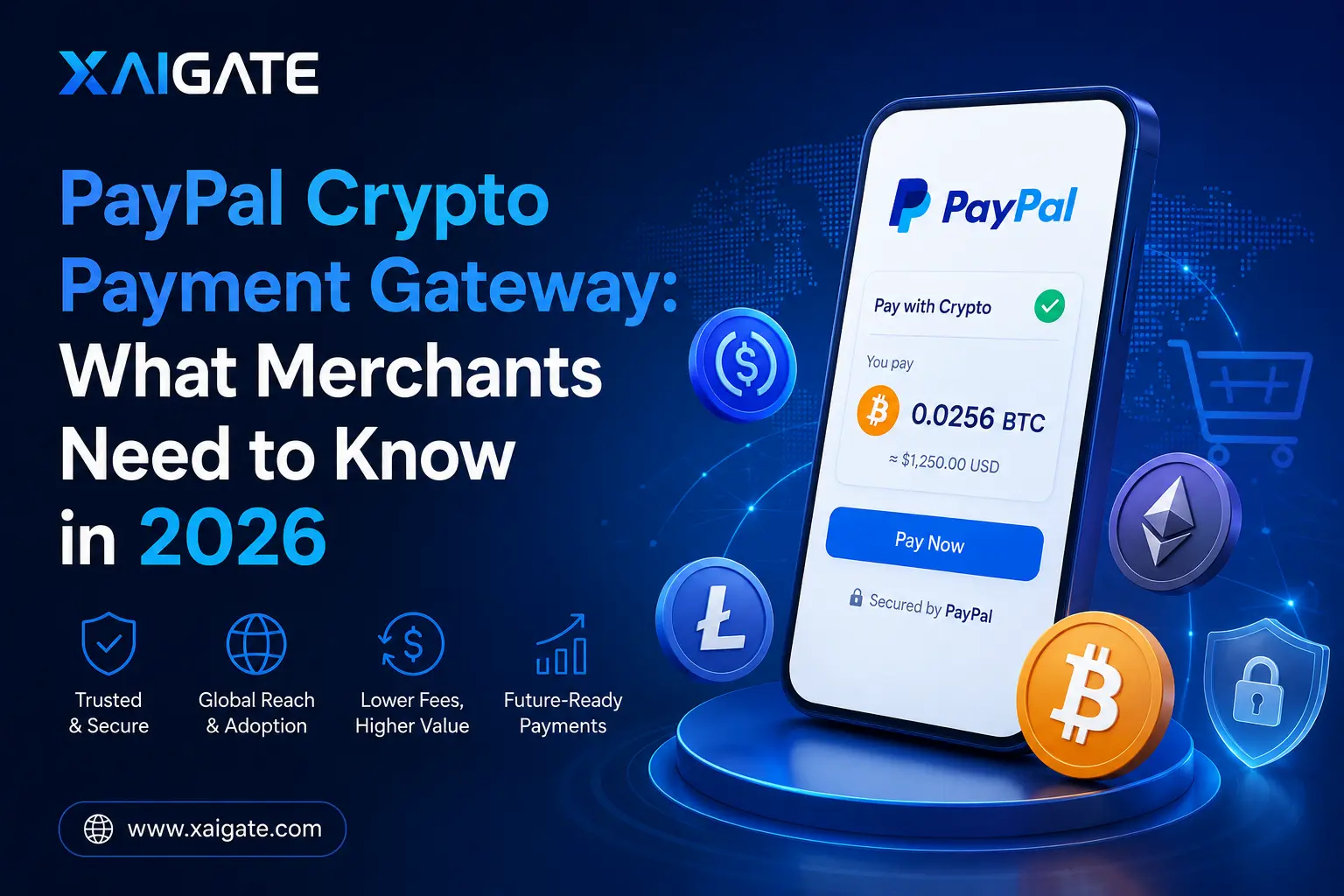
Adding crypto checkout can feel like opening a new sales door without knowing what is behind it. Some gateways promise reach, faster settlement, and lower fees, yet the real value depends on how the product works for merchants day to day. That is why the PayPal crypto payment gateway deserves a closer look. PayPal now offers a merchant product called Pay with Crypto, but it is not a one-size-fits-all solution. For the right business, it can simplify cross-border payments and expand buyer choice. For the wrong setup, its geographic limits and feature gaps may become friction points instead. Explore the details with XAIGATE in the article below.
What is the PayPal crypto payment gateway?
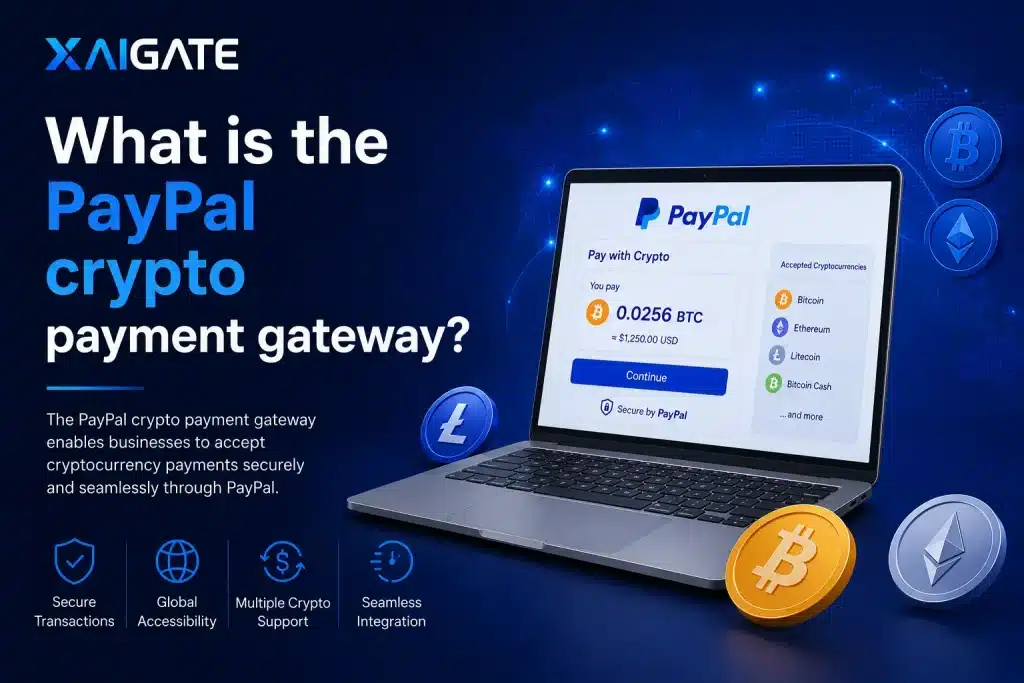
The PayPal crypto payment gateway is PayPal’s merchant-facing crypto checkout option, branded as Pay with Crypto. It allows customers to pay in cryptocurrency while the merchant receives settlement in local currency through PayPal. That means merchants do not need to hold volatile crypto just to offer a crypto payment option at checkout.
This matters because many businesses want the upside of crypto acceptance without the treasury complexity. PayPal positions the product around easier adoption, lower cross-border friction, and broader buyer reach. Its developer documentation says merchants can accept crypto from global buyers, receive automatic local-currency settlement, and plug the method into an existing PayPal for Business integration using the Orders V2 API.
In other words, PayPal is not asking merchants to become crypto-native. It is offering a bridge between crypto-paying customers and familiar business settlement flows. That makes the solution attractive for brands that already trust PayPal and want a lower-friction way to test crypto commerce.
How PayPal crypto payments work at checkout
The checkout flow is designed to look simple for the merchant, even though the crypto action happens in the background. A business presents Pay with Crypto at checkout, creates an order through PayPal, then sends the buyer to PayPal for approval. The buyer selects a wallet or exchange account, approves the payment, and PayPal handles the conversion and settlement.
Merchant flow in practice
For the merchant, the process follows a familiar payment stack rather than a direct on-chain checkout model. That reduces technical overhead for businesses already using PayPal infrastructure. Instead of building a crypto wallet experience from scratch, the merchant can extend an existing PayPal setup with another payment option.
The practical benefit is operational continuity. Finance teams still work within PayPal account structures, and customer-facing teams can present crypto as one more checkout choice instead of a separate payment environment. That lowers implementation risk for businesses that want controlled experimentation.
See more: Why Use a Crypto Payment Gateway: Key Advantages You Should Know
Buyer experience and wallet support
For customers, the experience is broader than PayPal’s own wallet. PayPal says buyers can use supported third-party wallet and exchange options, including sources such as Coinbase and self-custody wallets like MetaMask. The 2025 launch announcement also referenced support across wallets including Coinbase, OKX, Binance, Kraken, Phantom, MetaMask, and Exodus.
That matters because crypto users often prefer to pay from the wallets they already hold, not from a closed merchant-specific environment. A smoother wallet choice can reduce abandonment, especially in global markets where exchange-based holdings are common.
Settlement and volatility protection
One of the strongest parts of the PayPal crypto payment gateway is that PayPal automatically converts the cryptocurrency and settles funds to the merchant’s PayPal account in local currency. This helps merchants avoid direct exposure to token price swings during the payment flow. Refunds, meanwhile, are issued in PYUSD rather than requiring the merchant to hold crypto.
For many mainstream merchants, this is the difference between considering crypto and rejecting it. They may want demand capture, but not treasury volatility, custody management, or balance-sheet complexity. PayPal’s model is built around that business reality.
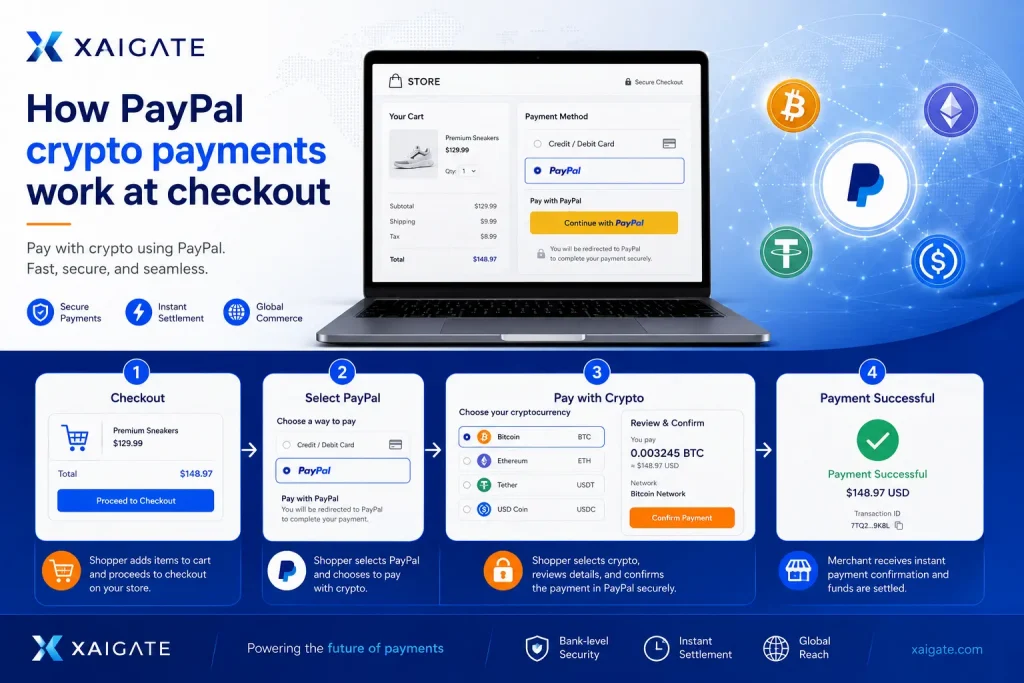
Key features of the PayPal crypto payment gateway
The product looks strongest when you evaluate it as a business tool rather than a pure crypto-native gateway. PayPal highlights reach, ease of integration, and lower transaction costs as the main commercial benefits.
| Feature | What PayPal says | Why it matters for merchants |
| Merchant eligibility | Verified U.S. PayPal Business account required | Best fit for U.S.-based businesses, not global merchant onboarding |
| Buyer reach | Global buyers can pay with supported crypto | Useful for cross-border sales and crypto-native audiences |
| Supported assets | About 100 cryptocurrencies supported | Expands buyer flexibility beyond BTC and ETH only |
| Wallet access | Supports exchanges and self-custody wallets | Reduces friction for existing crypto holders |
| Settlement | Merchant receives local currency | Cuts volatility risk for operations and accounting |
| Minimum transaction | Starts from 0.01 USD | Enables low-ticket purchases and testing |
| Refunds | Refunds issued in PYUSD | Gives a defined refund path without merchant crypto custody |
PayPal’s developer docs also point to reach of more than 650 million pro-crypto consumers worldwide, while the company’s launch announcement framed the addressable market as over 100 supported cryptocurrencies and a crypto market covering about 90% of total market cap. Even if merchants treat those figures as directional rather than guaranteed conversion, they show how PayPal is positioning this solution commercially.
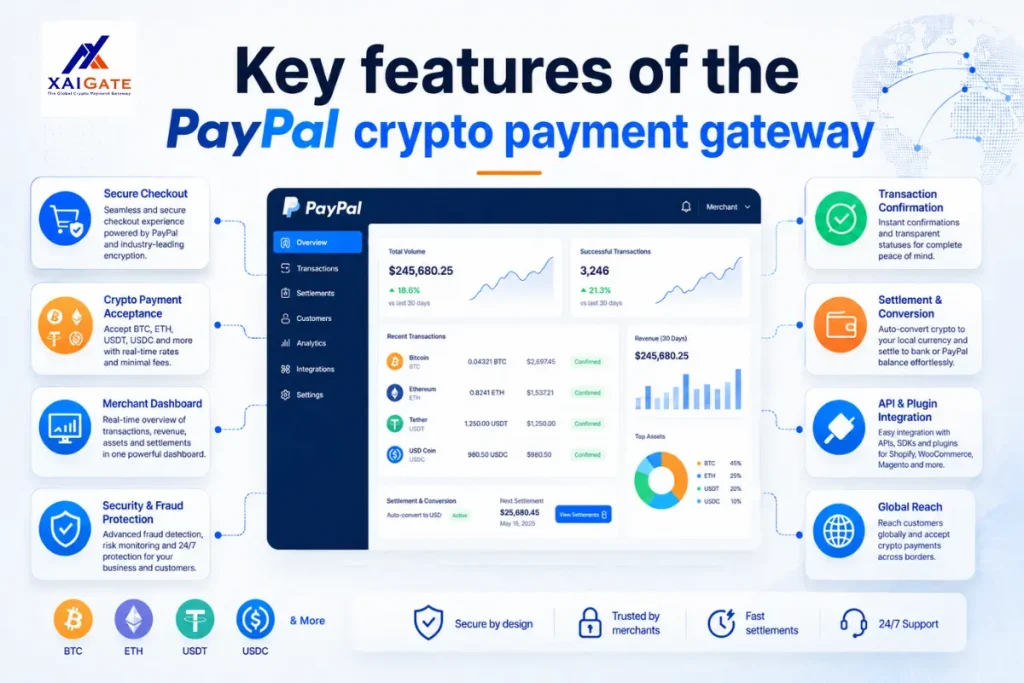
Fees, PYUSD, and the economics for merchants
Pricing is always where interest becomes action. PayPal’s July 28, 2025 launch announcement said Pay with Crypto launched with a 0.99% transaction rate and described that as up to 90% lower than international credit card processing in some cross-border scenarios.
That headline is compelling, but smart merchants should still model real payment economics. Crypto checkout cost is only one part of total margin impact. Settlement timing, refund handling, operational support, and customer adoption all shape whether the gateway improves profit contribution. A lower listed fee is useful only when it fits the business model.
PYUSD also plays a strategic role here. PayPal describes PYUSD as a stablecoin fully backed by U.S. dollar deposits, U.S. Treasuries, and similar cash equivalents, and says it is issued by Paxos on Ethereum, Solana, and Arbitrum. That backing and multi-chain presence strengthen PayPal’s position as it connects traditional checkout, stablecoins, and business payments.
| Economic point | Current detail |
| Launch transaction rate | 0.99% at launch announcement |
| Settlement model | Automatic settlement in local currency |
| Refund model | Refunds in PYUSD |
| PYUSD backing | Backed by U.S. dollar deposits, U.S. Treasuries, and similar cash equivalents |
| PYUSD networks | Ethereum, Solana, and Arbitrum |
See more: Why Businesses Should Use Crypto Payment Gateway: A Complete Guide for Companies
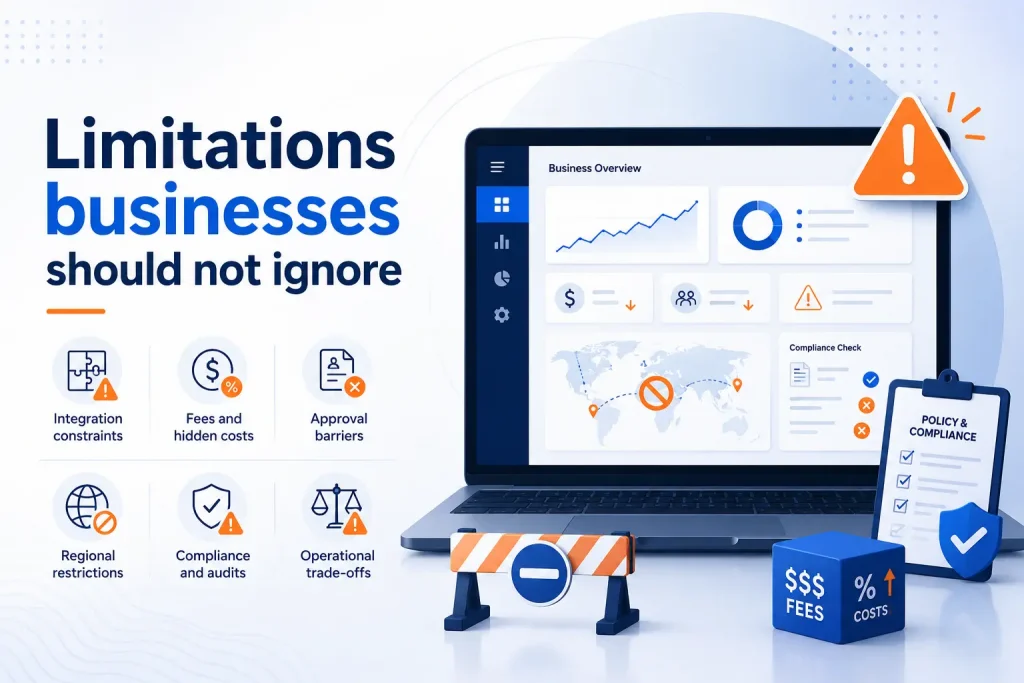
Limitations businesses should not ignore
This is where the PayPal crypto payment gateway needs a realistic review. The official developer documentation is clear that availability is limited to verified U.S. merchants. So while buyers can be global, merchant access is not global. For many international businesses, that alone can remove PayPal from the shortlist.
PayPal also lists several product limitations that matter operationally. Billing agreements, recurring payments, chargebacks, and multi-seller configurations are not supported. Authorization and capture flows are not supported, and vaulted payments are not supported either.
Those restrictions matter most for SaaS, subscription commerce, marketplaces, and complex order management. If your business depends on recurring billing, split settlements, or delayed capture, the product may not fit your checkout architecture yet. In that case, PayPal can still be interesting strategically, but not as your primary crypto payment engine.
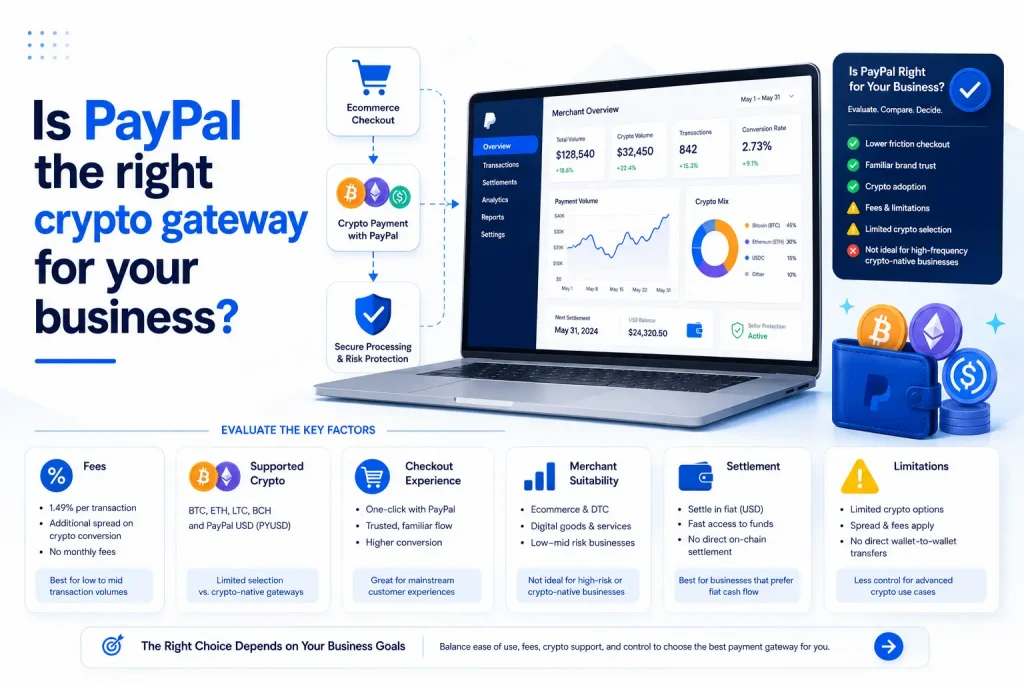
Is PayPal the right crypto gateway for your business?
The answer depends on what role crypto plays in your revenue plan. If you are a U.S. merchant that already uses PayPal, sells internationally, and wants to attract crypto holders without managing custody, PayPal offers a strong entry point. The integration logic is familiar, the buyer payment options are broader than many people expect, and the settlement model is business-friendly.
If you need global merchant onboarding, subscription support, or a more crypto-native settlement structure, PayPal may feel too narrow. In those cases, the better strategy is to compare it with specialized gateways that support broader merchant geographies, different settlement options, or more advanced checkout logic.
The market timing is also favorable. In January 2026, PayPal and the National Cryptocurrency Association said nearly 4 in 10 U.S. merchants surveyed already accept digital assets, showing that crypto checkout is moving from novelty toward mainstream commercial testing. That does not mean every business should add it today, but it does mean ignoring the category is becoming harder to justify.
Final thoughts on the PayPal crypto payment gateway
The PayPal crypto payment gateway is not just a headline feature anymore. It is a real merchant payment option with a clear commercial logic: let buyers pay in crypto, let merchants receive local currency, and reduce the friction that usually blocks crypto adoption. That makes it a practical solution for U.S. merchants that want a safer path into digital asset payments.
At the same time, smart evaluation matters. PayPal’s crypto checkout is strongest for cross-border commerce, mainstream merchant adoption, and simplified treasury handling. It is weaker for subscriptions, marketplace structures, and non-U.S. merchant eligibility. Businesses that understand that tradeoff will make better payment decisions and avoid chasing crypto acceptance as a trend without a business case.
Need a More Flexible Crypto Payment Gateway?
PayPal can be a useful option for eligible merchants that want a familiar payment brand and fiat-based settlement. However, it may not be the right fit for every business, especially if you need broader crypto payment flexibility, lower processing costs, API/plugin integration, multi-chain support, or a more direct crypto-native payment setup.
If your business is looking for a practical, merchant-friendly crypto payment gateway, XAIGATE can help you accept crypto payments with a simple, flexible, and cost-effective approach.
Explore XAIGATE today and start building a smarter crypto payment experience for your business.
For daily updates, subscribe to XAIGATE’s blog!
We may also be found on GitHub, and X (@mxaigate)!
FAQs – PayPal Crypto Payment Gateway
1. What is PayPal crypto payment gateway?
It lets customers pay with crypto through PayPal checkout.
2. How does PayPal crypto checkout work?
Buyers pay in crypto; merchants receive local currency.
3. Does PayPal protect merchants from volatility?
Yes, PayPal converts crypto before merchant settlement.
4. Can PayPal support global crypto buyers?
Yes, global buyers can pay with supported crypto.
5. Is PayPal crypto available to all merchants?
No, it is limited to eligible verified U.S. merchants.
6. Does PayPal support many cryptocurrencies?
Yes, PayPal says it supports many major crypto assets.
7. Are PayPal crypto refunds simple?
Refunds are handled in PYUSD.
8. Is PayPal good for subscriptions?
No, recurring payments are not supported.
9. Is XAIGATE an alternative to PayPal crypto?
Yes, XAIGATE offers crypto gateway tools for merchants.
10. What should merchants compare first?
Compare fees, countries, coins, settlement, refunds, and APIs.