The way people pay online is changing faster than ever. Businesses that once relied only on credit cards or PayPal are now exploring digital currencies as a serious alternative. In 2026, more companies are starting to accept crypto payments on website not just to follow a trend, but to gain real advantages: lower fees, faster settlements, and access to a truly global audience.
Stablecoins like USDT and USDC make this shift even smoother by reducing volatility, while modern crypto payment gateways make integration simple for e-commerce platforms, travel agencies, and even online gaming. If your website has not yet enabled crypto payments, this guide will show you why it matters and how to get started step by step.
1. Why Accept Crypto Payments on Website?
For many businesses, the decision to accept crypto payments on website comes down to one thing: staying competitive in a digital-first economy. Traditional payment methods are still useful, but they carry limitations—high fees, delayed settlements, and restrictions when serving customers overseas. Crypto provides a way out of these bottlenecks.
1. Expand Global Reach
Unlike credit cards or local e-wallets that often fail with cross-border customers, crypto transactions are borderless. Whether your customer is in the U.S., Europe, India, or Vietnam, payment can be completed in minutes without worrying about banking compatibility.
2. Lower Transaction Costs
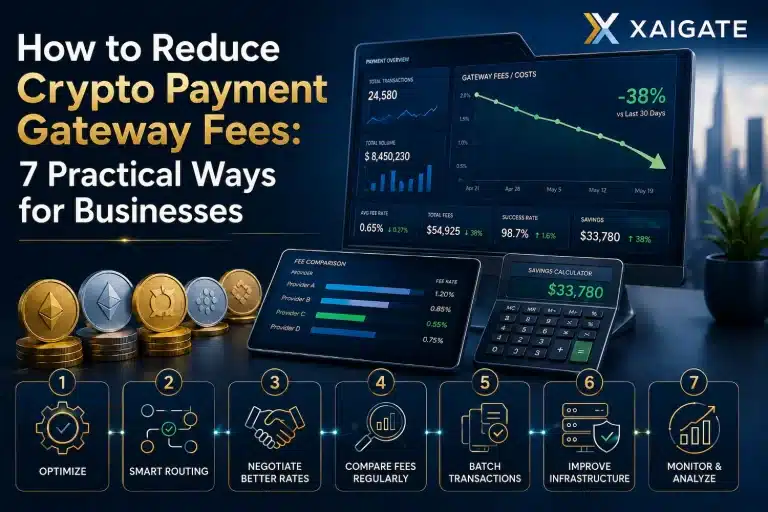
Credit card networks typically charge 2–3% per transaction. By enabling crypto payments, merchants can reduce that to as little as 0.5–1%. For high-volume e-commerce or travel businesses, this difference translates into significant savings every month.
3. Faster Settlement
Instead of waiting three to five business days for funds to clear, crypto payments arrive almost instantly. Stablecoins such as USDT or USDC ensure the value remains steady while delivering near real-time settlement.
4. Customer Trust & Innovation
Younger generations, especially Gen Z and Millennials, are quick to adopt new technologies. By offering crypto as a payment option, a brand signals innovation and inclusivity. This builds trust and strengthens loyalty among digital-savvy customers.
Comparison 1: Traditional Payments vs Crypto Payments
| Feature | Traditional Payments | Crypto Payments on Website |
|---|---|---|
| Settlement Speed | 2–5 business days | Instant – within minutes |
| Transaction Fees | 2–3% per transaction | 0.5–1% per transaction |
| Global Accessibility | Limited by banks & regions | Borderless, global reach |
| Chargeback Risk | High (fraud & disputes) | None (irreversible) |
| Currency Options | USD, EUR, local fiat only | USDT, USDC, BTC, ETH, more |
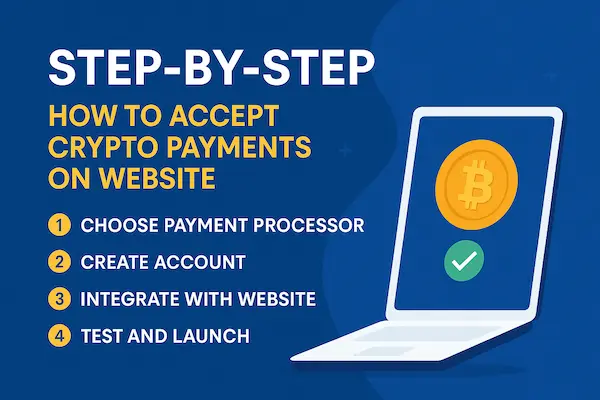
2. Step-by-Step – How to Accept Crypto Payments on Website
Before going live, businesses should follow a structured process. Below are the essential steps every website owner can take to integrate crypto payments smoothly.
1. Select the Right Crypto Payment Gateway
The first step is choosing a trusted gateway. XaiGate is a strong option for businesses that want to accept crypto payments on website with stablecoins like USDT and USDC, low transaction fees, and easy integration. Look for a gateway that offers plugins for WooCommerce, Shopify, and PrestaShop, as well as API support for custom websites.
2. Integrate API or Payment Plugins
After selecting a provider, the next step is integration. Most gateways provide APIs for developers and plugins for popular CMS platforms. Even small businesses without technical teams can set up payments by installing a plugin and connecting their crypto wallet.
3. Enable Multi-Currency & Stablecoin Support
Not all customers want to pay with the same coin. By enabling USDT, USDC, ETH, and BTC, merchants allow flexibility. Stablecoins are especially recommended since they protect against volatility while ensuring instant settlement.
4. Set Up Compliance & KYC/AML Controls
Different regions have different legal frameworks. For example, the U.S. requires strict KYC/AML compliance, while Dubai and Singapore are more open with clear regulations. Using a gateway that automates compliance checks ensures businesses stay safe without extra workload.
5. Test Transactions Before Going Live
Before fully launching, always run test transactions. This ensures wallets are connected properly, confirmation emails are sent, and checkout works seamlessly. Once successful, merchants can confidently activate crypto payments on their live website.
3. Security & Compliance Risks of Accepting Crypto Payments on Website
While the advantages are clear, businesses must also be aware of the risks that come with adopting digital currency payments. Understanding these challenges early helps merchants prepare better solutions.
1. Regulatory Uncertainty
Not every country treats crypto the same way. In the U.S. and parts of Europe, strict KYC/AML requirements are enforced, while regions like Dubai or Singapore provide clearer frameworks. Companies that accept crypto payments on website should stay updated with local laws to avoid unexpected penalties.
2. Market Volatility
Although stablecoins reduce this issue, other cryptocurrencies such as BTC and ETH can change value within hours. Without a proper settlement strategy, merchants risk losing revenue. Many businesses address this by automatically converting crypto to fiat upon payment.
3. Custodial vs Non-Custodial Wallets
With custodial wallets, funds are temporarily held by the gateway provider, creating counterparty risk if the provider faces technical or financial problems. Non-custodial wallets offer direct control, but they require stronger technical knowledge to manage safely.
4. Technical Complexity
Integrating APIs, maintaining wallets, and training staff can be challenging for SMEs. This is why choosing a user-friendly provider like XaiGate can reduce complexity, offering simple plugins and responsive customer support.
Comparison 2: Top Criteria When Choosing a Crypto Payment Gateway
| Criteria | Why It Matters | Best Practice Recommendation |
|---|---|---|
| Supported Currencies | Attracts more customers worldwide | Choose gateways with USDT, USDC, BTC, ETH |
| Transaction Fees | Directly affects profit margin | Look for 0.5%–1% fees only |
| Integration Options | Smooth setup saves time & resources | Select plugins for Shopify, WooCommerce, PrestaShop |
| Compliance & Security | Reduces legal and fraud risks | Use regulated providers with AML/KYC support |
| Conversion to Fiat | Protects against crypto volatility | Auto-convert to USD/EUR when needed |
4. Case Studies – Businesses Accepting Crypto Payments on Website
To understand how crypto payments impact real businesses, let’s look at a few practical examples. These case studies show how different industries have benefited from enabling digital currency transactions.
1. European E-commerce Store
A mid-sized online fashion retailer in Germany decided to accept crypto payments on website alongside traditional methods. Within three months, international orders rose by 30% as customers from Asia and South America found it easier to pay with USDT. The store also saved thousands of euros in transaction fees compared to credit card networks.
2. Dubai Travel Agency
A travel agency in Dubai integrated stablecoin payments for clients booking tours and holiday packages. By switching from credit card processors to a crypto gateway, they reduced payment fees from 3% to just 1%. This cost saving allowed them to offer better pricing, while also attracting new customers from India and China who preferred paying in USDT and USDC.
3. Asian Online Gaming Platform
An online gaming platform in Southeast Asia adopted crypto payments to streamline deposits and withdrawals. By accepting stablecoins, the company eliminated chargeback risks and gave players instant access to funds. Customer retention increased by 20%, proving that crypto is not only a payment option but also a tool to build loyalty in competitive digital industries.
5. Future of Accepting Crypto Payments on Website (2026–2030)
The landscape of online payments is evolving rapidly, and the role of crypto is only set to expand. Businesses that start to accept crypto payments on website today are positioning themselves ahead of the curve for the next wave of innovation.
1. CBDCs and Stablecoin Integration
Central Bank Digital Currencies (CBDCs) are under development in many countries, from the EU to China. As these become mainstream, businesses may be able to handle both CBDCs and stablecoins in the same checkout process. This will further legitimize crypto as a trusted payment method.
2. Mainstream Adoption
Just as PayPal or Visa became standard in e-commerce, crypto payment gateways are moving toward mainstream use. By 2030, it’s expected that millions of small and medium-sized businesses will naturally include crypto alongside credit cards and bank transfers.
3. DeFi and Web3 Payments
Decentralized Finance (DeFi) and Web3 platforms are changing the way value moves online. Instead of routing through banks or processors, future customers could pay directly from their wallets to a merchant’s wallet. This peer-to-peer structure reduces costs and boosts transparency.
4. Global Policy Harmonization
Governments are working toward clearer regulations, especially with frameworks like MiCA in the EU and VARA in Dubai. Once policies stabilize, merchants will have more confidence to accept crypto payments widely without fear of sudden legal shifts.
FAQs – Accept Crypto Payments on Website
1. What does it mean to accept crypto payments on website?
It means letting customers pay directly with crypto like USDT, USDC, BTC, or ETH through a payment gateway.
2. Do I need a license to accept crypto payments on website?
In many regions, yes. The U.S. and EU require compliance, while Dubai and Singapore have clearer rules.
3. Which cryptocurrencies are best for website payments?
Stablecoins such as USDT and USDC are the most reliable, with BTC and ETH also widely used.
4. Can small businesses accept crypto payments easily?
Yes. Plugins for Shopify, WooCommerce, and PrestaShop make setup simple.
5. Is it safe to accept crypto payments online?
Yes, if using a trusted gateway and secure wallets. Stablecoins add extra safety.
6. How do refunds work with crypto transactions?
They are manual. Merchants send funds back to the buyer’s wallet.
7. How much does it cost to accept crypto payments on website?
Usually 0.5%–1% per transaction, cheaper than credit card fees.
8. Can I automatically convert crypto payments to USD or EUR?
Yes, many gateways offer instant conversion to fiat currencies.
Conclusion – Should You Accept Crypto Payments on Website?
Accepting crypto payments on website is no longer just an option; it is becoming a necessity in global commerce. With lower fees, instant settlements, and borderless reach, merchants gain clear advantages over traditional payment methods. Stablecoins like USDT and USDC make transactions safer, while regulated gateways reduce compliance risks.
In 2026, governments are drafting clearer regulations and adoption is growing across e-commerce, travel, and digital services. Businesses that act early will capture this momentum, build trust with younger customers, and future-proof their payment strategy.
Quick Summary Table
| Key Benefit | Business Impact |
|---|---|
| Lower Fees (0.5–1%) | Save on every transaction |
| Faster Settlement | Instant payments vs 3–5 days |
| Borderless Reach | Attract global customers |
| No Chargebacks | Reduce fraud and disputes |
| Stablecoin Support | Minimize volatility risks |
The future of online commerce is shifting fast. Don’t let your business fall behind. Start today, integrate a trusted provider like XaiGate, and confidently accept crypto payments on website to expand your reach, cut costs, and win global customers.
For daily updates, subscribe to XAIGATE’s blog!
We may also be found on GitHub, and X (@mxaigate)! Follow us!