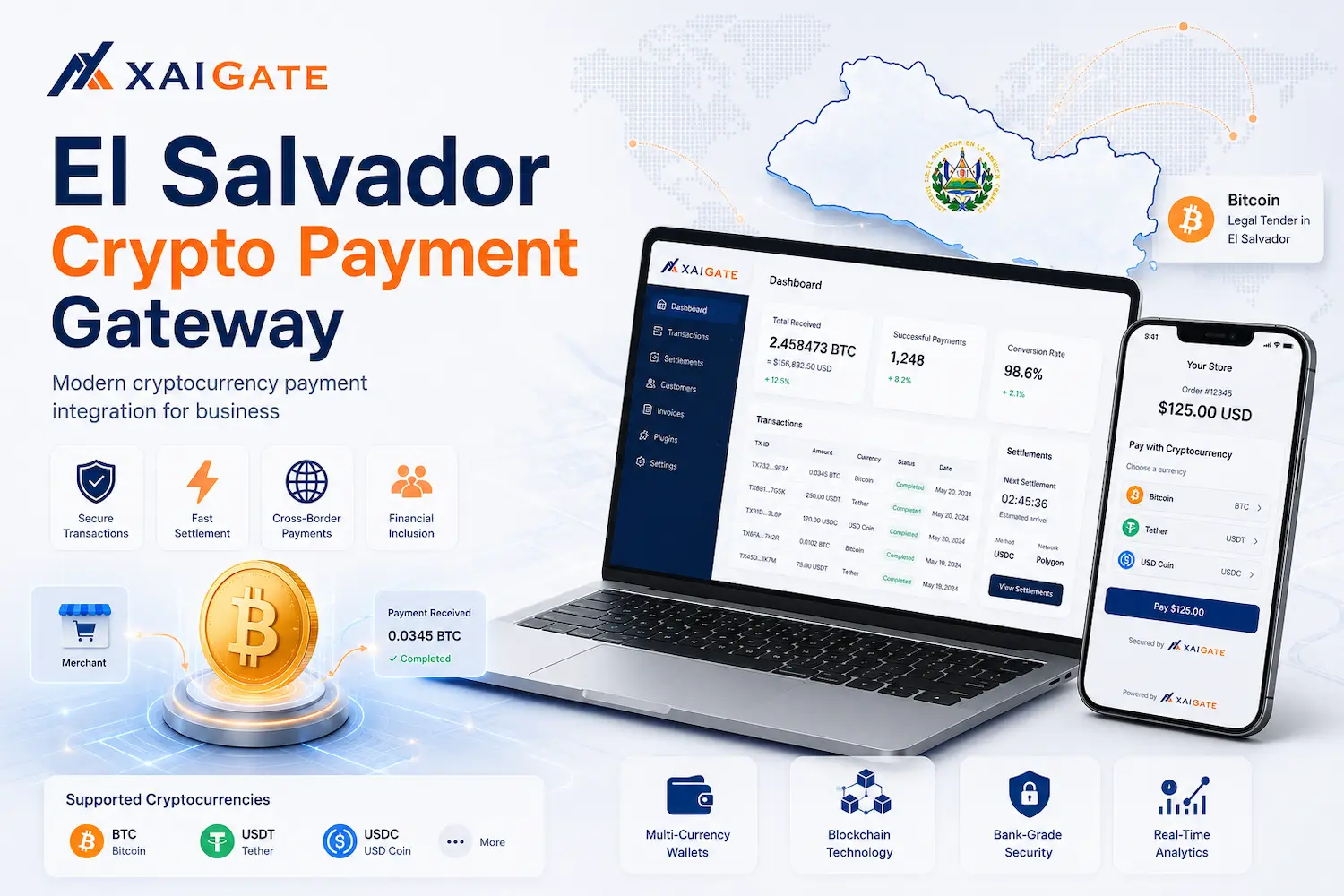
El Salvador is emerging as one of the pioneering countries in adopting cryptocurrency within its national financial system, especially through modern crypto payment gateway solutions. An El Salvador Crypto Payment Gateway not only simplifies transactions using Bitcoin and other digital assets but also opens new opportunities for cross-border payments and e-commerce. As digital transactions continue to expand globally, businesses operating in or targeting the Salvadoran market need secure, fast, and flexible payment infrastructure to accept crypto payments efficiently. The article below analyzes how this solution works and its role in the modern digital finance ecosystem. Let’s find out more with XaiGate in this article.
How the Crypto Payment Gateway in El Salvador Works
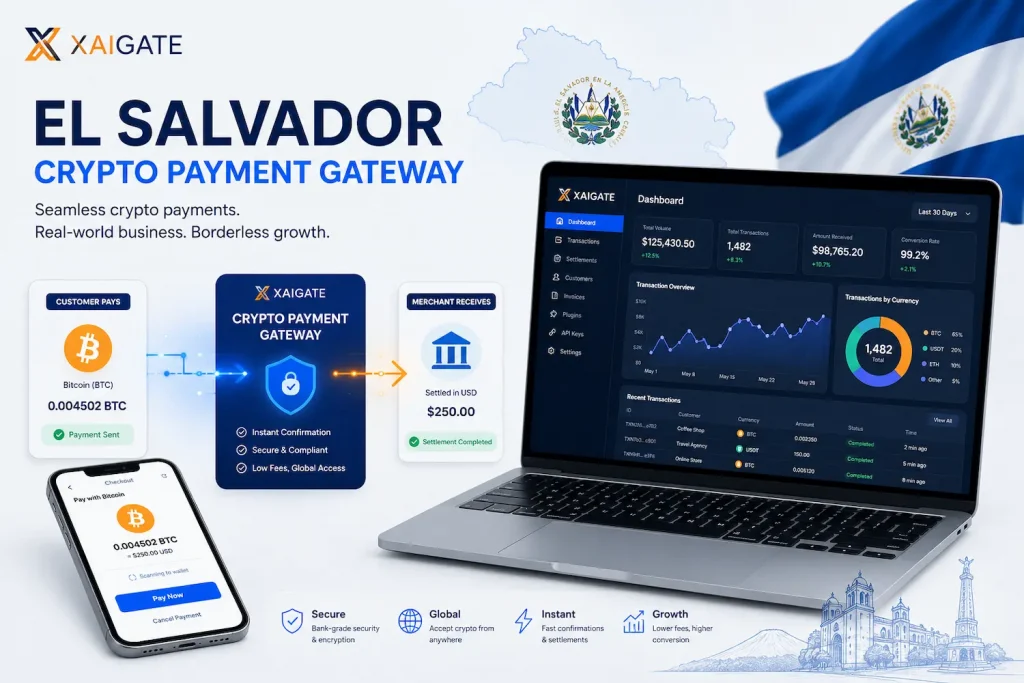
El Salvador’s crypto payment gateway functions as a digital bridge between cryptocurrencies and traditional financial transactions. It enables users and merchants to send, receive, and process payments using Bitcoin and other digital assets in a fast, simplified, and efficient way.
By translating complex blockchain operations into user-friendly payment flows, the system makes cryptocurrency more practical for everyday use in retail, e-commerce, and cross-border transactions.
Key points:
- Digital payment bridge: Connects crypto assets with real-world payment systems
- Crypto transaction processing: Allows sending and receiving Bitcoin and other digital currencies
- Simplified payment flow: Converts complex blockchain steps into easy payment actions for users and merchants
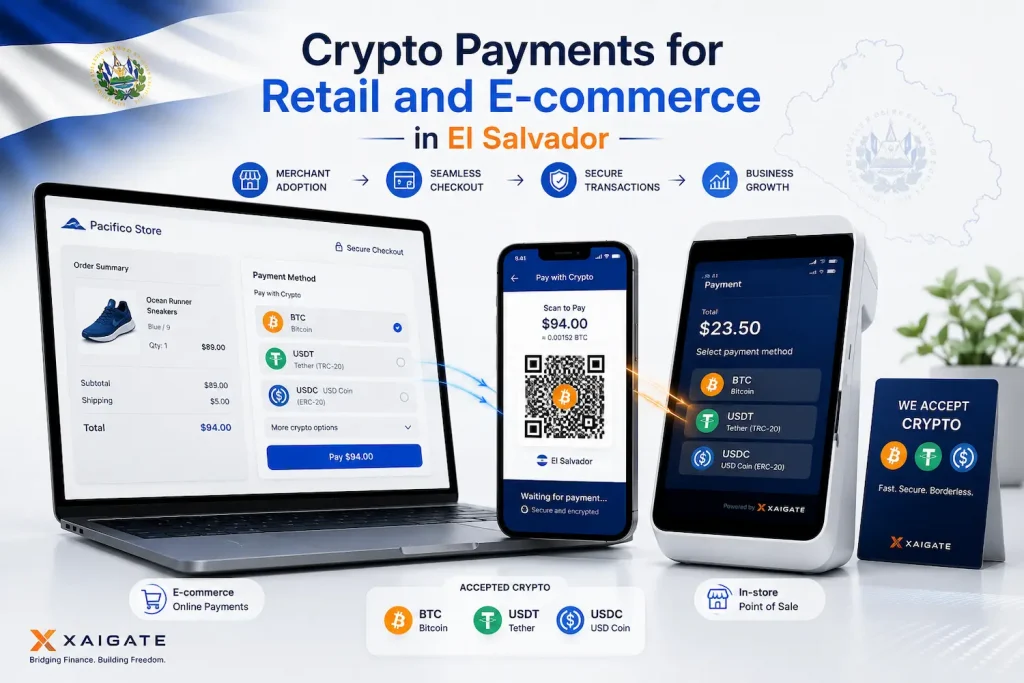
- Retail and e-commerce integration: Supports payments in online shops and physical stores
- Cross-border transactions: Enables faster international payments with fewer intermediaries
This system helps make cryptocurrency usage more accessible, practical, and scalable in daily financial activities.
Technologies Used in the Payment System
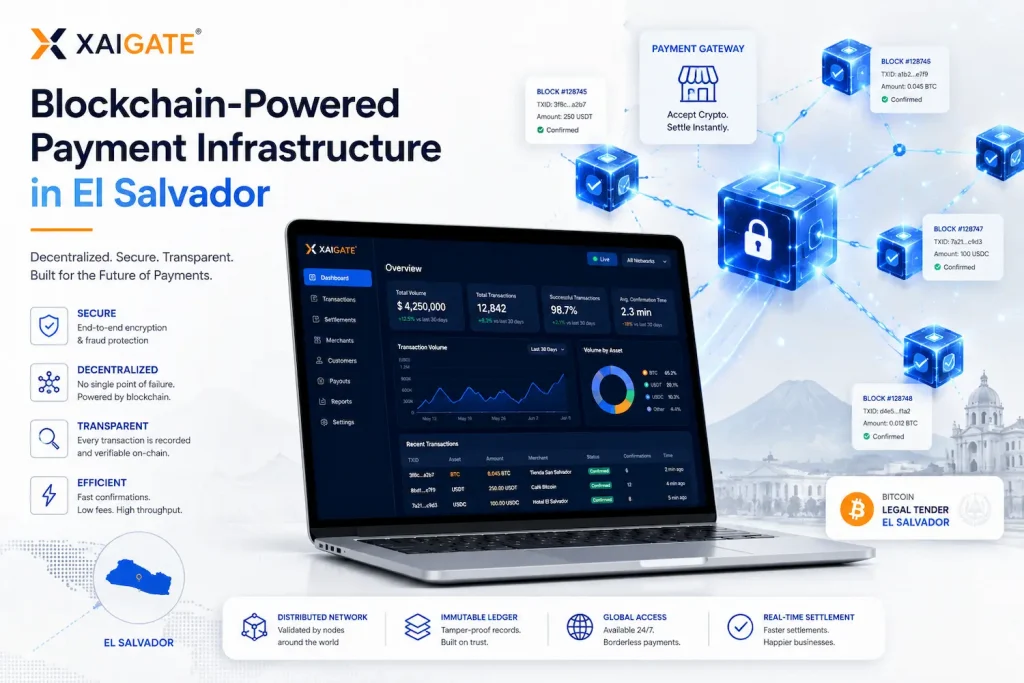
The El Salvador crypto payment infrastructure is built on a multi-layered technology framework designed to ensure high speed, transparency, security, and reliability in digital transactions. Instead of relying on a single system, it integrates several advanced technologies that work together to support real-world crypto payments for both individuals and businesses.
This layered architecture allows the system to operate in a decentralized environment while still maintaining structure, usability, and compliance with financial requirements.
See more: Multi Currency Crypto Payment Gateway: The Smarter Way to Accept Global Crypto Payments
Blockchain technology
Blockchain serves as the core foundation of the entire payment ecosystem, functioning as a decentralized and immutable ledger that records every transaction.
- Distributed transaction data: Transaction information is shared across multiple independent nodes, reducing dependence on a single central authority.
- Transparent records: Publicly verifiable data allows users and businesses to confirm transactions with greater confidence.
- Immutable history: Once transactions are confirmed, they cannot be easily modified or removed without network consensus.
- Peer-to-peer payments: Users can send and receive funds directly without relying on traditional financial intermediaries.
This structure eliminates the need for traditional banking intermediaries while maintaining trust through mathematical verification rather than centralized control.
Digital wallets and transaction processing systems
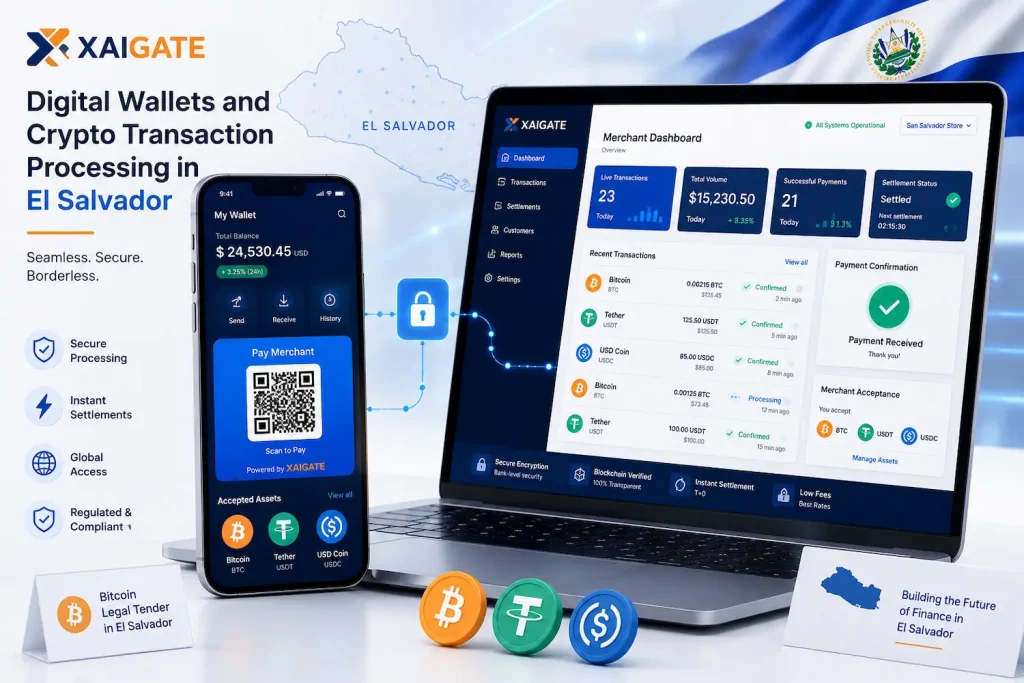
Digital wallets and processing systems act as the user-facing and operational layer that connects individuals and businesses to the blockchain network.
- Secure asset storage: Wallets allow users to store cryptocurrencies and digital assets through private keys and encrypted access.
- User-friendly interfaces: Complex blockchain actions are simplified into practical functions such as sending, receiving, and checking balances.
- Transaction management: Processing systems handle transaction submission, validation, confirmation, and status tracking.
- Crypto-to-fiat conversion: When needed, these systems can support conversion between cryptocurrencies and fiat currencies to reduce volatility exposure.
These systems are essential for making blockchain technology accessible to everyday users who do not need to understand its technical complexity.
Security and verification systems
Security infrastructure plays a critical role in protecting the integrity of the payment system and ensuring user trust.
- Data encryption: Advanced encryption techniques help protect sensitive information, wallet credentials, and transaction details.
- Multi-factor authentication: Additional verification layers reduce the risk of unauthorized account access.
- Consensus-based validation: Blockchain consensus mechanisms verify transactions before they are permanently recorded.
- Fraud monitoring: Continuous monitoring helps detect suspicious activity, system vulnerabilities, and abnormal transaction behavior.
These security layers work together to reduce risks, prevent attacks, and ensure that all transactions remain accurate, verifiable, and secure in a decentralized environment.
Benefits of the El Salvador Crypto Payment Gateway
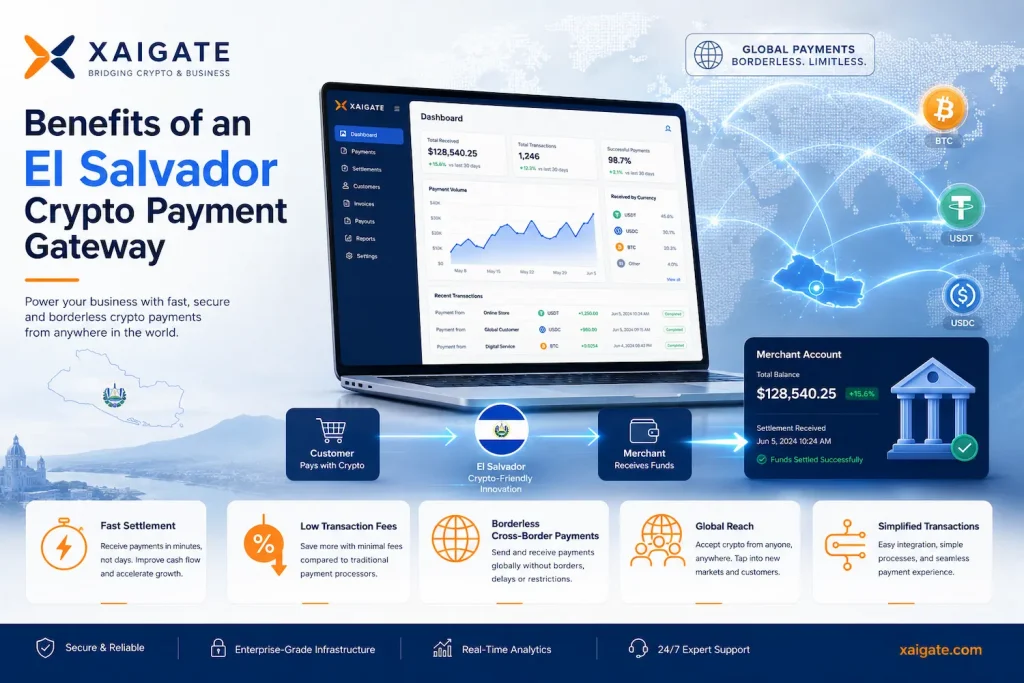
The crypto payment gateway in El Salvador delivers a wide range of important benefits for both individuals and businesses. It plays a key role in modernizing the national financial system while expanding the practical use of digital assets in everyday transactions.
By reducing reliance on traditional financial intermediaries and improving transaction efficiency, the system helps create a more flexible and inclusive digital economy.
- Enables fast and low-cost digital transactions: Reduces processing time and transaction fees compared to traditional payment systems
- Reduces dependency on traditional banking systems: Allows users to conduct financial activities without relying heavily on banks
- Supports financial inclusion for unbanked populations: Provides access to digital financial services for individuals without traditional bank accounts
- Facilitates cross-border payments with fewer intermediaries: Improves speed and efficiency of international transfers by minimizing third-party involvement
- Encourages innovation in fintech and digital commerce: Promotes the growth of new financial technologies, startups, and digital business models
Overall, the system helps modernize financial infrastructure and makes cryptocurrency payments more practical, accessible, and scalable in daily economic activities.
Challenges of Implementing Crypto Payments in El Salvador
Despite being a significant step toward financial modernization and digital transformation, the crypto payment system in El Salvador still faces several challenges that affect its adoption speed and long-term stability. These challenges are largely driven by market volatility, infrastructure limitations, regulatory uncertainty, and varying levels of public understanding.
Together, these factors create barriers that must be addressed to ensure wider and more sustainable usage of crypto payment solutions across the country.
- High volatility of cryptocurrency prices: Frequent price fluctuations can impact transaction value stability, creating uncertainty for both consumers and businesses
- Limited technical infrastructure in some regions: Some areas still lack sufficient digital infrastructure, making it difficult to ensure smooth and consistent crypto transactions
- Regulatory and compliance uncertainties: Changing legal frameworks and unclear policies can create challenges for businesses adopting crypto payment systems
- Low public trust and limited understanding: Lack of awareness and education about cryptocurrency slows down user confidence and adoption rates
- Dependence on internet connectivity: Stable internet access is required for transactions, making usage difficult in areas with weak or inconsistent connectivity
These challenges collectively slow down adoption and highlight the importance of continued improvements in infrastructure, regulation, and public education to support long-term development.
See more: Download XaiGate here
Conclusion
The El Salvador Crypto Payment Gateway represents a significant step toward integrating cryptocurrency into a national financial system. It demonstrates how blockchain technology can transform payment methods and expand financial accessibility. However, successful long-term adoption depends on addressing technical, regulatory, and educational challenges.
If you are interested in the future of crypto payments and blockchain-based financial systems, keep following developments in El Salvador as it continues to shape the global digital economy.
For daily updates, subscribe to XAIGATE’s blog!
We may also be found on GitHub, and X (@mxaigate)! Follow us!
FAQs
1. What is an El Salvador crypto payment gateway?
It helps businesses accept Bitcoin and other digital asset payments.
2. Why is El Salvador important for crypto payments?
El Salvador is known for early national cryptocurrency adoption.
3. How does a crypto payment gateway work?
It connects customers, merchants, wallets, and blockchain networks.
4. Can businesses accept Bitcoin in El Salvador?
Yes, businesses can accept Bitcoin through a suitable payment gateway.
5. Does it support cross-border payments?
Yes, crypto gateways can make international payments faster and simpler.
6. What technologies are used?
They use blockchain, digital wallets, transaction systems, and security tools.
7. Are crypto payments secure?
Yes, when protected by encryption, wallet security, and transaction verification.
8. What are the main benefits?
Fast payments, lower costs, financial access, and global transaction support.
9. What are the main challenges?
Volatility, regulation, internet access, infrastructure, and user education.
10. Is XAIGATE suitable for crypto payment integration?
Yes, XAIGATE helps businesses accept crypto payments with modern gateway tools.