As crypto payments continue to grow in popularity, more businesses are adopting USDT payment gateways to diversify their payment methods and reach customers worldwide. Understanding How to Build a USDT Checkout With an API is therefore essential for companies seeking fast transaction processing, robust security, and reliable system performance. In this article, XAIGATE will guide you through the key steps involved in building a USDT checkout using an API and highlight the critical factors businesses should consider when implementing an efficient, secure, and scalable crypto payment system.
Contents
Essential Components for Building a USDT Checkout With an API
Understanding How to Build a USDT Checkout With an API requires several technical components working together. A reliable system must support wallet management, blockchain connectivity, API integration, and real-time transaction verification.
USDT Wallet Infrastructure
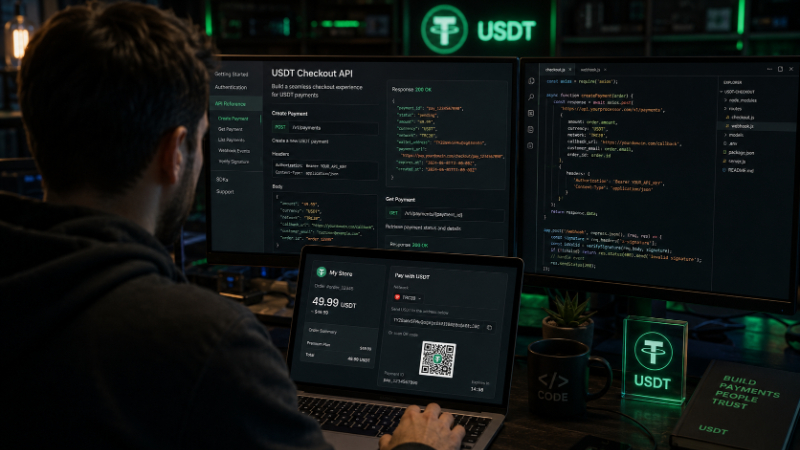
The wallet system is the foundation of a USDT checkout. It handles receiving, storing, and managing USDT across supported networks.
Key components include:
- Hot wallets for automated payments.
- Secure wallet management.
- Multi-network USDT support.
- Unique payment address generation.
A strong wallet infrastructure improves payment efficiency and protects digital assets.
Blockchain Network Integration
USDT operates on networks such as Ethereum and Tron, so the checkout must connect to the appropriate blockchain.
Blockchain integration enables the system to:
- Generate payment addresses.
- Monitor incoming transfers.
- Confirm transactions.
- Retrieve transaction details.
- Update payment status in real time.
Choosing the right network can improve transaction speed and reduce fees.
Payment API System
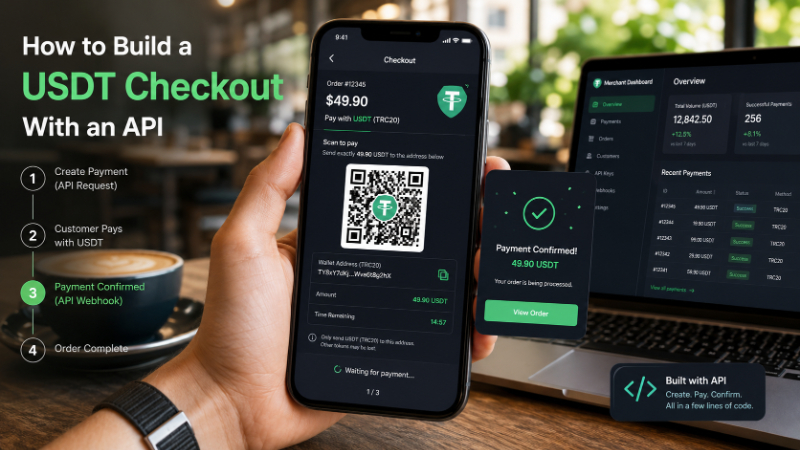
The API connects the USDT checkout with websites, apps, and e-commerce platforms.
A payment API typically supports:
- Creating payment requests.
- Generating checkout sessions.
- Checking payment status.
- Sending transaction notifications.
- Managing order information.
A flexible API helps businesses integrate USDT payments without building the entire infrastructure from scratch.
Transaction Monitoring and Verification
Accurate verification is essential because blockchain transactions are irreversible.
The system should:
- Detect incoming USDT payments.
- Verify confirmations.
- Match transactions with orders.
- Prevent duplicate processing.
- Flag suspicious activity.
These components form the foundation of How to Build a USDT Checkout With an API that is secure, reliable, and scalable.
Detailed Process: How to Build a USDT Checkout With an API
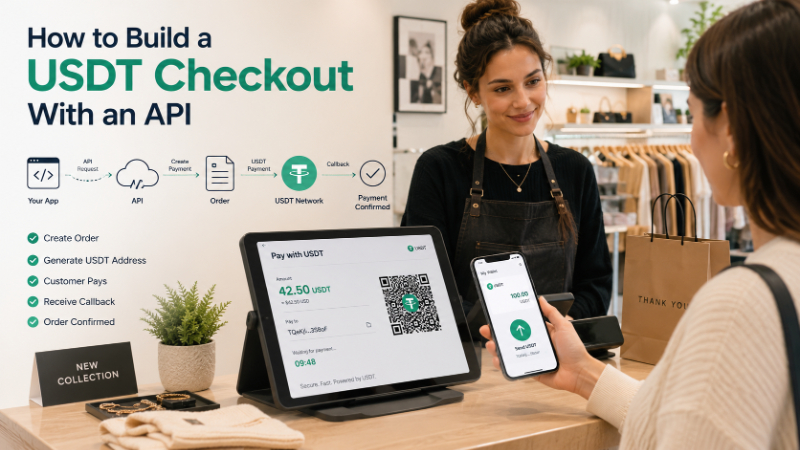
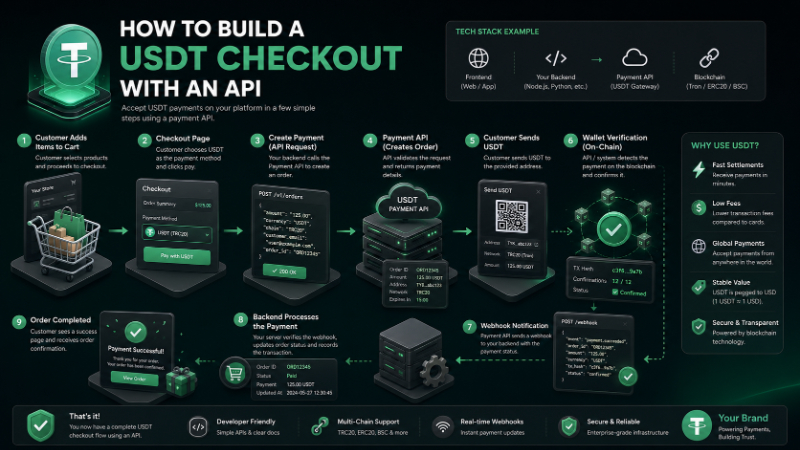
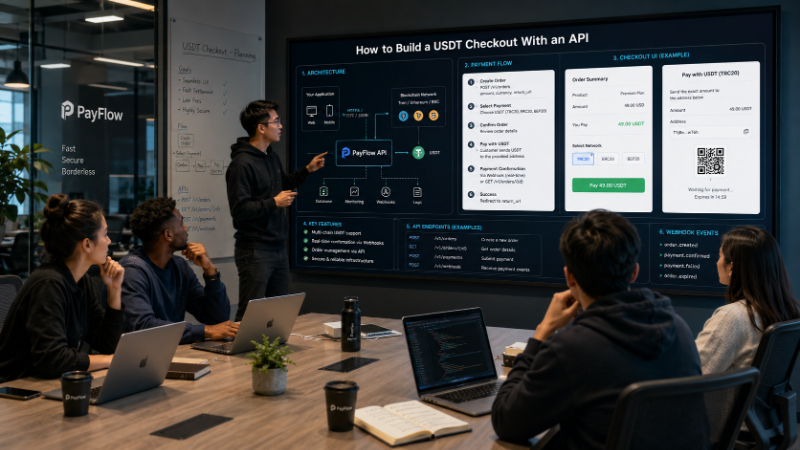
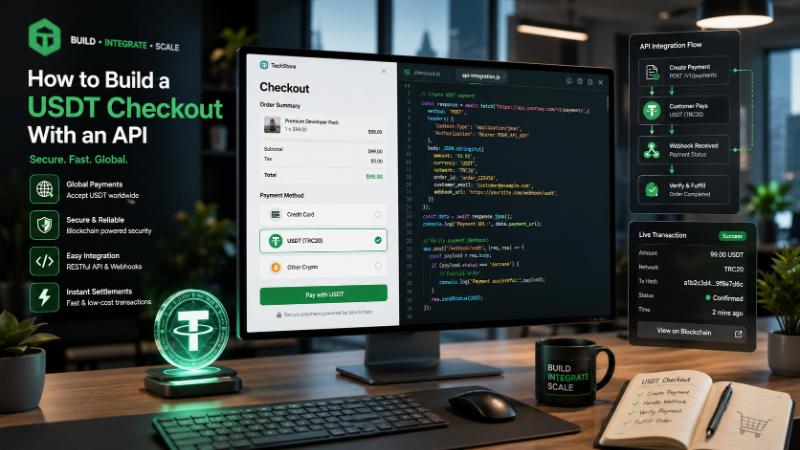
Understanding How to Build a USDT Checkout With an API involves several stages, from choosing a blockchain network to creating a smooth checkout experience and automating payment confirmation.
Step 1: Choose a Supported Blockchain Network
Start by selecting the blockchain networks that will support USDT payments.
Businesses should consider:
- Transaction speed.
- Network fees.
- Customer preferences.
- Technical compatibility.
The right network helps reduce costs, improve processing speed, and make payments more convenient.
See more: What Is Crypto Transaction Monitoring in AML and Crypto Regulatory Compliance?
Step 2: Set Up USDT Wallet Management
The wallet system must securely receive and manage customer payments.
It should support:
- Unique payment address generation.
- Incoming transaction tracking.
- Transaction record management.
- Secure private key storage.
Strong wallet security is essential for protecting funds and maintaining stable operations.
Step 3: Integrate the USDT Payment API
The API connects the merchant’s platform with the crypto payment infrastructure.
The integration usually includes:
- Creating payment requests.
- Generating checkout details.
- Receiving payment status updates.
- Confirming completed transactions.
- Updating customer orders.
A reliable API ensures smooth communication between the checkout system and the blockchain network.
Step 4: Create the Customer Checkout Experience
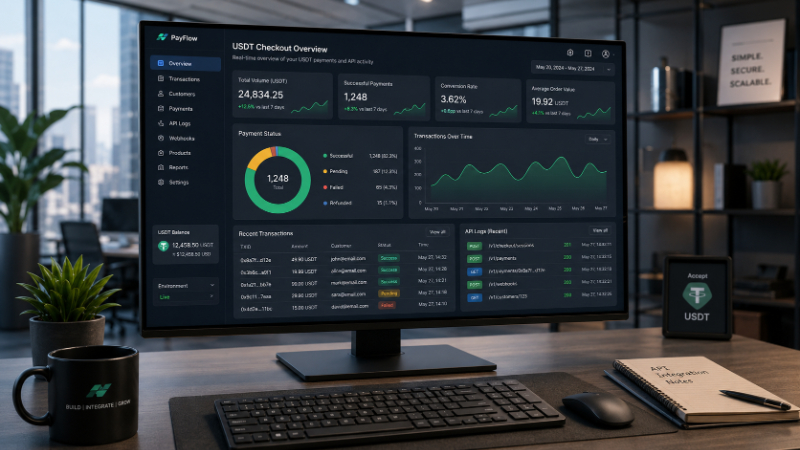
A clear and simple checkout process can improve payment completion rates.
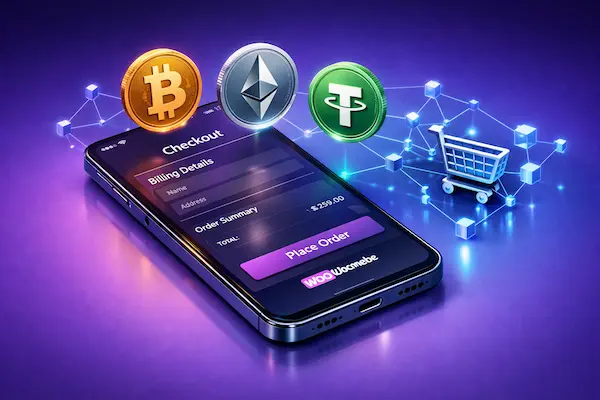
The checkout page should:
- Display the exact payment amount.
- Show available blockchain networks.
- Provide a wallet address or QR code.
- Display payment instructions.
- Confirm successful transactions automatically.
Customers should be able to complete payments without unnecessary technical complexity.
Step 5: Implement Confirmation and Notifications
After payment is sent, the system must monitor and verify the transaction.
Important features include:
- Blockchain transaction tracking.
- Confirmation status updates.
- Automated order activation.
- Webhook notifications.
- Real-time payment alerts.
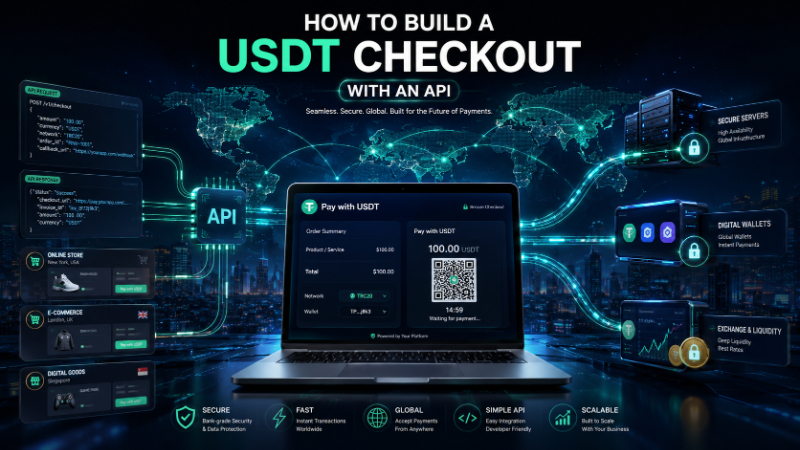
These steps explain How to Build a USDT Checkout With an API that is secure, efficient, and easy for both merchants and customers to use.
Important Technologies and Features When Building a USDT Checkout
Learning How to Build a USDT Checkout With an API also requires understanding the technologies that support security, scalability, and reliable payment processing. The following features are essential for a professional USDT checkout system.
Blockchain API Integration
Blockchain APIs allow the checkout system to connect with blockchain networks without managing full node infrastructure.
They typically support:
- Transaction tracking.
- Wallet data retrieval.
- Blockchain data analysis.
- Payment confirmation.
Reliable blockchain APIs simplify development and improve system performance.
Smart Contract Support
Smart contracts can automate advanced payment functions and reduce manual processing.
They may support:
- Automated payment conditions.
- Digital asset management.
- Transparent transaction execution.
However, smart contract features should be carefully audited to minimize security risks.
Security and Encryption Technology
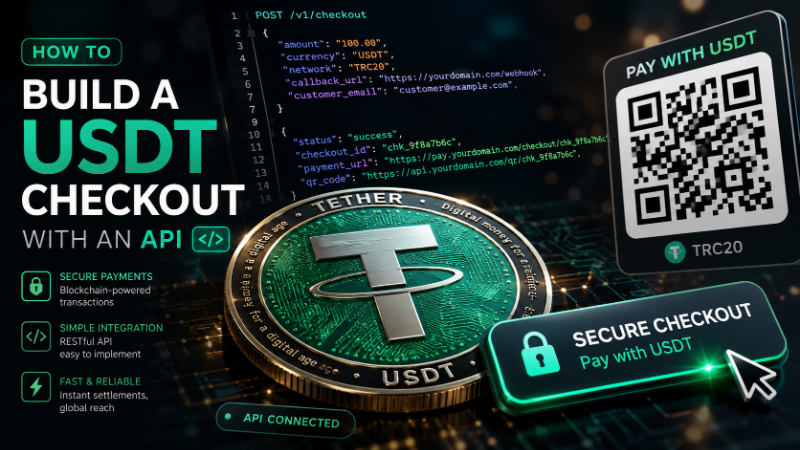
Security is a critical part of How to Build a USDT Checkout With an API. The system must protect wallet data, API connections, and customer information.
Key security measures include:
- Data encryption.
- Secure API authentication.
- Access control.
- Wallet protection.
- Fraud prevention systems.
Strong security controls reduce unauthorized access and payment risks.
See more: KYC vs KYB: A Detailed Comparison of the Differences Between Individual and Business Verification
Real-Time Transaction Monitoring
Real-time monitoring helps businesses track payments and respond quickly to transaction events.
Important functions include:
- Payment status tracking.
- Transaction history management.
- Confirmation monitoring.
- Suspicious activity detection.
This feature is especially valuable for merchants processing high transaction volumes.
Multi-Network Support
USDT is available on several blockchain networks, so multi-network support gives customers more payment flexibility.
The main benefits include:
- More payment options.
- Lower transaction fees.
- Faster processing.
- Greater global accessibility.
A scalable USDT checkout should allow businesses to add new networks as customer demand grows.
Important Considerations When Implementing a USDT Payment Gateway
Understanding How to Build a USDT Checkout With an API is only part of the implementation process. Before deployment, businesses must also evaluate legal, technical, security, and operational requirements to ensure the payment gateway remains reliable, compliant, and easy to use.
Key considerations include:
- Regulatory compliance: Apply customer verification, transaction monitoring, Anti-Money Laundering procedures, sanctions screening, and data protection requirements based on each operating market.
- Security: Protect wallet credentials and private keys, use secure API authentication, encrypt sensitive data, test system vulnerabilities, and monitor unusual transaction activity.
- User experience: Provide a simple checkout interface, clear payment instructions, visible network and fee information, fast confirmation, and mobile-friendly payment flows.
- Infrastructure reliability: Evaluate providers based on API uptime, blockchain connectivity, security standards, supported networks, transaction capacity, and technical support.
- Transaction management: Prepare systems for delayed confirmations, underpayments, overpayments, duplicate transactions, expired payment requests, and network congestion.
- Scalability: Ensure the checkout can handle increasing transaction volumes and support additional blockchain networks as customer demand grows.
When planning How to Build a USDT Checkout With an API, businesses should balance functionality with security, compliance, and operational efficiency. Careful preparation in these areas helps reduce payment risks, improve system performance, and create a secure and scalable USDT checkout experience.
Conclusion
Understanding How to Build a USDT Checkout With an API helps businesses integrate fast, flexible, and secure crypto payments into their platforms. A reliable solution requires strong wallet infrastructure, blockchain connectivity, transaction monitoring, API integration, and robust security controls.
A well-designed USDT checkout can improve payment convenience and support global business growth. To achieve stable and scalable performance, businesses should combine careful planning, compliance-focused development, and the right technology partner.