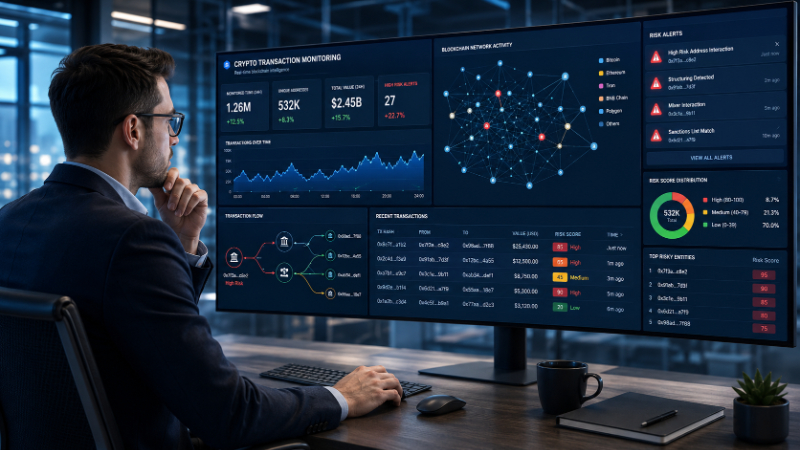
As the cryptocurrency market continues to grow rapidly, compliance with Anti-Money Laundering (AML) regulations has become a mandatory requirement for cryptocurrency exchanges and financial institutions. Crypto Transaction Monitoring plays a crucial role in tracking, analyzing, and detecting suspicious transactions, helping organizations mitigate the risks of fraud and regulatory violations. In this article, XAIGATE will explain what is Crypto Transaction Monitoring, how it works, and the role it plays in modern cryptocurrency compliance systems.
The Role of Crypto Transaction Monitoring in AML
To understand What is Crypto Transaction Monitoring, it is important to look at its role in modern AML strategies. As the cryptocurrency industry expands, digital asset businesses face growing pressure to prevent financial crime, improve transparency, and comply with regulatory requirements. Crypto Transaction Monitoring helps organizations continuously track and analyze blockchain transactions to identify suspicious activity and potential compliance risks.
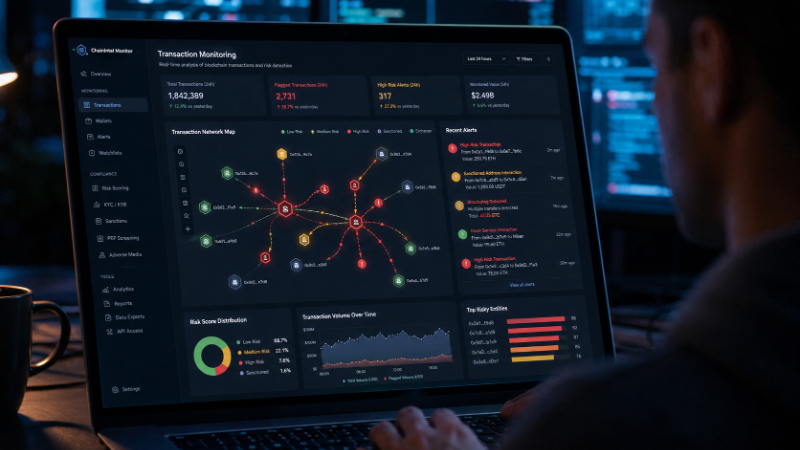
In AML frameworks, Crypto Transaction Monitoring supports several key functions:
- Detecting suspicious transactions: It identifies unusual transaction patterns, abnormal volumes, rapid fund movements, and interactions with high-risk wallet addresses.
- Preventing money laundering: By analyzing transaction histories and wallet relationships, monitoring systems can uncover attempts to conceal or transfer illicit funds.
- Supporting regulatory compliance: Crypto businesses can use transaction monitoring tools to meet AML obligations, maintain audit records, and demonstrate compliance with financial regulations.
- Managing risk exposure: Continuous monitoring helps companies evaluate the risk levels of customers, transactions, wallets, and blockchain addresses.
- Improving operational security: Early detection of high-risk activity allows businesses to respond quickly and reduce potential financial or reputational damage.
For crypto exchanges, payment platforms, financial institutions, and blockchain-based businesses, understanding What is Crypto Transaction Monitoring is essential. It is no longer just an additional security measure, but a core component of building trust, protecting users, and operating responsibly in a highly regulated digital asset market.
How Does a Crypto Transaction Monitoring System Work?
After understanding What is Crypto Transaction Monitoring, businesses also need to know how the system operates in practice. A Crypto Transaction Monitoring system collects blockchain data, analyzes transaction behavior, and applies compliance rules and risk assessment models to detect potentially suspicious activities.

The monitoring process generally includes four key stages:
Data Collection and Blockchain Analysis
The process begins with collecting transaction data from one or multiple blockchain networks. This information provides the foundation for analyzing wallet activity and tracing the movement of digital assets.
The collected data may include:
- Sender and receiver wallet addresses
- Transaction amounts and timestamps
- Transaction frequency
- Blockchain network information
- Previous transaction history
- Wallet interaction patterns
Because blockchain records are transparent and permanent, monitoring systems can review both current and historical activities. This helps compliance teams identify relationships between wallet addresses and detect potential exposure to high-risk entities.
Risk Assessment and Transaction Screening
Once the data has been collected, the system screens each transaction using predefined AML rules, sanctions databases, and risk indicators. The objective is to determine whether a transaction presents a low, medium, or high compliance risk.
Common risk factors include:
- Transactions involving wallets associated with illegal activities
- Transfers connected to sanctioned individuals or entities
- Large or unusual transaction volumes
- Rapid transfers across multiple wallet addresses
- Transactions involving mixers or other high-risk services
- Activity that does not match a customer’s usual behavior
Based on these indicators, the system assigns a risk score to each transaction. This score helps compliance teams prioritize cases that may require further review.

See more: KYC vs KYB: A Detailed Comparison of the Differences Between Individual and Business Verification
Detection of Suspicious Transaction Patterns
Modern monitoring systems use automated analytics to identify complex transaction patterns that may indicate money laundering, fraud, or other financial crimes. These patterns can be difficult to detect through manual reviews alone.
Examples of suspicious activity include:
- Layering activities: Moving crypto assets through multiple wallets to obscure their original source
- Unusual transaction spikes: Sudden increases in transaction value, volume, or frequency
- High-risk wallet interactions: Transfers involving addresses linked to scams, fraud, or illicit marketplaces
- Structuring transactions: Dividing large transfers into smaller amounts to avoid detection
- Cross-chain movement: Transferring assets across different blockchains to complicate transaction tracing
Early detection allows businesses to investigate suspicious activity and take appropriate action before the risk becomes more serious.
Alerts and Compliance Investigation
When a transaction exceeds predefined risk thresholds, the system automatically generates an alert for the compliance team. Each alert may include transaction details, wallet relationships, risk scores, and the reasons the activity was flagged.
Compliance teams can then:
- Review suspicious transactions
- Investigate connected wallets and fund flows
- Compare activity with customer profiles
- Request additional customer information
- Escalate high-risk cases for further review
- Submit suspicious activity reports when required
This automated workflow enables businesses to process large transaction volumes more efficiently. Understanding What is Crypto Transaction Monitoring and how its alert system works can help organizations improve AML investigations, reduce manual workloads, and respond to financial crime risks more effectively.

Technology and Tools Supporting Crypto Transaction Monitoring
To fully understand What is Crypto Transaction Monitoring, it is also important to examine the technologies that support its operation. Modern monitoring solutions rely on blockchain analytics, artificial intelligence, automated risk scoring, and integrated AML platforms to improve transaction visibility, detect suspicious activity, and streamline compliance processes.
Blockchain Analytics Technology
Blockchain analytics technology helps businesses examine transaction flows across multiple blockchain networks. It provides greater visibility into wallet activity, fund movements, and relationships between different addresses.
These tools can help organizations:
- Trace cryptocurrency movements across blockchain networks
- Identify risks associated with wallet addresses
- Detect connections between multiple wallets
- Analyze historical transaction activity
- Recognize unusual fund-flow patterns
- Assess exposure to high-risk entities or services
Because cryptocurrency transactions can cross borders almost instantly, blockchain analytics provides insights that traditional financial monitoring methods may not capture. It allows compliance teams to trace digital assets more accurately and investigate potentially suspicious activity.
Artificial Intelligence and Machine Learning
Artificial intelligence and machine learning are increasingly used to improve the speed and accuracy of Crypto Transaction Monitoring. These technologies can process large volumes of blockchain data and identify patterns that may be difficult to detect manually.
AI-powered monitoring solutions can:
- Recognize unusual transaction patterns
- Analyze large volumes of blockchain data
- Detect changes in customer behavior
- Reduce false-positive alerts
- Improve risk predictions over time
- Identify emerging financial crime methods
Machine learning models can continuously adapt as new transaction behaviors and risks appear. This helps compliance systems remain effective in a rapidly changing cryptocurrency environment.

See more: What Is Crypto Payment KYB? Benefits and the KYB Process in Crypto Payments
Automated Risk Scoring Systems
Automated risk scoring systems classify transactions, wallets, and customers according to their potential risk levels. The system evaluates multiple indicators and assigns a score that helps compliance teams prioritize investigations.
Risk scores may be based on:
- Wallet reputation and transaction history
- Connections to sanctioned or high-risk entities
- Geographic risk factors
- Regulatory watchlists
- Transaction value and frequency
- Customer behavior patterns
- Exposure to mixers or other high-risk services
By using automated risk scoring, compliance teams can focus their resources on the most critical cases. This improves investigation efficiency and reduces the time spent reviewing low-risk transactions.
Integration with AML Compliance Platforms
Modern Crypto Transaction Monitoring solutions are often integrated with broader AML and compliance platforms. This creates a connected system that supports customer verification, transaction analysis, investigations, and regulatory reporting.
Common integrations include:
- Customer screening tools
- Know Your Customer (KYC) verification platforms
- Sanctions and watchlist databases
- Case management systems
- Regulatory reporting solutions
- Fraud detection tools
These integrations provide compliance teams with a more complete view of customer and transaction risks. Understanding What is Crypto Transaction Monitoring also means recognizing how these technologies work together to create a stronger, more efficient, and scalable AML compliance framework.

Benefits of Crypto Transaction Monitoring for Businesses
Understanding What is Crypto Transaction Monitoring helps digital asset businesses recognize its value beyond basic transaction tracking. An effective monitoring system can strengthen regulatory compliance, detect financial crime risks, improve operational efficiency, and build greater trust with customers and business partners.
Key benefits of Crypto Transaction Monitoring include:
- Enhancing AML compliance: Monitoring systems help businesses identify suspicious activities, maintain detailed transaction records, support regulatory reporting, and demonstrate compliance with AML requirements.
- Reducing financial crime risks: Continuous transaction analysis enables companies to detect potential fraud, money laundering, illicit fund transfers, and interactions with high-risk wallets before they cause serious financial or reputational damage.
- Improving operational efficiency: Automated monitoring reduces manual reviews, processes large transaction volumes, prioritizes high-risk alerts, and allows compliance teams to focus on cases that require immediate investigation.
- Supporting informed risk management: Transaction data, behavioral patterns, and wallet risk indicators provide businesses with valuable insights for assessing customers, transactions, and blockchain addresses.
- Building customer and partner trust: Effective monitoring demonstrates a company’s commitment to protecting users, maintaining secure platforms, and following regulatory standards.
As the digital asset market becomes more regulated, understanding What is Crypto Transaction Monitoring and implementing the right solution can help businesses create safer operations, maintain compliance, and strengthen their competitive position in the crypto industry.

Conclusion
Understanding What is Crypto Transaction Monitoring is important for businesses operating in the digital asset industry. By analyzing blockchain transactions, detecting suspicious activities, and supporting AML requirements, transaction monitoring systems help reduce financial crime risks and improve overall security.
As crypto regulations become stricter, exchanges, payment providers, and blockchain-based companies need reliable monitoring solutions to maintain compliance and protect their operations. Investing in advanced Crypto Transaction Monitoring technology can help businesses manage risks more effectively and build secure, transparent, and sustainable growth.