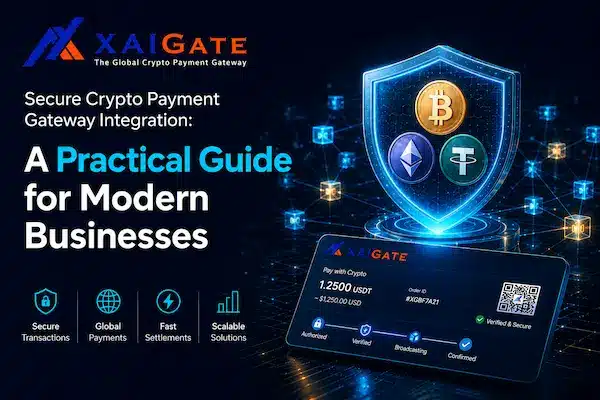
Adding crypto payments to a business can feel like opening a new sales channel and a new risk surface at the same time. That is why secure crypto payment gateway integration matters more than speed alone. A weak setup may expose API credentials, accept spoofed callbacks, or create gaps between payment confirmation and order fulfillment. A strong setup does the opposite. It protects data, controls access, verifies every event, and keeps checkout reliable. For modern businesses, the goal is not only to accept digital assets. The goal is to build a payment flow that customers trust, teams can manage, and the business can scale with confidence. Explore the details with XAIGATE in the article below.
Contents
- 1 Core Security Requirements Before You Integrate a Crypto Payment Gateway
- 2 Step-by-Step Secure Crypto Payment Gateway Integration Process
- 3 Security Best Practices for Crypto Payment Gateway Integration
- 4 Common Mistakes That Make Crypto Gateway Integrations Unsafe
- 5 How to Choose the Right Secure Crypto Payment Gateway for Your Business
- 6 FAQs – Secure Crypto Payment Gateway Integration
- 7 Conclusion
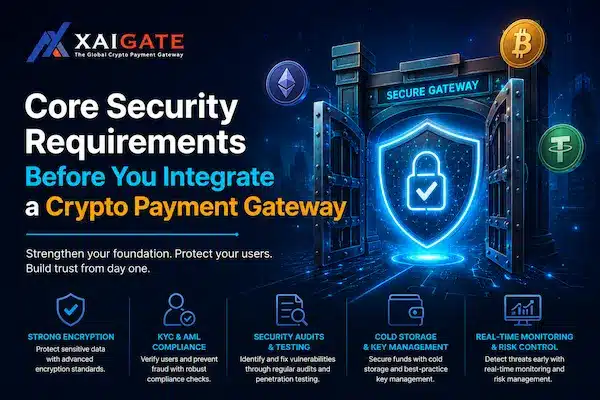
Core Security Requirements Before You Integrate a Crypto Payment Gateway
Before writing code or selecting plugins, businesses need a security baseline. This foundation reduces implementation errors and makes later scaling much easier.
API authentication, access control, and role-based permissions
Every secure payment system starts with strong authentication. API credentials should be unique, limited by environment, and rotated on a regular schedule. Production keys should never be reused in testing, and internal teams should only access the permissions they actually need.
Role-based permissions help prevent damage from human error. A developer may need test access, while finance teams may need reporting access, and operations teams may need transaction visibility. When every user has broad permission, small mistakes can quickly become costly incidents.
Webhook signature verification and callback security
Crypto gateways often rely on webhooks to send payment updates, confirmations, and settlement notices. These callbacks are useful, but they are also a common attack path when the receiving system trusts them too easily. A secure integration verifies signatures, checks payload integrity, and confirms that the event matches the expected transaction state.
It is also important to handle duplicate events and delayed events correctly. Payment systems do not always deliver callbacks in a perfect sequence. If the backend cannot process retries safely, a business may trigger duplicate fulfillment or fail to update order status properly.
Encryption, tokenization, and secure data handling
Sensitive data should be protected in transit and at rest. This includes credentials, wallet-related data, customer identifiers, and internal transaction references. Encryption reduces the chance that intercepted or exposed data can be used in a harmful way.
Secure data handling also means storing only what the business truly needs. The less sensitive payment data a system retains, the smaller the attack surface becomes. Good integration design does not collect everything. It collects only what supports operations, reconciliation, and customer support.
See more: How to Reduce Crypto Payment Gateway Fees
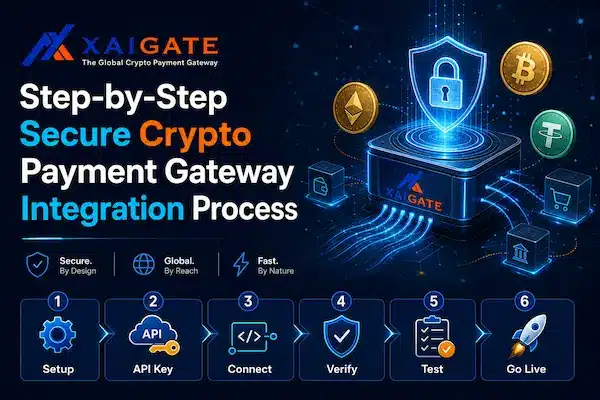
Step-by-Step Secure Crypto Payment Gateway Integration Process
A practical integration process keeps security aligned with business logic. This prevents technical shortcuts from turning into payment risks later.
Define business requirements, supported coins, and settlement workflows
The first step is to define what the business actually needs from the gateway. Some merchants need stablecoin settlement. Others need multi-coin acceptance, recurring billing support, or payouts across regions. Security decisions depend on these requirements because each feature changes the payment flow and the risk profile.
This is also the stage to define settlement logic clearly. The team should know when a payment becomes valid, when an order moves forward, how failed payments are handled, and how refunds or exceptions are reviewed. If those rules stay vague, security controls become inconsistent.
Connect the gateway API, wallet logic, and merchant backend securely
Once requirements are clear, the gateway can be connected to the website or application backend. This layer should isolate secrets from the frontend, keep wallet logic away from public exposure, and ensure that transaction creation happens through trusted server-side processes.
A secure backend connection should also include environment separation, request validation, and error handling. When systems fail, they should fail in a controlled way. A customer should not see internal details, and the business should still have enough logs to investigate the problem safely.
Test transactions, monitoring, and incident response before launch
Testing should go beyond successful payments. A mature team also tests expired requests, underpayments, duplicate callbacks, invalid signatures, and delayed confirmations. These scenarios reveal whether the integration behaves safely under real operational pressure.
Monitoring should be ready before launch, not after. Teams need alerts for failed callbacks, unusual transaction patterns, key usage anomalies, and reconciliation mismatches. Incident response matters too. If a suspicious event occurs, the business should already know who reviews it, how access is restricted, and how the issue is documented.
Security Best Practices for Crypto Payment Gateway Integration
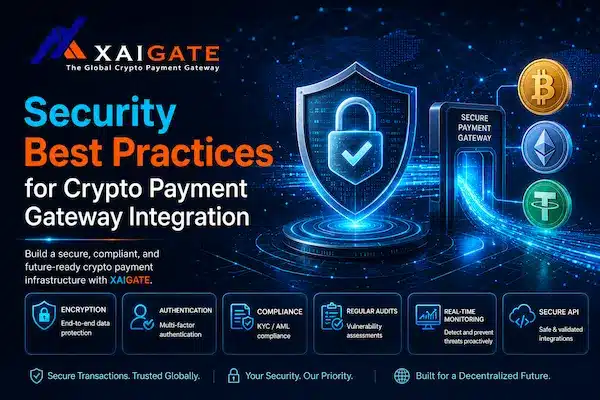
Once the main architecture is in place, best practices help reduce long-term risk. These controls improve resilience without making the checkout process harder for users.
Protect API keys, secrets, and wallet credentials
Secrets should be stored in secure vaults or protected configuration systems, never in code repositories or shared spreadsheets. Access to secrets should be restricted, tracked, and reviewed regularly. Even the best gateway becomes risky when the surrounding secret management is weak.
Wallet credentials deserve the same discipline. Businesses should decide early whether they need direct wallet exposure, managed custody, or a hybrid model. That decision affects control, complexity, and the overall security burden of the integration.
Use multi-factor authentication, IP controls, and least-privilege access
Internal admin panels and payment dashboards should be protected with multi-factor authentication. This adds a strong barrier against stolen passwords and careless access habits. It is a simple control, but it blocks many preventable incidents.
IP allowlisting and least-privilege access add another layer of protection. Not every person, server, or partner needs broad system entry. Restricting access by role and source makes it harder for unauthorized actions to move through the system unnoticed.
Build logging, alerting, and fraud monitoring into the payment flow
A secure integration should be observable. Teams need clean logs, meaningful alerts, and transaction monitoring that can detect abnormal behavior early. This does not mean collecting excessive data. It means tracking the right events in the right places.
Useful monitoring covers failed authentication attempts, unusual payment patterns, callback rejection rates, and reconciliation exceptions. These signals help teams detect abuse, identify technical faults, and improve the payment flow over time.
See more: Fiat to Crypto Payment Gateway 2026 – Secure, Fast & Compliant Business Solutions
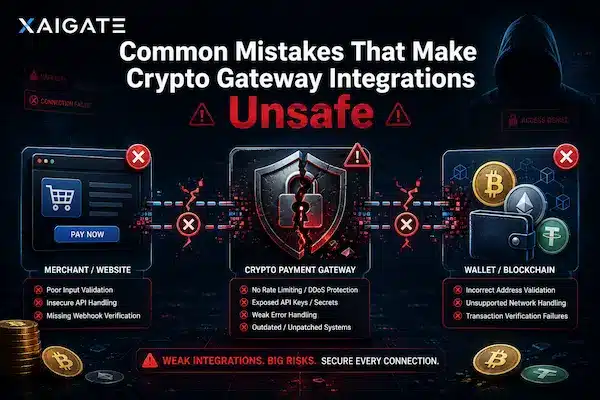
Common Mistakes That Make Crypto Gateway Integrations Unsafe
Many security issues come from rushed deployment decisions rather than advanced attacks. The list below highlights common mistakes that weaken a crypto payment setup.
- Storing secrets in source code: This exposes production credentials to unnecessary risk and makes rotation harder during emergencies.
- Trusting webhooks without validation: A callback should never be treated as true until its signature, source, and payload are verified.
- Skipping edge-case testing: Teams that test only successful payments often miss duplicate events, delayed confirmations, and failed settlements.
- Logging sensitive data openly: Excessive logging can turn routine troubleshooting into a data exposure problem.
- Giving broad internal access: When too many people have admin rights, human error becomes a major security threat.
How to Choose the Right Secure Crypto Payment Gateway for Your Business
Selecting a gateway is not only a feature decision. It is also a risk decision that affects operations, customer trust, and long-term scalability.
| Evaluation Area | What to Check | Why It Matters |
| Security architecture | API protection, webhook verification, access controls | Reduces exposure to fraud and unauthorized actions |
| Asset and chain support | Supported cryptocurrencies, stablecoins, settlement options | Ensures the gateway fits your business model |
| Integration flexibility | APIs, plugins, customization options | Helps teams deploy faster without sacrificing control |
| Monitoring and support | Alerts, reporting, operational assistance | Improves visibility and incident handling |
| Scalability | Transaction capacity, cross-border readiness, backend stability | Supports business growth without rework |
For many businesses, the best provider is the one that fits both technical and operational needs. A gateway may offer wide coin support, but if monitoring is weak or integration control is limited, it may still create friction. The right choice supports secure crypto payment gateway integration from launch through scale.
FAQs – Secure Crypto Payment Gateway Integration
1. What is secure crypto payment gateway integration?
It connects crypto payments while protecting APIs, wallets, and order data.
2. Why does secure integration matter?
It prevents spoofed callbacks, leaked credentials, and payment errors.
3. What should businesses secure first?
Secure API keys, access roles, webhooks, wallets, and backend logic.
4. Why is webhook verification important?
It confirms payment events are real before updating orders.
5. Should API keys be reused?
No, use separate keys for testing and production.
6. How should secrets be stored?
Store secrets in vaults or protected configuration systems.
7. What testing should merchants run?
Test expired, underpaid, duplicate, delayed, and invalid-signature events.
8. Why is monitoring important?
It detects failed callbacks, unusual activity, and reconciliation issues.
9. What access controls are useful?
Use MFA, IP allowlisting, and least-privilege permissions.
10. What should merchants check before launch?
Check API security, webhook validation, logs, settlement, and incident response.
Conclusion
Secure crypto payment gateway integration is not just a technical milestone. It is a business decision that shapes trust, reliability, and payment performance. A secure setup protects secrets, validates every event, limits internal risk, and gives teams the visibility they need to manage transactions with confidence.
If your business is planning to accept digital assets, do not stop at basic connectivity. Build a payment flow that is secure from the first API call to final settlement. Choose a partner like XAIGATE that helps you integrate crypto payments with stronger control, cleaner operations, and a checkout experience built to scale.
For daily updates, subscribe to XAIGATE’s blog!
We may also be found on GitHub, and X (@mxaigate)!