In the context of rapidly evolving digital payments and blockchain technology, solutions such as stablecoin payment gateways enterprise-grade custody crypto PSP are gradually becoming essential pillars of the modern financial ecosystem. These technologies not only optimize transaction speed and reduce costs but also enhance security and transparency in cross-border payments. The article below from XAIGATE will help you explore how these solutions work and their role in shaping the future of crypto payments.
What is a Stablecoin Payment Gateway?
A stablecoin payment gateway is a financial infrastructure that enables businesses to accept, process, and settle payments using stablecoins—cryptocurrencies that are pegged to stable assets such as the US dollar or other fiat currencies. Unlike traditional cryptocurrencies like Bitcoin or Ethereum, stablecoins are designed to minimize price volatility, making them more suitable for everyday payments and commercial transactions.
By combining blockchain technology with price stability, stablecoin payment gateways provide a reliable alternative to traditional payment systems while maintaining the advantages of crypto, such as speed and global accessibility.
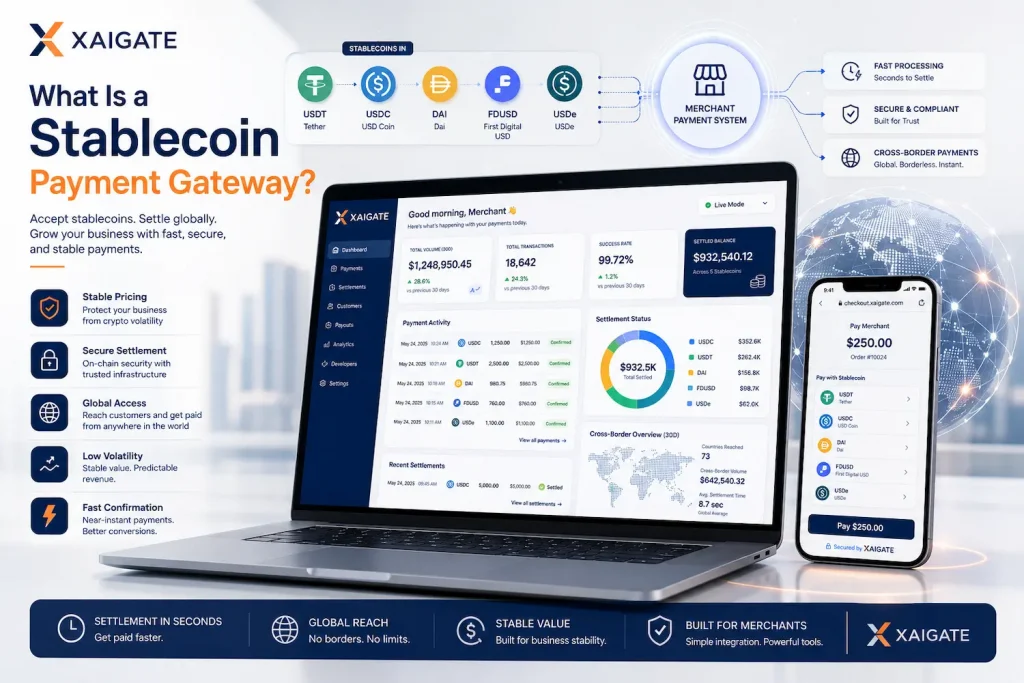
Key characteristics include:
- Reduced volatility risk: Payments are made using stablecoins, which maintain a consistent value and reduce exposure to market fluctuations.
- Fast settlement: Transactions are processed quickly on blockchain networks, often in near real time.
- Cross-border payment support: Enables seamless international transactions without relying on traditional banking intermediaries.
- Automated conversion: Many gateways support instant conversion between stablecoins and fiat currencies or other digital assets.
- Merchant integration: Easily integrates into existing e-commerce systems, payment platforms, and financial infrastructure.
Stablecoin payment gateways act as a critical bridge between traditional finance and the crypto economy, allowing businesses to adopt digital asset payments without exposing themselves to high volatility or operational complexity.
Enterprise-Grade Custody in the Crypto Industry
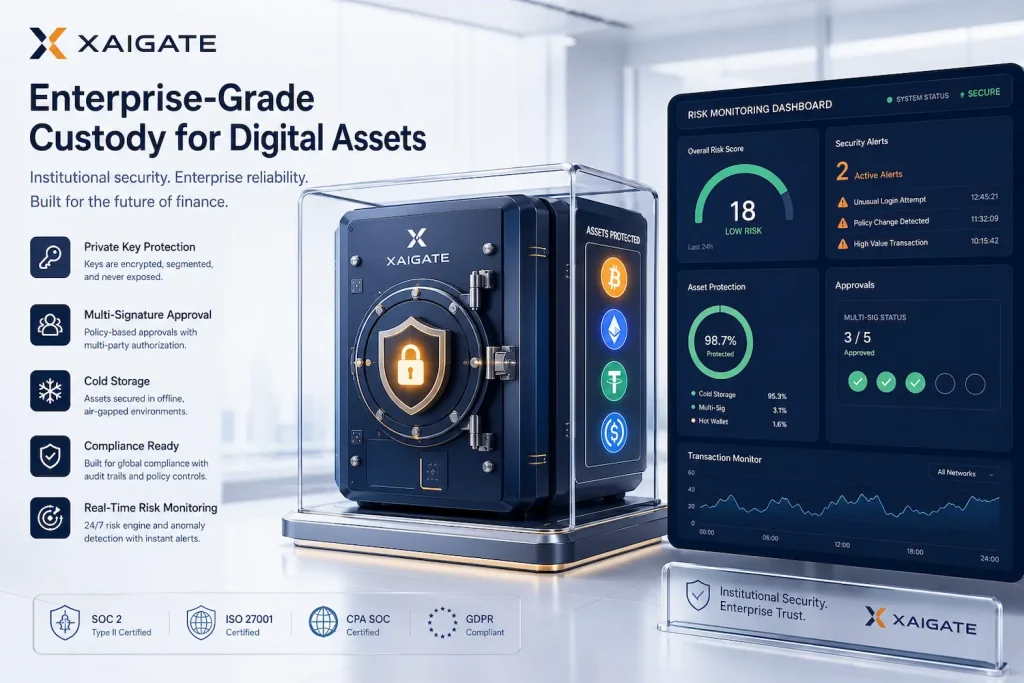
Enterprise-grade custody refers to institutional-level solutions designed for the secure storage, management, and protection of digital assets. In the crypto industry, custody plays a crucial role because blockchain transactions are irreversible, and assets are fully controlled by private keys. Without proper custody infrastructure, businesses face significant risks related to hacking, theft, and operational errors.
Enterprise-grade custody solutions are built specifically for organizations that manage large-scale crypto holdings, such as exchanges, fintech companies, hedge funds, and payment platforms.
Key characteristics include:
- Advanced security infrastructure: Utilizes multi-layer encryption, cold storage systems (offline storage), and hardware security modules (HSMs) to protect private keys and sensitive data from cyber threats.
- Multi-signature authorization: Requires multiple approvals before any transaction is executed, reducing the risk of unauthorized or single-point failures.
- Regulatory compliance: Designed to meet institutional standards, including AML (Anti-Money Laundering), KYC (Know Your Customer), and other regional financial regulations.
- Risk management systems: Includes real-time monitoring, fraud detection, and backup mechanisms to protect against hacking attempts, internal misuse, or asset loss.
Enterprise-grade custody is a foundational component of the modern crypto ecosystem, ensuring that digital assets are managed with the same level of security and governance expected in traditional financial institutions.
See more: Fiat to Crypto Payment Gateway Without KYC: What Businesses Need to Know
What is a Crypto PSP (Payment Service Provider)?
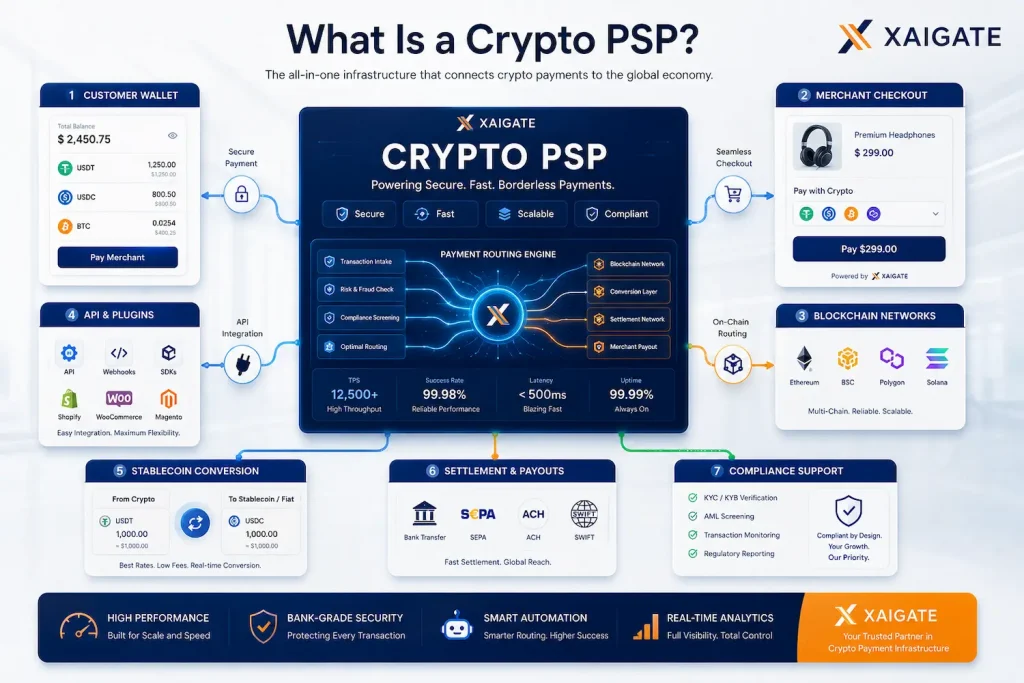
A crypto PSP (Payment Service Provider) is a financial technology service that enables merchants and businesses to accept cryptocurrency payments in a simple and seamless way. Similar to traditional payment service providers, a crypto PSP acts as an intermediary that handles the technical and operational aspects of payment processing, settlement, and system integration.
Instead of requiring businesses to directly manage blockchain transactions, wallets, and conversions, crypto PSPs provide a unified solution that simplifies the entire payment flow.
Key functions include:
- Crypto-to-fiat or stablecoin conversion: Automatically converts cryptocurrency payments into fiat currency or stablecoins to reduce volatility risk.
- Payment integration tools (APIs): Provides developers with APIs and plugins to easily integrate crypto payments into websites, apps, and e-commerce platforms.
- Transaction routing and processing: Manages the flow of payments between users, merchants, and blockchain networks to ensure smooth and efficient settlement.
- Regulatory compliance support: Helps businesses meet financial regulations such as AML (Anti-Money Laundering) and KYC (Know Your Customer) requirements.
By handling these complex processes, crypto PSPs significantly reduce technical barriers and make it easier for businesses to operate in both traditional financial systems and the crypto economy.
The Integration of Stablecoin Gateway, Custody, and Crypto PSP
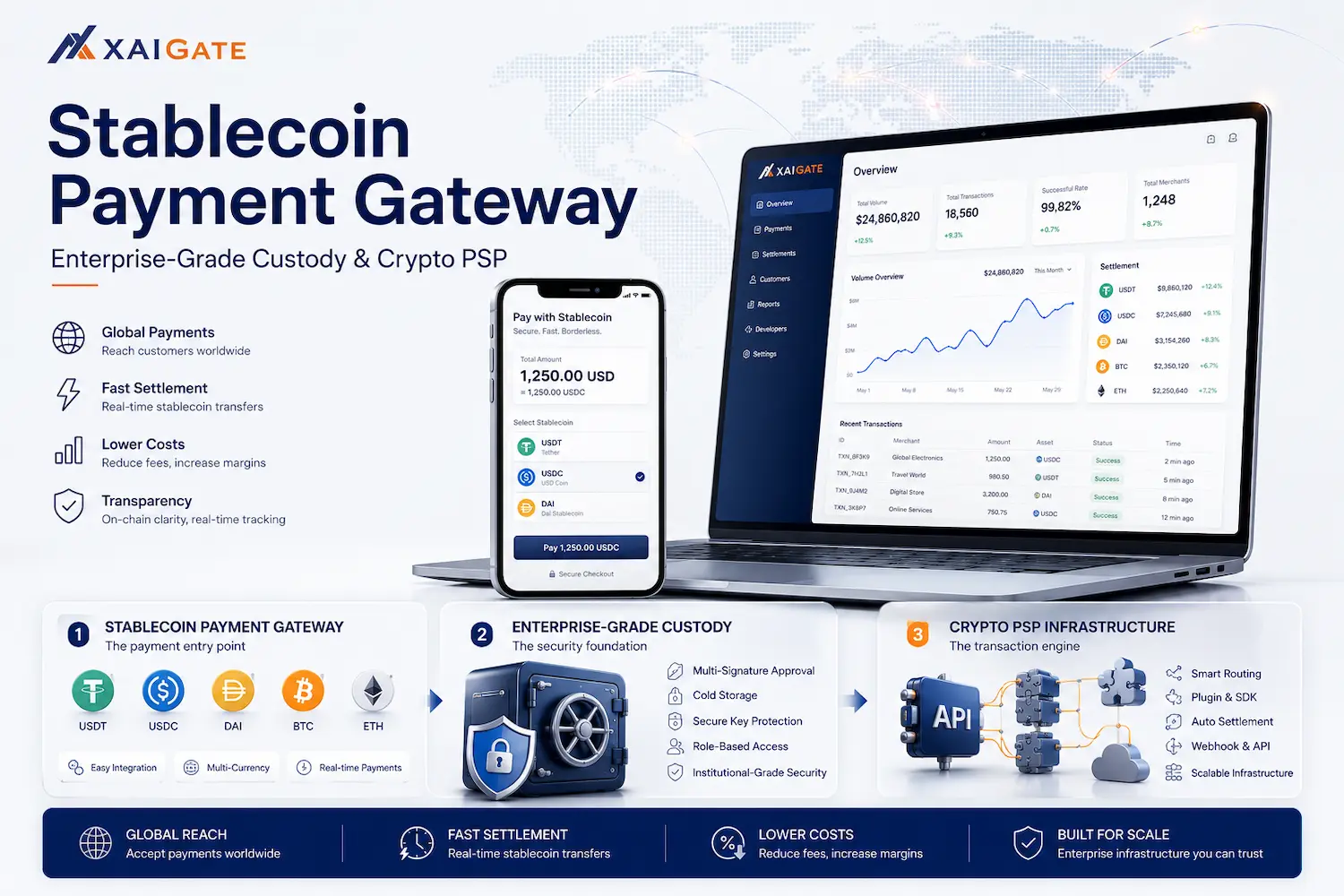
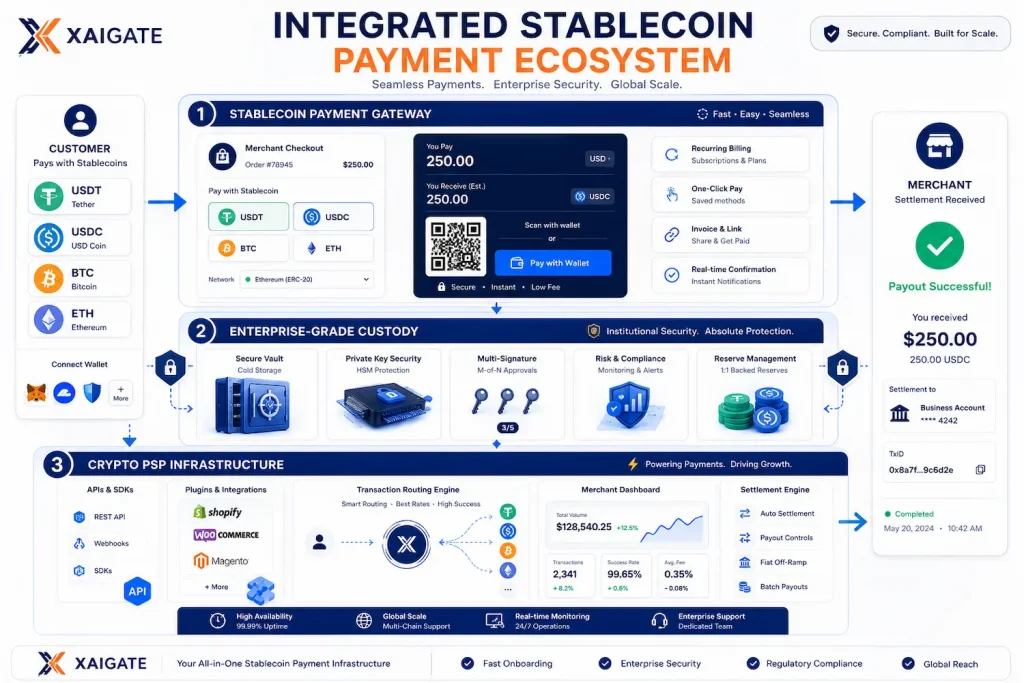
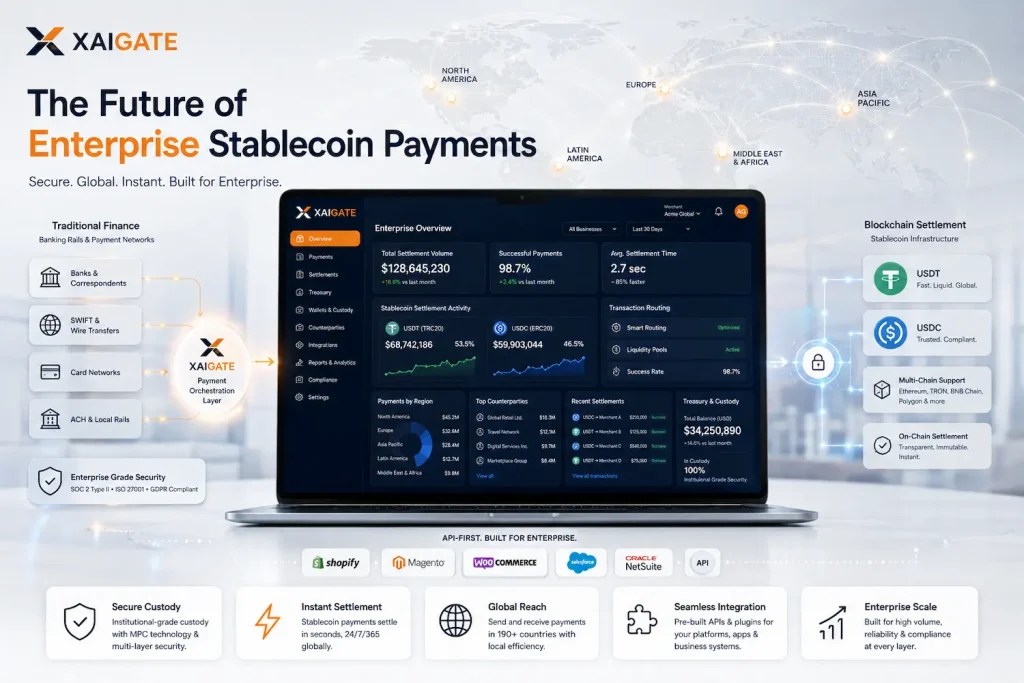
When viewed individually, stablecoin payment gateways, enterprise-grade custody solutions, and crypto PSPs each solve a specific part of the digital payments problem. However, their true value emerges when they are integrated into a unified ecosystem. Together, they create a full-stack payment infrastructure that supports the entire lifecycle of a crypto transaction—from payment initiation to final settlement—while ensuring speed, security, and regulatory alignment.
Stablecoin Payment Gateway: The Entry Point of Transactions
The stablecoin payment gateway serves as the front-end layer where transactions begin. It is responsible for accepting payments in stablecoins and initiating the conversion or routing process.
- Acts as the payment acceptance layer for merchants and users
- Reduces volatility risk by using stablecoins instead of traditional cryptocurrencies
- Enables fast and efficient cross-border transactions
- Supports instant conversion between digital assets and fiat currencies
At this stage, the focus is on ensuring that payments are received quickly and reliably, without exposure to price fluctuations or banking delays.
Enterprise-Grade Custody: The Security Foundation
Once assets enter the system, enterprise-grade custody becomes the core security layer responsible for safeguarding digital funds.
- Protects private keys using multi-layer encryption and cold storage systems
- Uses multi-signature authorization to prevent unauthorized transactions
- Ensures compliance with institutional and regulatory standards
- Provides real-time monitoring and risk management tools
This layer is essential for maintaining trust, especially for businesses handling large volumes of digital assets or operating in regulated environments.
Crypto PSP: The Transaction and Integration Engine
The crypto PSP (Payment Service Provider) acts as the operational and connectivity layer that links merchants, users, and blockchain networks.
- Processes and routes transactions efficiently across systems
- Provides APIs and plugins for easy merchant integration
- Handles conversion between crypto, stablecoins, and fiat currencies
- Ensures compliance with AML and KYC regulations
This layer simplifies technical complexity, allowing businesses to adopt crypto payments without building their own infrastructure.
Unified Ecosystem: End-to-End Payment Flow
When combined, these three components form a seamless and scalable payment ecosystem.
- The stablecoin gateway initiates and accepts payments
- The custody layer secures and protects digital assets
- The crypto PSP manages processing, routing, and integration
Together, they create a continuous flow from payment initiation to settlement, reducing operational friction and improving system efficiency. This integrated model enhances security, lowers costs, and enables scalable global transactions for modern digital businesses.
See more: Low Fee Crypto Payment Gateway: Best Options for Global Businesses
Benefits of a Modern Crypto Payment Ecosystem
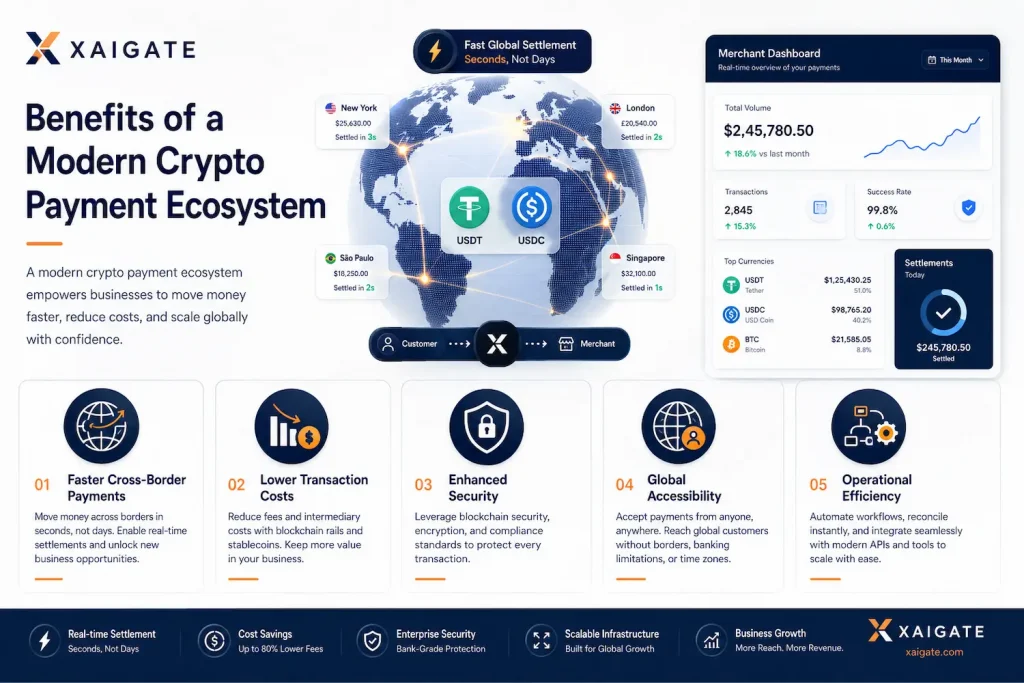
The integration of stablecoin payment gateways, enterprise-grade custody solutions, and crypto PSPs creates a powerful and efficient financial infrastructure. Together, these technologies significantly improve how global transactions are processed, secured, and managed.
Key advantages include:
- Faster cross-border payments: Transactions are settled in real time, eliminating the delays commonly associated with traditional banking systems and intermediaries.
- Lower transaction costs: By reducing reliance on multiple financial intermediaries, businesses benefit from significantly lower fees compared to conventional payment networks.
- Enhanced security: Enterprise-grade custody combined with blockchain transparency strengthens asset protection and reduces the risk of fraud or unauthorized access.
- Global accessibility: Businesses can accept payments from users anywhere in the world without being limited by geographic or banking restrictions.
- Operational efficiency: Automated payment processing and settlement reduce manual workload, minimize human error, and streamline financial operations.
This modern crypto payment ecosystem is particularly valuable for e-commerce platforms, fintech companies, and global service providers seeking scalable, secure, and borderless payment solutions.
FAQs
1. What is a stablecoin payment gateway?
A tool that accepts stablecoin payments for businesses.
2. Why use stablecoins for payments?
They reduce crypto price volatility.
3. Which stablecoins are common?
USDT, USDC, DAI, and other major stablecoins.
4. Who needs stablecoin payments?
Enterprises, PSPs, SaaS, fintech, and global merchants.
5. What is enterprise-grade custody?
Secure fund management for high-volume crypto payments.
6. Can stablecoins support global payments?
Yes, they enable fast cross-border settlement.
7. Is stablecoin payment useful for PSPs?
Yes, PSPs can add crypto payment rails for merchants.
8. Does XAIGATE support API integration?
Yes, XAIGATE supports flexible API-based integration.
9. Are stablecoin payments faster?
Yes, they can settle faster than many traditional methods.
10. How do businesses start?
Choose stablecoins, connect XAIGATE, test checkout, and go live.
Conclusion
The combination of stablecoin payment gateways, enterprise-grade custody, and crypto PSPs is shaping the future of digital payments. By bridging traditional finance with blockchain technology, this ecosystem offers a more efficient, secure, and scalable solution for global transactions.
As crypto adoption continues to grow, businesses that integrate these technologies early will gain a significant competitive advantage in the evolving digital economy.
For daily updates, subscribe to XAIGATE’s blog!
We may also be found on GitHub, and X (@mxaigate)! Follow us!