
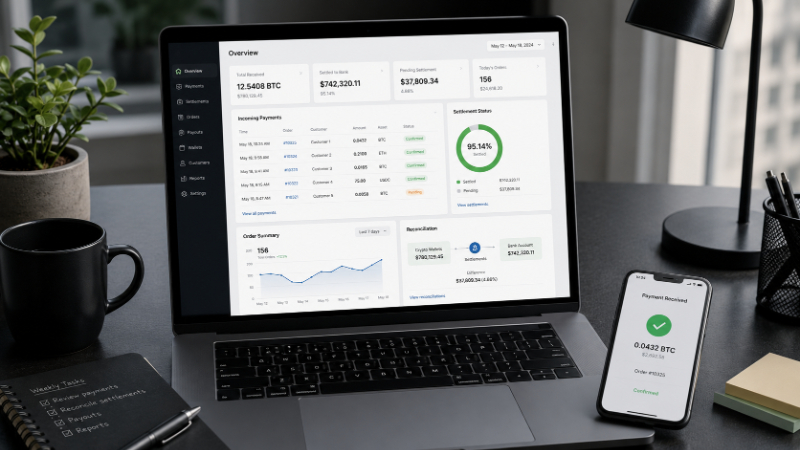
Crypto payment settlement is the process of finalizing cryptocurrency transactions between parties, ensuring that digital assets are transferred to the correct wallet address, accurately recorded, and ready for reconciliation. As more businesses adopt cryptocurrency payments, understanding the settlement process is essential for reducing errors, speeding up transaction processing, and improving cash flow management. In this article, XAIGATE explains what crypto payment settlement is, how it works, and the best practices for optimizing your digital payment settlement process.
How Does Crypto Payment Settlement Work?
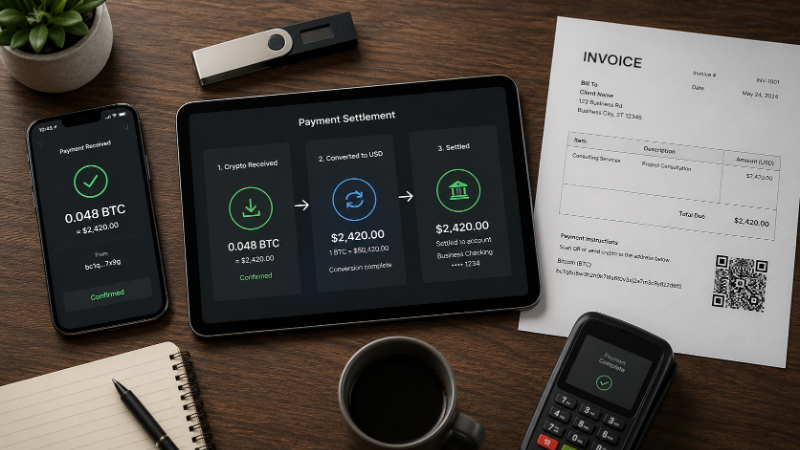
Crypto payment settlement is the process of completing a cryptocurrency transaction from the customer’s wallet to the merchant’s wallet and confirming it on the blockchain. Compared with traditional payment systems, blockchain-based settlement can reduce reliance on intermediaries while providing transparent transaction records.
Transaction Initiation
The process begins when a customer selects cryptocurrency as the payment method. Depending on the platform, supported assets may include:
- USDT.
- BTC.
- ETH.
- Other supported cryptocurrencies or stablecoins.
The payment system then generates a wallet address or QR code, allowing the customer to send the required amount.
Blockchain Confirmation
After the transaction is submitted, it is broadcast to the relevant blockchain network for verification. During this stage:
- The network validates the transaction.
- The transaction is added to a block.
- Blockchain confirmations begin to accumulate.
- The payment platform monitors the confirmation status.
Confirmation speed depends on the blockchain network, network congestion, and the number of confirmations required by the payment provider.

Settlement Completion
Once the required confirmations are reached, the payment is considered successfully settled. The business can then:
- Confirm the customer payment.
- Update the order or invoice status.
- Record the transaction as revenue.
- Transfer funds to another wallet.
- Convert cryptocurrency into fiat currency when supported.
Automating these steps helps reduce manual processing and improves payment workflow efficiency.
Reconciliation and Data Management
After settlement, transaction data must be organized for accounting, reporting, and internal control. Important records may include:
- Transaction ID or blockchain hash.
- Payment amount and cryptocurrency.
- Wallet addresses.
- Transaction time.
- Network fees.
- Settlement and conversion details.
Platforms such as XAIGATE can help synchronize crypto payment data with accounting or ERP systems, making reconciliation, reporting, and transaction management more efficient.

Benefits of Crypto Payment Settlement for Businesses
Crypto payment settlement can help businesses improve payment speed, reduce operational complexity, and expand their ability to accept payments from international customers. When supported by the right infrastructure, it can also simplify reconciliation and financial management.
Some of the main benefits include:
- Faster payments: Many blockchain networks can confirm transactions within seconds or minutes, helping reduce delays compared with some traditional cross-border payment methods.
- Lower transaction costs: Reducing reliance on multiple intermediaries may help lower payment processing costs, particularly for international transactions.
- Greater transparency: Blockchain transactions are recorded with verifiable transaction data, making it easier to track payments and investigate discrepancies.
- Global payment acceptance: Businesses can receive supported cryptocurrencies from customers in different countries without depending entirely on traditional banking channels.
- Simplified reconciliation: Transaction records can be matched with invoices, orders, and internal accounting data more efficiently.
- Automated financial operations: Platforms such as XAIGATE can support real-time payment monitoring, transaction recording, reporting, and reconciliation workflows.
By combining faster settlement, transparent transaction records, and automation, crypto payments can help businesses build a more efficient payment infrastructure for both domestic and international operations.
See more: How to Reconcile Crypto Payments: A Practical Guide to Accurate Crypto Payment Reconciliation
Challenges of Implementing Crypto Payment Settlement
Although crypto payment settlement offers speed, transparency, and automation benefits, businesses still need to manage several operational, financial, and regulatory challenges before adopting it at scale.
Some of the main challenges include:
- Cryptocurrency price volatility: The value of assets such as BTC or ETH can change quickly, which may affect the actual value of payments received before conversion or settlement.
- Blockchain network fees: Transaction fees may rise during periods of high network congestion, increasing settlement costs and potentially slowing confirmations.
- Regulatory compliance: Businesses need to consider applicable KYC, AML, tax reporting, and other regulatory requirements in each market where they operate.
- Managing multiple blockchains: Supporting different cryptocurrencies may require handling multiple networks, wallet addresses, token standards, and confirmation rules.
- Digital asset security: Wallets, private keys, user permissions, and payment infrastructure must be protected against unauthorized access and cyber threats.
- Accounting and reconciliation complexity: Crypto transactions may require additional processes for valuation, record keeping, conversion, and financial reporting.
These challenges can be reduced by using a centralized payment platform, establishing clear security controls, automating reconciliation, and regularly reviewing regulatory requirements in relevant jurisdictions.

How to Optimize the Crypto Payment Settlement Process
To improve crypto payment settlement, businesses should focus on automation, real-time monitoring, secure transaction management, and integration with existing financial systems. A well-structured process can reduce manual work while improving payment visibility and operational efficiency.
Use a Professional Crypto Payment Platform
Managing multiple wallets manually can become difficult as transaction volume increases. A dedicated platform can help businesses:
- Manage wallets from one dashboard.
- Track payment status.
- Monitor incoming transactions.
- Organize transaction records.
- Reduce manual processing.
Platforms such as XAIGATE can centralize crypto payment operations and simplify settlement management.
Automate Transaction Reconciliation
Manual reconciliation can be time-consuming, especially when businesses process large numbers of crypto payments. Automation can help:
- Match blockchain transactions with invoices.
- Identify completed and pending payments.
- Reduce data-entry errors.
- Improve accounting accuracy.
- Speed up financial reporting.
Automated reconciliation makes it easier to maintain accurate records across different payment channels.
See more: Crypto Payment Reconciliation Becomes a New Trend in Business Payment Management
Monitor Transactions in Real Time
Real-time monitoring gives businesses better visibility into payment activity. A centralized dashboard can help teams:
- Track confirmed transactions.
- Monitor pending confirmations.
- Detect unusual payment activity.
- Review transaction status quickly.
- Respond to payment issues sooner.
This is particularly useful for businesses processing payments across multiple blockchain networks.
Support Multiple Blockchains and Stablecoins
Supporting different networks and digital assets provides greater flexibility for international customers. Businesses may consider:
- Major blockchain networks.
- Stablecoins such as USDT and USDC.
- Multiple supported wallets.
- Different settlement options.
- Network-specific transaction fees.
Stablecoins can also help reduce exposure to the price volatility associated with some cryptocurrencies.

Integrate with Accounting and Business Systems
Connecting crypto payments with existing software can reduce repetitive manual work. Useful integrations may include:
- ERP systems.
- Accounting software.
- CRM platforms.
- Order management systems.
- Financial reporting tools.
Automatic synchronization helps ensure that payment, revenue, and transaction data remain consistent across business systems.
Establish a Clear Risk Management Strategy
Security should remain a core part of the settlement process. Businesses should establish procedures for:
- Managing user access permissions.
- Protecting private keys and wallet credentials.
- Reviewing unusual transactions.
- Setting transaction approval rules.
- Maintaining backup and recovery procedures.
- Preparing contingency plans for operational disruptions.
Combining automation, secure controls, real-time monitoring, and system integration can help businesses build a more efficient and reliable crypto payment settlement process.

Conclusion
Crypto payment settlement is becoming an essential component of the modern digital payments ecosystem. When implemented effectively, it enables businesses to process transactions faster, reduce operational costs, improve transparency, and streamline financial management. However, achieving these benefits requires selecting a secure, scalable, and compliant settlement platform.
If your business is looking for a secure, flexible, and easy-to-integrate Crypto Payment Settlement solution, XAIGATE provides a comprehensive platform for cryptocurrency payment processing, real-time transaction monitoring, automated reconciliation, and efficient payment management. With XAIGATE, businesses can optimize financial operations while confidently expanding into the global digital economy.